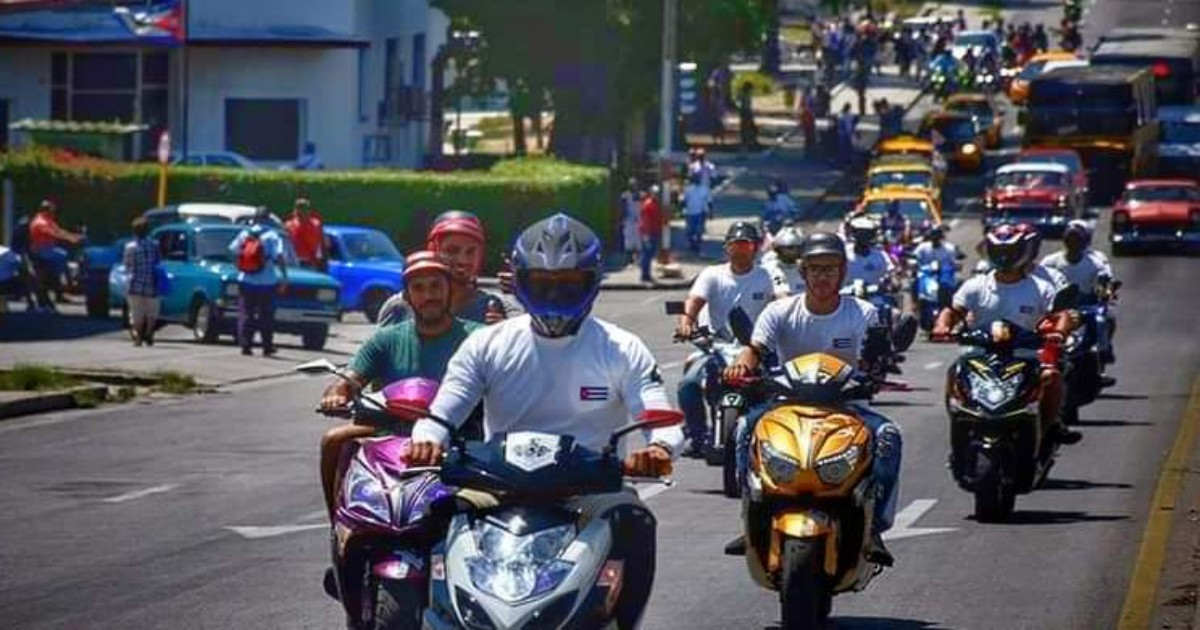
The Ministry of the Interior (MININT) in Cuba, through the Revolutionary National Police (PNR), has taken an unusual step by opening vehicle registration centers in Havana this Sunday. This move is aimed at allowing owners of electric mopeds to officially register and legalize their vehicles.
This special event provides an opportunity for individuals to complete the official registration, obtain necessary license plates and documentation, or regularize mopeds that have been operating without being officially declared to the authorities.
To proceed with the registration, citizens are required to present their identity card along with a document proving ownership of the moped, such as a purchase invoice, a sworn statement, or a certification from an authorized import entity.
For further assistance, the PNR has set up hotlines at 76893531 and 54603379 to guide the public regarding the specific locations of these centers throughout the different municipalities of Havana.
The government has portrayed this measure as a gesture of flexibility towards the citizens. A statement published by Cubadebate highlights that “the exceptional opening of the centers on Sunday is part of efforts to expand public access to these services and facilitate the registration of electric mopeds, aiming to contribute to a safer and more organized traffic system.”
However, this initiative is limited to the capital, excluding the rest of the country, where the registration process remains slow and bureaucratic. Readers of Cubadebate have openly questioned this limitation: "Why only Havana? The process is much slower in the rest of the country," one user commented, while another noted, "Such initiatives should have been implemented nationwide."
The urgency to regulate these vehicles cannot be separated from the collapse of Cuba's public transportation system. Minister Eduardo Rodríguez Dávila described the situation to Reuters as "at one of its lowest points ever."
The statistics presented by the minister are staggering: the daily departures of interprovincial buses from Havana plummeted by 97.4%, from 419 daily trips in 2025 to just 11 in the current year. In 2026, interurban transportation, crucial for the daily commute of workers, is expected to shrink by 90%.
In response to this void, electric mopeds and tricycles have become the only viable mobility option for millions of Cubans. The number of electric vehicles is estimated at around 150,000 units, accounting for nearly 40% of vehicle sales in Cuba by August 2026, up from 3.5% in 2025.
According to Rodríguez Dávila, in August last year, 40% of vehicle imports were electric, compared to just 3.5% in January 2025. This shift is attributed to import incentives that waive or reduce taxes for electric cars and bicycles.
Yet, the rapid increase—driven by desperation due to the collapse of state transportation—has impacted road safety. During the first quarter of 2026, 1,234 accidents were reported, resulting in 153 fatalities and 1,154 injuries. Electric motorcycles, mopeds, and tricycles are among the most vulnerable vehicles, involved in 74% of these incidents.
The government initially allowed the unchecked proliferation of these vehicles—many without plates, licenses, and often operated by minors—as a release valve in response to the failing state transport system. Now, they are making urgent efforts to regularize them through special registration days.
FAQs About Electric Moped Registration in Havana
Why is the registration event only taking place in Havana?
The current initiative is limited to Havana, potentially due to resource constraints and the existing infrastructure. There is public demand for this to be extended nationwide.
What documents are required to register an electric moped?
Owners must present their identity card along with proof of ownership, such as a purchase invoice, a sworn statement, or certification from an authorized import entity.
How has the collapse of public transportation affected electric vehicle sales?
The collapse of public transportation has led to a surge in electric vehicle sales, with these vehicles becoming a primary mode of transportation for many Cubans.