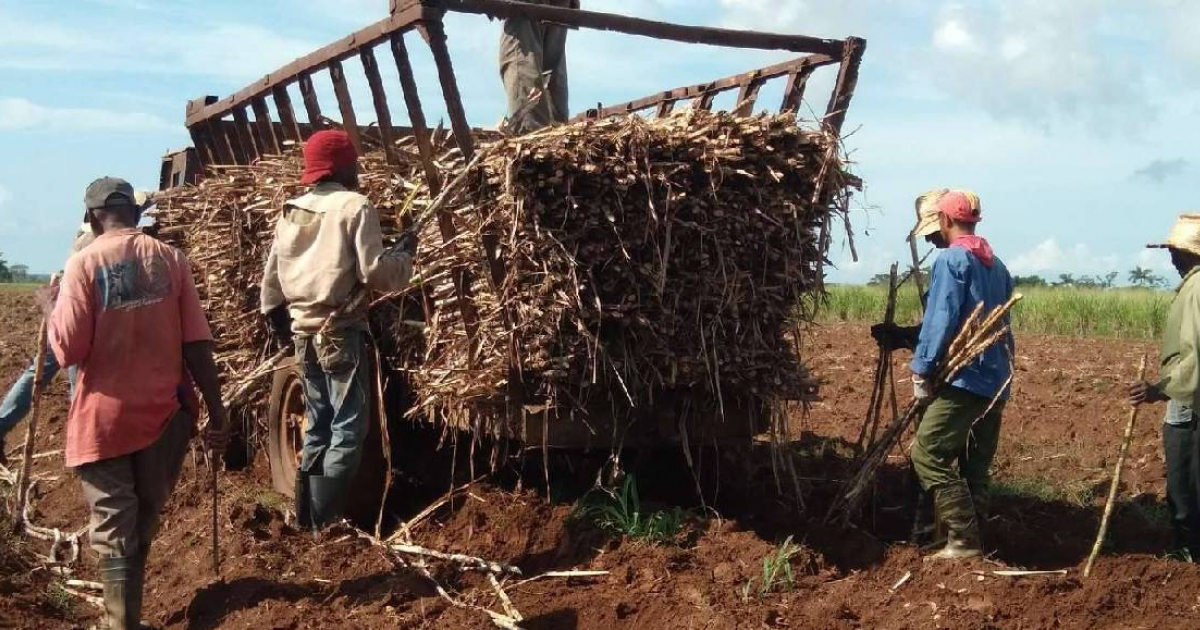
Jorge Piñón, an energy expert, has dismissed Cuban leader Miguel Díaz-Canel's initiative to transform sugar mills into electricity generators as a "fairy tale" and "unrealistic." In a recent interview with Martí Noticias, Piñón questioned the viability of the proposal.
On November 12, Díaz-Canel unveiled the plan during a meeting with sugar industry stakeholders aimed at discussing the implementation of 176 government-approved economic and social transformation measures.
The government's strategy involves utilizing existing boilers, turbines, and generation systems in sugar mills to produce steam and electricity by burning sugarcane bagasse and marabú, while formally maintaining sugar production.
Díaz-Canel also suggested that sugar companies be evaluated based on their energy generation, molasses production, debt repayment, and wages paid. He described the state of the industry on social media platform X as undergoing a "transformation process."
Piñón, a researcher at the Energy Institute of the University of Texas at Austin, challenged the plan's logic with a straightforward query: "How can they talk about producing electricity and feeding it into the grid when there's no sugarcane?"
The analyst pointed out that the sugar sector has been in a continuous decline for over six years, with a decade lacking recovery investments. He estimated that a full recapitalization could take three to five years, assuming Cuba can secure funding.
The official option to use marabú as fuel also failed to convince the expert, who questioned the available logistics: "Where are the tractors? Where is the machinery? Where is the transportation to bring the marabú to the mills?"
Challenges Facing Cuba's Sugar Industry
The collapse of the sugar sector makes sustaining any bioelectric generation plan even more challenging. Cuban sugar production fell below 150,000 tons in the 2024-2025 harvest, compared to a state plan of 265,000 tons. During the 2025-2026 campaign, only the Tuinucú mill in Sancti Spíritus managed to operate, producing around 5,600 tons before halting due to a fuel shortage in March.
Currently, out of the 156 sugar mills Cuba once had, only four to seven are operational, with 95% of the mills either idled or underutilized. These facilities, aged between 40 and 50 years without proper maintenance, face technical issues similar to the country's thermoelectric plants.
Precedents and Future Prospects
The only large-scale bioelectric generation project in Cuba highlights the model's difficulties: the 65-megawatt plant built next to the Ciro Redondo mill in Ciego de Ávila. Despite being funded with $186 million from Chinese investments and constructed between 2017 and 2020, it has struggled to operate continuously due to a lack of raw materials. The facility was designed to burn bagasse during the harvest and marabú the rest of the year.
Piñón acknowledged that sugarcane biomass is a viable energy resource in other markets, contributing about 6% of Brazil's national electricity. However, he emphasized that the Cuban situation is incomparable due to the industry's state of neglect.
This proposal isn't new; Díaz-Canel previously suggested using mill biomass for electricity generation in June 2022, but that initiative did not yield tangible results.
As the regime announces conversion plans, Cuba's national energy crisis deepens. The National Electric System experienced at least six total collapses in 2026, with power outages lasting up to 20 to 24 hours daily in various regions. The longest blackout, on March 16, left the island in darkness for 29 hours and 29 minutes.
Understanding Cuba's Energy and Sugar Industry Challenges
What is Díaz-Canel's proposal for sugar mills?
Díaz-Canel's proposal involves converting sugar mills to generate electricity by using bagasse and marabú, while continuing sugar production.
Why does Jorge Piñón criticize the plan?
Piñón criticizes the plan as unrealistic due to the lack of sugarcane and necessary logistics, alongside the industry's prolonged decline.
What challenges does Cuba's sugar industry face?
Cuba's sugar industry struggles with outdated infrastructure, lack of maintenance, and significant production shortfalls.
How has the energy crisis affected Cuba?
Cuba's energy crisis has led to frequent and prolonged blackouts, with severe impacts on daily life and the economy.