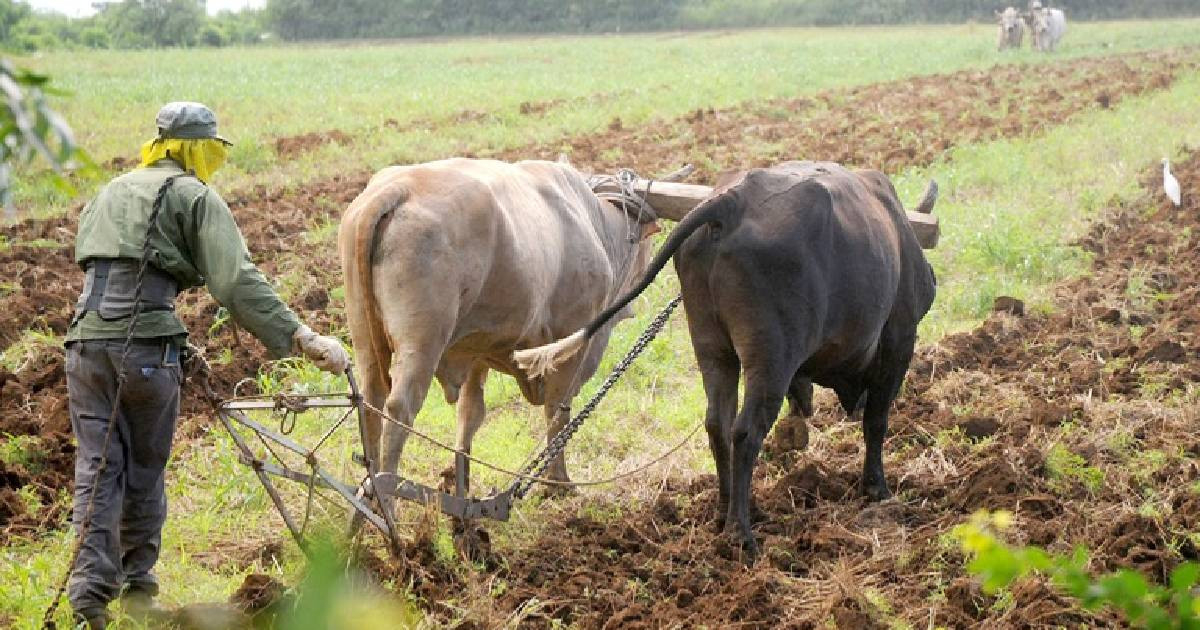
The Cuban government has allocated 131,000 hectares of agricultural land to private producers and companies under the Agricultural and Forestry Land Law 185, which has been in effect since September 17, 2026, as reported by the state-controlled newspaper, Granma.
Raúl Placencia Quintero, the Director of Land at the Ministry of Agriculture, stated that there have been 5,333 applications amounting to 137,500 hectares. Around 4,000 individuals—approximately 75% of the applicants—are already working the land under this new regulation.
Placencia Quintero highlighted that among those benefiting from this initiative are individuals who "already had land to work on and now are expanding their areas," as the legislation does not impose any limits on the quantity or period of land use. These terms are negotiated in contracts between the state-run company and the applicant.
In the realm of private enterprise, the government has reported receiving 29 applications from small and medium-sized enterprises (SMEs) under this law, which for the first time broadly opens up idle state lands to private businesses.
Additionally, 88 agricultural production cooperatives have "already been granted land," with another 59 in the process of receiving theirs.
Villa Clara leads the provinces with the highest number of applications, followed by Santiago de Cuba and Camagüey.
Significant Agrarian Reform Amidst Crisis
Passed by the National Assembly on July 29, 2026, Law 185 represents the most comprehensive agrarian reform since 1959. It consolidates over 25 scattered legal provisions, removes land size restrictions for business projects, and allows Cuban residents abroad, foreigners, and mixed or foreign companies operating in the country to also apply for land.
The law also permits building a home on the farm and legalizing it as property after five years, as well as selling, bequeathing, donating, or transferring the land. However, the state retains socialist ownership of the land; what is transferred is the right to use it.
Addressing Food Shortages
This reform comes amid a historical food crisis. Cuba imports between 70% and 80% of the food it consumes, at an annual cost of nearly $2 billion. Rice production plummeted from 304,000 tons in 2018 to between 79,000 and 111,000 tons in 2025, against an estimated demand of 600,000 tons. From 2018 to 2023, pork production dropped by 95% and bean production by 70%.
A 2025 survey revealed that 33.9% of Cuban households reported at least one person going to bed hungry, and the Food Monitor Program estimated that 96.91% of the population lacked adequate food access by May 2026.
In 2021, authorities acknowledged that nearly 49% of the country's 6.4 million hectares of agricultural land was uncultivated, with marabou covering between 1.1 and 1.7 million hectares. Previous reforms—2008, 2012, and 2018 decree-laws—failed to reverse this decline.
Placencia Quintero admitted that the remaining challenge is to "have more people move to the countryside and produce so that the population can benefit." Deputy Minister of Agriculture Telce González warned in October that it is uncertain when supply will improve, though he estimated short-cycle crops might show results "in a few months."
Understanding Cuba's Agrarian Reform and Its Implications
What is the purpose of Cuba's new Agricultural and Forestry Land Law 185?
The law aims to revitalize Cuba's agricultural sector by allowing private producers and companies to utilize state-owned lands, thereby increasing food production and addressing the country's ongoing food crisis.
How does the new law impact foreign and Cuban residents abroad?
The law permits Cuban residents abroad, foreigners, and mixed or foreign companies to apply for land, offering them opportunities to invest and participate in Cuba's agricultural development.
What are the expected outcomes of this agrarian reform for Cuba's food supply?
The reform is expected to increase food production through better land utilization and the involvement of private enterprises, though it remains uncertain when significant improvements in food supply will be observed.