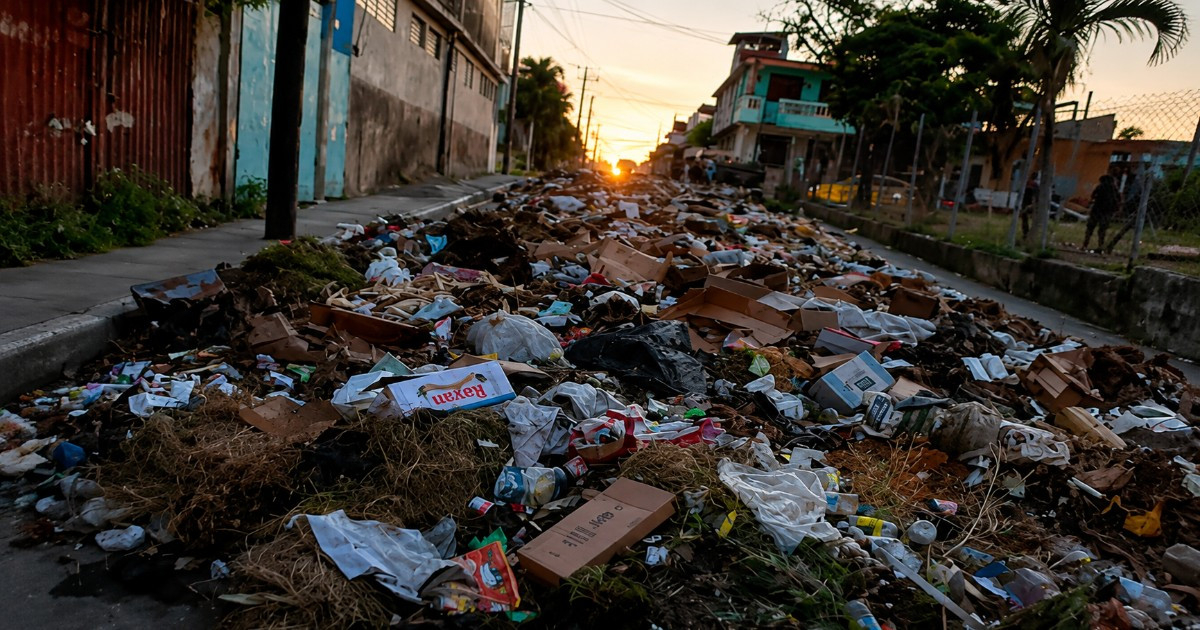
The streets of Guantánamo have become synonymous with piles of garbage, blocked sidewalks, and unpleasant odors—all part of the daily experience for its residents. The ever-growing accumulation of trash not only poses a significant public health risk but also highlights the glaring issues within the local waste management system.
A recent social media post brought attention to the dire state of this eastern Cuban city, painting a picture of the everyday decay faced by its residents. "Step outside your home in Guantánamo and you won't find clean streets; instead, you're greeted by heaps of garbage. Days and weeks go by, and the trash remains untouched," stated a post shared on Mary Canela Tudela's Facebook page, attributing the reflection to a follower.
The author of the post identified six key factors contributing to the crisis: aging garbage trucks and a lack of replacement parts, fuel shortages, insufficient workforce due to low wages, the spread of illegal dump sites, construction debris left unattended, and a shortage of waste containers in various neighborhoods.
Responses to the post revealed the frustration of those who have resigned themselves to walking in the streets because sidewalks are occupied by refuse, enduring foul smells, and witnessing children playing near garbage dumps.
"It's both sad and shameful. Guantánamo is a beautiful city with hardworking, good people. It's painful to see it neglected like this, buried in debris... we once were among the cleanest cities in Cuba... now it feels like all of Cuba is one big landfill," lamented the post.
In May, a circular economy meeting confirmed that approximately 1,600 cubic meters of garbage ended up in dumps and streets across the province.
Residents have raised alarms about the increase in mosquitoes, flies, rats, and cockroaches, and the associated risks of dengue, diarrhea, and skin diseases. The trash buildup can also block sewers, worsen flooding, and impede ambulance access.
For months, Guantánamo remained under Epidemiological Alert for dengue, as dumps near childcare centers and elementary schools were identified as potential breeding grounds for the Aedes aegypti mosquito.
In June, a local resident reported a massive garbage dump infested with rats and insects on 1 Norte Street, between Cuartel and San Gregorio. "The rats are invading homes, and the stench is unbearable," she warned.
With garbage trucks idle due to fuel shortages, authorities have resorted to using carts and animal-drawn vehicles to try and maintain waste collection.
Institutional measures have yet to reverse the situation. In October, the Municipal Sanitation Company received five electric tricycles through the My Ecological City project, a small addition given the vast amounts of waste accumulating.
Yoel Pérez García, the first secretary of the Communist Party in Guantánamo, has called on agencies and mass organizations to join in cleanup efforts, emphasizing that "contributing to solid waste collection should be everyone's responsibility."
Guantánamo Waste Crisis: Causes and Solutions
What are the main causes of the waste crisis in Guantánamo?
The crisis is primarily due to aging garbage trucks, lack of replacement parts, fuel shortages, low wages leading to a workforce shortage, illegal dumping sites, construction debris, and insufficient waste containers.
How is the garbage issue affecting public health in Guantánamo?
The accumulation of waste is contributing to the spread of mosquitoes, flies, rats, and cockroaches, increasing the risk of diseases such as dengue, diarrhea, and skin infections.
What measures have been taken to address the garbage problem?
Efforts include using carts and animal-drawn vehicles for waste collection, and the Municipal Sanitation Company has received a few electric tricycles through an ecological initiative.