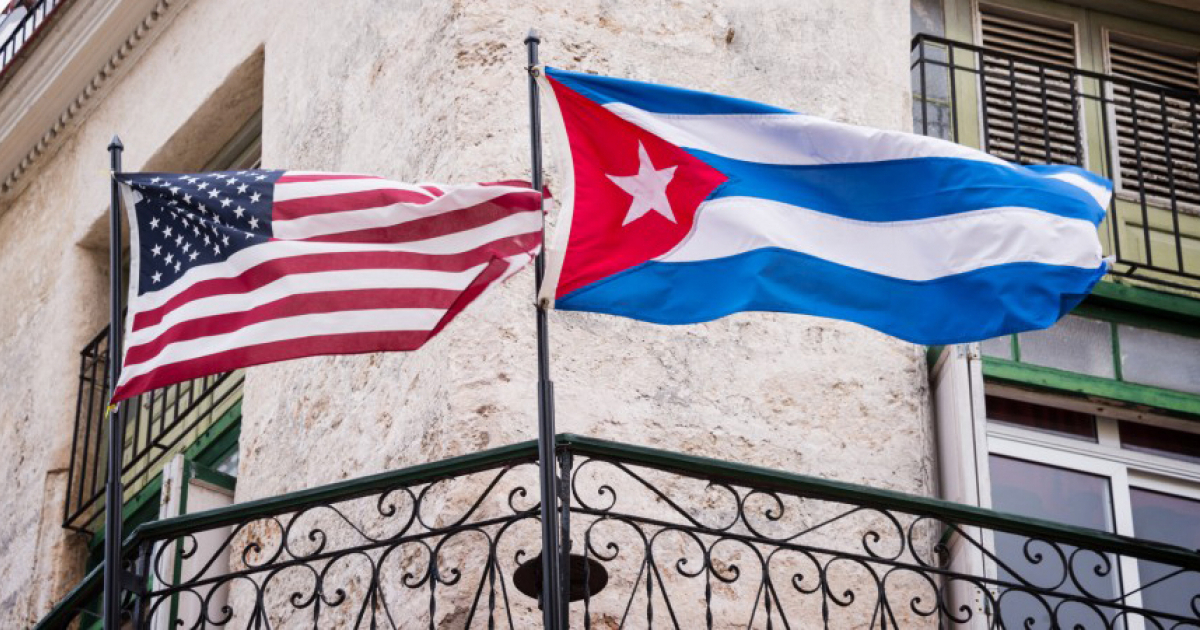
This Saturday, the Cuban Embassy in the United States reiterated its openness to engage in discussions with Washington, emphasizing its usual stipulations: mutual respect, sovereignty, and non-interference in internal affairs. This message was shared on X, underlining that "this offer remains on the table."
The embassy's declaration follows Cuban President Miguel Díaz-Canel's similar proposal to university students during the University Student Bastion event. However, Díaz-Canel insisted that any dialogue must occur "without pressure, without preconditions, and without questioning our political system."
In their statement, the embassy criticized Washington for historically responding with "more sanctions, increased restrictions on fuel and trade, and ongoing isolation." It posed a rhetorical question: "After six decades, is it valid to ask whether those measures achieved their intended outcomes, or have they primarily caused suffering among the Cuban population?"
The Cuban regime, however, overlooks that the primary cause of the nation's economic woes is 67 years of authoritarian governance, not U.S. sanctions.
Cuba's Stance on Dialogue
Havana's approach of open dialogue while keeping its political system untouchable is not new. In 2009, Raúl Castro expressed willingness to discuss "everything" except sovereignty and socialism with then-President Obama. This position was constitutionally reinforced in 2019, when Article Four of the Constitution declared socialism irreversible.
Meanwhile, Washington's stance has toughened. On November 5, Secretary of State Marco Rubio announced new sanctions targeting Cuban oil and military networks, including Chinese suppliers linked to the regime's armed forces.
In September, Rubio was unequivocal: "No one is going to invest in Cuba under its current government model. It's simply not going to happen."
Escalating Tensions Between Cuba and the U.S.
Bilateral tensions peaked on November 12 when former President Donald Trump stated in an interview that he "would certainly consider" a brief military campaign against Cuba, with the intention of "ending Cuba" before leaving office. The following day, the State Department warned that a "failed state" Cuba off the U.S. coast would pose a direct threat to national security.
Amid this heightened pressure, the Cuban regime has combined resistance rhetoric—declaring 2026 as the "Year of Preparation for Defense" and conducting the Strategic Exercise Moncada earlier this month—with diplomatic messages of conditional openness, like the one released this Saturday.
Communication channels between the two countries exist but are limited. In October, Cuban Chargé d'Affaires in Washington, Lianys Torres Rivera, confirmed to Reuters that interactions are restricted to meetings, calls, and WhatsApp messages, with no formal negotiations taking place.
Foreign Minister Bruno Rodríguez admitted in July that these conversations "show no progress."
FAQs on Cuba-U.S. Relations
What are the main conditions Cuba insists on for dialogue with the U.S.?
Cuba insists on dialogue under conditions of mutual respect, sovereignty, and non-interference in its internal affairs.
How has the U.S. responded to Cuba's proposals for dialogue?
Historically, the U.S. has responded with increased sanctions and restrictions, maintaining a stance of isolation towards Cuba.
What recent actions have escalated tensions between the U.S. and Cuba?
Tensions escalated when former President Trump suggested a military campaign against Cuba, and Secretary of State Marco Rubio announced new sanctions.