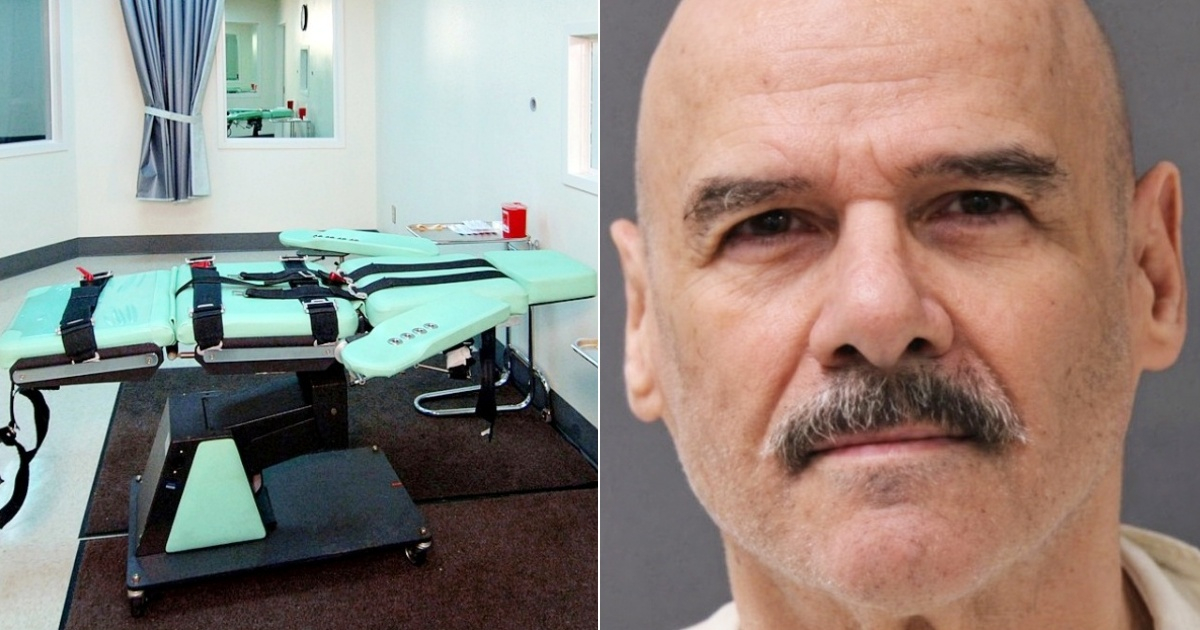
Reinaldo Dennes, a 70-year-old Cuban national, experienced excruciating pain and cried out for relief while strapped to a gurney during his lethal injection execution on Thursday, November 19, in Huntsville, Texas. His spiritual advisor, Reverend Jeff Hood, condemned the execution as "torture," alleging a failure in the procedure, while prison officials maintained that all protocols were adhered to.
Reverend Hood, who was present during Dennes' final moments, shared with Newsweek that Dennes remained vocal and in significant discomfort for several minutes after the lethal drug was administered. Dennes reportedly pleaded, "Please, kill me, kill me."
Execution Delayed by Procedural Difficulties
The execution extended beyond the usual timeframe due to complications in establishing the two intravenous lines required for administering pentobarbital, the sedative employed by Texas for capital punishment. According to the chronology provided by the Texas Department of Criminal Justice (TDCJ) to the Associated Press, Dennes was secured on the gurney at 6:04 p.m. local time. Initial attempts to find veins in his hands and arms were unsuccessful, but ultimately, an IV was placed in the left side of his neck at 6:20 p.m. and another in his left foot at 6:38 p.m.
Witnesses entered the chamber as Dennes prepared to deliver his final words around 6:52 p.m. In his last message, documented by prison authorities, he expressed gratitude to his family and loved ones for the years spent together and spoke of his faith in God. The administration of the drug commenced shortly thereafter.
The procedure concluded at 7:07 p.m., with a doctor pronouncing Dennes' death at 7:08 p.m. In total, 63 minutes elapsed from when he was restrained to the completion of the execution, and 64 minutes until the official declaration of his death.
Allegations of Inhumane Treatment
Michael Graczyk, a journalist with the Associated Press, witnessed Dennes' cries, noting that he specifically complained of severe pain in his right leg, describing it as a cramp and expressing disbelief that it was normal. Approximately 16 minutes passed from the start of the injection to his death.
Reverend Hood recounted to Newsweek his suspicions that something was amiss when he was delayed entry into the execution chamber. Once inside, he observed evidence of multiple attempts to insert catheters into Dennes' arms, in addition to the IVs in his neck and foot. Hood placed his hand on Dennes' shoulder, assuring him that he would remain by his side throughout the ordeal.
According to Hood, almost immediately after the drugs began to flow, Dennes started thrashing his legs, arching his chest, and struggling against the restraints holding his arms. Dennes repeatedly screamed that his leg was on fire and insisted something was wrong. The reverend also noted that Dennes called on God to end his suffering.
Hood, who has accompanied many individuals to their executions, stated that typically, those receiving the lethal drug lose consciousness within 30 seconds. However, Dennes continued speaking for over four minutes. The pastor described this as the most distressing execution he had ever observed, likening the experience to holding onto a wild horse due to the condemned man's violent movements.
Texas Officials Deny Any Misconduct
Amanda Hernández, spokesperson for the TDCJ, dismissed allegations of a botched execution, asserting that staff followed established procedures and that IVs were placed in the most viable veins available. Official reports indicated that Dennes expressed pain before the pentobarbital was administered, complaining about areas where needles were not inserted. Hernández suggested that Dennes might have exaggerated or feigned his suffering.
No further investigation is anticipated, according to Hernández, who confirmed that the pentobarbital used was not expired, though she did not specify its expiration date. Dr. Paul Wax, Executive Director of the American College of Medical Toxicology, expressed uncertainty as to why an injection in the left foot or neck would cause pain in the right leg.
Attorney Dale Baich, who has represented death row inmates and witnessed 17 executions, challenged the notion that Dennes' cries were an act without corroborating medical evidence. Graczyk noted that witnesses could not directly observe the IVs or pinpoint the exact moment the drug began to flow. The origin of Dennes' pain remains undetermined.
Calls for Accountability and Moratorium
Following the execution, Reverend Hood called for accountability among Texas prison system officials, urging Newsweek for the removal of Bobby Lumpkin, TDCJ Executive Director, due to the events in the execution chamber. He also appealed to Texas Governor-elect Gina Hinojosa to halt executions once she takes office in January, following her victory over Republican Greg Abbott in the November 3 election.
Reprieve US, an advocacy organization, echoed these calls for a moratorium. Executive Director Maya Foa argued that Dennes' case should heighten scrutiny over methods used for capital punishment in the United States.
Ongoing Debate Over Pentobarbital Use
The execution of Dennes occurs amid renewed debate over the use of pentobarbital in U.S. executions, especially after another death row inmate survived the drug's administration. On September 30, Christa Pike survived a lethal injection attempt in Tennessee after receiving two doses of pentobarbital. Her attorneys claimed the drug may not have entered her bloodstream correctly. Pike was hospitalized in critical condition and discharged on October 10, resuming medical care in prison as per her legal representatives.
The Crime Leading to Dennes' Death Sentence
Reinaldo Dennes was sentenced to death for the murder of diamond wholesaler Janos Szucs during a robbery in Houston on January 24, 1996, which also injured a security guard. Judicial investigations concluded that Dennes was involved in planning and executing the heist, resulting in the theft of diamonds valued at approximately $3.6 million and a substantial amount of cash.
Dennes spent nearly three decades on death row before his sentence was carried out. According to the Texas Department of Criminal Justice's official records, Dennes was the ninth person executed in the state in 2026 and the 605th since Texas resumed executions in 1982.
Frequently Asked Questions About the Execution of Reinaldo Dennes
What were the allegations surrounding Reinaldo Dennes' execution?
Reverend Jeff Hood alleged that the execution was botched, describing it as "torture." He stated that Dennes experienced severe pain and cried for relief during the procedure, prompting criticism of the methods used.
How did Texas prison officials respond to the botched execution claims?
Texas Department of Criminal Justice officials denied any wrongdoing, asserting that all procedures were properly followed and suggesting that Dennes may have exaggerated his suffering.
What impact did the execution of Reinaldo Dennes have on the debate over lethal injection in the U.S.?
The case has intensified scrutiny of pentobarbital use in executions, especially following other incidents where inmates have experienced complications or survived the procedure.