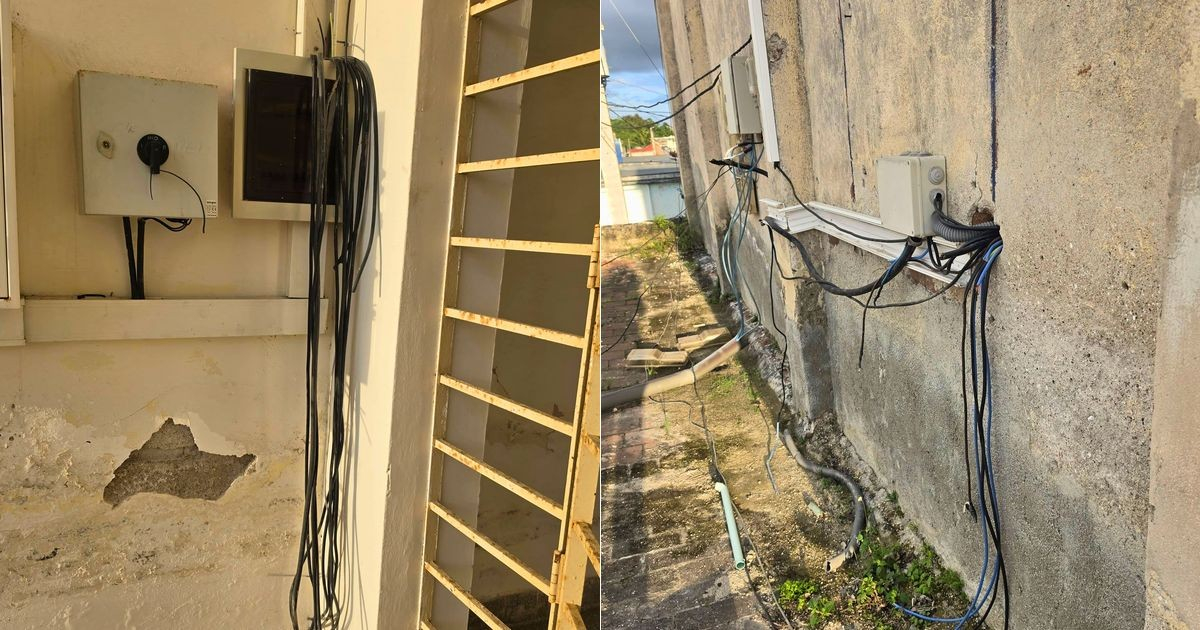
Enrique Diego Arango Arias, who leads Cuba's National Seismological Service and is an expert at the National Center for Seismological Research (CENAIS), publicly exposed the theft and devastation of all electric and communication connections at the CITMA facility in Holguín this past Friday. This site is crucial as it houses the backup Central Station for the National Seismological Service, the provincial CENAIS, the Meteorology Department, and CITMATEL.
The details of this plundering were initially shared by Zelma Corona, CENAIS's director. She described a team inspection of the seismological stations in Granma and Holguín. While the situation in Las Mercedes, Granma was stable, Holguín presented a stark contrast, Corona noted.
"Upon arriving in Holguín, despite the equipment being securely stored, it had to be moved to Santiago de Cuba due to the vandalism by unscrupulous individuals. They cut and stole all the building's electrical and connectivity cables, leaving all the centers located there without power and connectivity, including Meteorology, Seismology, and CITMATEL," Corona elaborated.
Arango Arias did not mince words in his statement: "Where does impunity end? How far will these thefts go? This incident is about the destruction and removal of all electrical and communication connections from the CITMA institutions in Holguín, including the backup Central Station for the National Seismological Service and the provincial CENAIS and Meteorology Departments."
The official confirmed that "everything remaining of CENAIS in Holguín has been collected" and warned that without severe penalties, the situation "will only spiral into catastrophic levels, impacting both family and national economies."
Corona questioned whether this was merely vandalism or an outright "attack on national security," given that these institutions are integral parts of Cuba's Early Warning System for earthquakes and tsunamis. She called for a collective effort from law enforcement to severely punish those acting with impunity.
This is not CENAIS's first encounter with such incidents. Back in September 2026, Arango Arias had already reported a complete looting of equipment from the Isla de la Juventud seismological station—opened in March 2024—including solar panels, batteries, a seismometer, and a digitizer, along with thefts in Moa and the Holguín backup station.
Holguín has a recent history of vandalism against critical infrastructure. In 2025, ETECSA recorded 27 acts of vandalism in the province, resulting in losses exceeding 529,000 Cuban pesos. Additionally, in October 2026, cable theft from a 4G antenna left a Holguín neighborhood with "virtually nonexistent" connectivity.
Nationally, Cuba's General Prosecutor's Office reported over 460 criminal investigations between 2025 and the first half of 2026 for offenses against the National Power System, including sabotage, damage, theft with force, burglary, and receiving stolen goods.
Since May 2025, the People's Supreme Court has set criteria for defining certain acts of theft or damage to electrical infrastructure as sabotage, according to Articles 125 and 126 of the Penal Code. Penalties range from seven to 30 years in prison, with life incarceration or even the death penalty possible under aggravated circumstances.
CENAIS operates a network of seismological stations across the country that provide real-time data to detect earthquakes and issue alerts. The eastern region of Cuba, where Holguín is located, has historically experienced the most seismic activity on the island, making any disruption in this monitoring network particularly concerning.
Understanding the Impact of Infrastructure Vandalism in Cuba
What critical functions does the CITMA facility in Holguín serve?
The CITMA facility in Holguín is vital as it houses the backup Central Station for the National Seismological Service, the provincial CENAIS, the Meteorology Department, and CITMATEL, all of which play crucial roles in monitoring environmental and geological conditions.
How has vandalism affected infrastructure in Holguín?
Holguín has experienced significant vandalism affecting critical infrastructure, including the theft of cables and equipment, leading to substantial financial losses and disruptions in services such as connectivity and environmental monitoring.
What measures has the Cuban government taken against acts of vandalism?
The Cuban government has initiated numerous criminal investigations and set legal criteria to classify certain acts as sabotage, with penalties ranging from long-term imprisonment to life sentences or the death penalty under severe conditions.