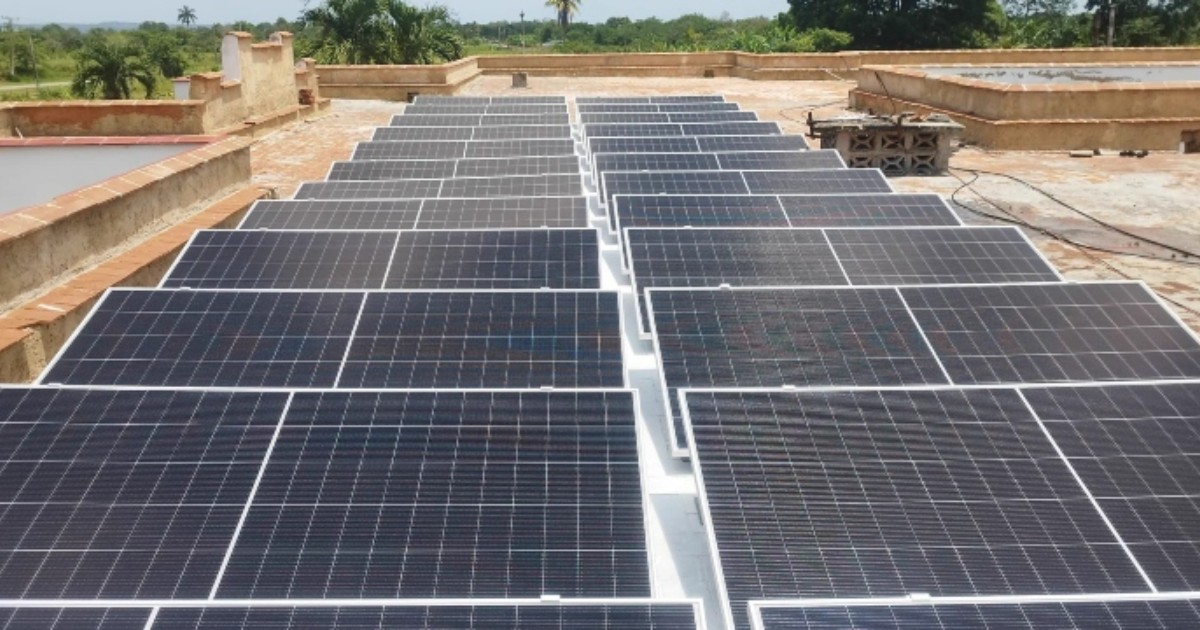
Amidst Cuba's severe energy crisis, Swedish solidarity organizations and Cuban expatriates residing in Sweden have aided the installation of photovoltaic systems in five of the island's healthcare centers. This was announced by Foreign Minister Bruno Rodríguez Parrilla, who took the opportunity to attribute Cuba's energy woes to the actions of the United States.
Rodríguez Parrilla expressed his gratitude on X to Swedish solidarity groups and Cuban residents in Sweden for their contribution to setting up solar systems in five healthcare facilities on the island.
The beneficiaries include the Aleida Fernández Hospital, the Antonio Guiteras Psychiatric Hospital, and the National Institute of Angiology, all located in Havana. Additionally, the Cienfuegos Psychiatric Hospital and the polyclinic in the Palmira municipality, also in Cienfuegos, will receive installations.
Rodríguez noted that systems would be set up in the two Cienfuegos facilities "in the coming days," but did not disclose details regarding system capacity, the number of panels, or the economic value of the donation.
The announcement follows a meeting weeks earlier where Deputy Minister of Public Health, Julio Guerra Peralta, met with solidarity organizations and Cuban residents at the Cuban Embassy in Stockholm to express gratitude for solar panel donations facilitated by the Nordic country.
During that meeting, according to state media outlet Prensa Latina, participants also discussed shortages of medications, surgical instruments, and technological parts within Cuba's healthcare system. They agreed to expand humanitarian donations and raise awareness in Scandinavian countries about the conditions of Cuban hospitals.
The Swedish initiative adds to a series of international solar energy donations that various countries and organizations have provided to Cuba throughout 2026, driven by the nation's acute electricity crisis.
Just days earlier, on November 16, Rodríguez had thanked Cuban communities and organizations in Belgium and Luxembourg — including Cubanismo and Friends of Cuba — for funding a 90-kilowatt solar system at the Joaquín Paneca Consuegra Hospital in Yaguajay, Sancti Spíritus, and solar panels at the Institute of Gastroenterology in Havana.
This pattern of international aid continues with contributions from Japan, which allocated $6.5 million through the United Nations Development Program to install solar systems in ten Cuban hospitals, and China, which delivered 5,000 photovoltaic systems, some of which were designated for polyclinics and maternity homes across several provinces.
Spain, via the Spanish Agency for International Development Cooperation, dispatched 18 photovoltaic systems for Cuban healthcare centers in April, while the Red Cross installed 14 systems in clinics and polyclinics in the eastern regions in October, benefiting over 4,100 individuals.
This wave of donations is a response to an unprecedented energy crisis: in April 2026, the generation shortfall reached 1,945 MW, leaving more than 55% of the nation without power, with blackouts in eastern regions surpassing twenty hours daily. The regime blames the U.S. embargo, but the roots lie in decades of underinvestment and mismanagement of the electrical system.
The Cuban government portrays these donations as a testament to international solidarity, yet the reliance on external charity to sustain hospitals highlights the structural collapse of a system unable to ensure consistent electricity even for its healthcare facilities.
FAQs on Cuba's Energy Crisis and International Aid
What role do Swedish organizations play in aiding Cuba during its energy crisis?
Swedish organizations, along with Cuban expatriates, have contributed to installing solar systems in five Cuban healthcare centers, helping to alleviate some of the energy shortages affecting the island.
Which Cuban healthcare facilities have benefited from the recent solar system donations?
The Aleida Fernández Hospital, Antonio Guiteras Psychiatric Hospital, National Institute of Angiology in Havana, Cienfuegos Psychiatric Hospital, and the Palmira municipality polyclinic have received solar system installations.
How has the international community responded to Cuba's energy crisis?
Countries like Belgium, Luxembourg, Japan, China, and Spain have provided solar systems and financial aid to help Cuban healthcare facilities cope with electricity shortages.
What is the Cuban government's stance on the energy crisis?
The Cuban government attributes the energy crisis to the U.S. embargo, although it also stems from long-term underinvestment and poor management of the country's electrical infrastructure.