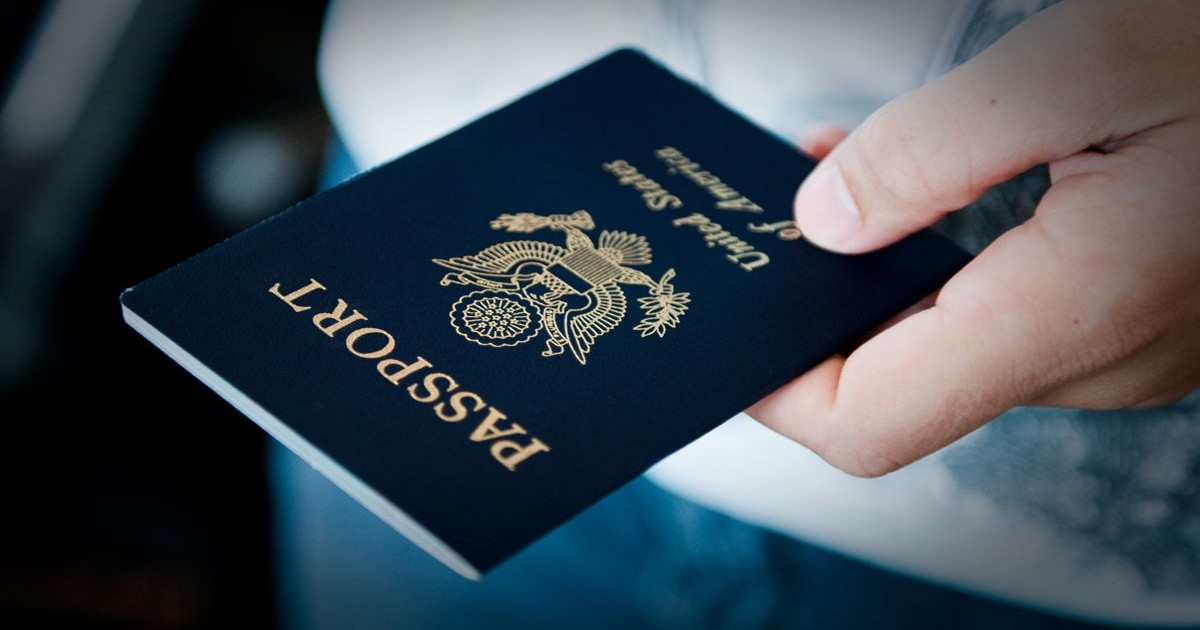
The U.S. passport, once hailed as the most powerful in the world in 2006 and again reaching the top spot in 2014, now ranks ninth in the global standings for 2026. Despite still being among the top ten for travel freedom, it has slipped eight places since its peak years.
The November update of the Henley Passport Index places the American passport in ninth position globally, allowing visa-free access to 180 destinations. This rank is shared with Liechtenstein, while Singapore leads the list with access to 193 destinations.
The gap between the two countries stands at 13 destinations, a notable difference from the years when the United States was at the forefront of international travel ease.
Compiled by Henley & Partners, the ranking compares 199 passports and 227 international destinations, drawing on data from the International Air Transport Association (IATA) and other sources regarding immigration requirements.
The index measures the number of places a traveler can access without needing a visa prior to departure. It also considers destinations where a visa can be obtained upon arrival and those requiring an Electronic Travel Authorization.
Historical Shifts in U.S. Passport Ranking
Over the past two decades, the U.S. passport has experienced significant changes. According to a chart by Henley & Partners, the United States held the top spot in 2006, dropped to seventh in 2010, and regained its leadership in 2014.
However, its position has since deteriorated. By 2019, it was sixth and fluctuated between sixth and seventh from 2020 to 2024. A notable downturn occurred in October 2025, when the passport fell to 12th place, marking the first time it exited the top ten since the index's inception.
In 2026, the U.S. passport has made some progress. By April, it climbed back to tenth place, allowing Americans to travel to 179 destinations without a pre-arranged visa.
The November update shows a slight improvement, moving up to ninth place and gaining one more destination, totaling 180. Despite this recent uptick, it does not erase the long-term losses from when the American passport held the top global ranking.
Countries Surpassing the U.S. in 2026
Singapore retains the top global position with access to 193 visa-free destinations, followed by Japan and the United Arab Emirates, both offering 188 destinations, placing them second.
South Korea holds third place with 187 destinations, while a group of European countries, including Germany, France, Italy, and Spain, share fourth with 185 destinations.
The United Kingdom ranks fifth with 184 destinations, and Canada comes in sixth with 183, both surpassing the U.S. passport according to the November edition.
Australia holds seventh place with 182 destinations, followed by Lithuania in eighth with 181. The United States and Liechtenstein share ninth with 180, while Iceland rounds out the top ten with 179.
In Latin America, Mexico and Uruguay rank 23rd with access to 154 destinations. Brazil is 15th with 170, and Chile is 14th with 173.
The gap is much wider for Cuba, where the passport ranks 80th, granting access to only 56 visa-free destinations, 124 fewer than the American passport.
Reasons Behind the U.S. Passport's Decline
The index rankings depend on both migration agreements and individual countries' decisions on which nationalities can enter without a visa in advance.
In 2025, several changes negatively affected U.S. travelers. Notably, Brazil reinstated visa requirements due to a lack of reciprocity, and other countries altered their entry policies.
In its January 2026 report, Henley & Partners noted the U.S.'s return to the top ten after its late 2025 drop, but warned that this rebound does not undo its long-term positional decline.
The firm also highlighted the disparity between the travel freedoms of U.S. citizens and the entry conditions their country offers to foreigners.
According to data at that time, Americans could visit 179 destinations without a prior visa, while the U.S. granted equivalent entry conditions to citizens from just 46 nationalities.
For travelers, being ninth does not mean the U.S. passport has lost its extensive global advantages. However, the November ranking confirms that other countries have managed to maintain or expand greater mobility, while the United States remains far from the number one position it once held in 2006 and 2014.
U.S. Passport Ranking: Frequently Asked Questions
What factors contribute to the U.S. passport's decline in ranking?
The decline is influenced by changes in migration agreements and entry policies of other countries, such as Brazil reinstating visa requirements for U.S. citizens.
Which country currently has the most powerful passport?
As of 2026, Singapore holds the top position, allowing visa-free access to 193 destinations.
How does the U.S. passport compare to those of other countries?
The U.S. passport is ninth, granting access to 180 destinations. It is surpassed by countries like Singapore, Japan, and several European nations.