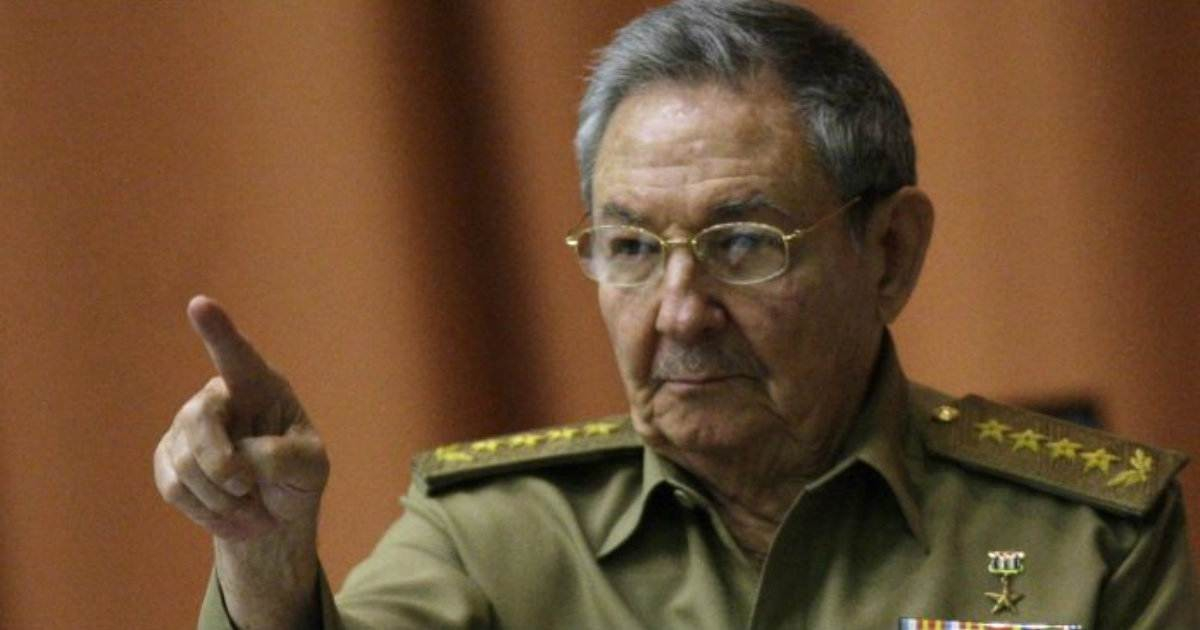
The Cuban government is reportedly employing a strategy designed to manipulate perceptions in order to prevent Washington from making decisions that could dismantle its power before January 2029. This is the core assertion made in an analysis by Juan Antonio Blanco for Cuba Siglo 21, titled "Can Raúl Castro Outmaneuver Trump? The Landscape Post-Election."
The report begins by noting the significant defeat of the Republican Party in the November 3 legislative elections, where Democrats secured control of both the Senate (56-44) and the House of Representatives (257-171).
However, Blanco cautions against viewing this outcome as a safety net for the Cuban dictatorship. Despite domestic challenges, Trump still holds substantial constitutional authority in foreign affairs and might seek to solidify his historical legacy through decisive actions in Cuba.
Strategic Influence Over Military Might
According to the report, Havana's approach is not to militarily defeat the United States—a feat beyond its capabilities—but rather to ensure that Washington refrains from using force over the next 24 months.
The strategy hinges on "Reflex Control," a Soviet doctrine involving the dissemination of selectively curated information to lead an adversary to make decisions that appear voluntary yet are advantageous to the manipulator.
'Cognitive Missiles' and Their Targets
Blanco outlines the tools of this campaign, dubbed "cognitive missiles," aimed at influencing Washington: the threat of civil war, economic costs of a transition, potential reactions from Russia, China, or Iran, legal implications of intervention, and the moral legitimacy of military action.
The goal, as the article specifies, is "not to convince Washington that the regime deserves survival, but to make any alternative to ending its rule seem too risky or costly."
Historical Parallels and Domestic Challenges
The report draws a historical parallel with Vietnam, where a militarily weaker adversary eroded U.S. political will without conventional victories.
Moreover, it warns against underestimating Cuban intelligence services, which have a history of significant cases, including Ana Belén Montes, Víctor Manuel Rocha, the Wasp Network, and former officer Florentino Aspillaga's revelations.
Ironically, the analysis indicates that the regime is losing this same war of perceptions domestically. A survey by the International Republican Institute conducted with 1,199 Cuban respondents revealed that 89% feel the government does not represent them, 86% believe the country is heading in the wrong direction, and 69% say the government's greatest achievement has been "nothing."
Only 2% hold a positive view of Miguel Díaz-Canel, and roughly eight in ten Cubans express unfavorable opinions of Raúl Castro, the Communist Party, and the regime's key institutions. Among young adults aged 18 to 35, 85% demand serious and urgent changes.
Internal Discontent and Economic Strain
The dossier attributes this credibility collapse to deteriorating public services, poverty, power outages, and the growing public exposure of GAESA's power. This military conglomerate is estimated to control between 40% and 70% of Cuba's economy.
Blanco describes the regime as a "mafia-totalitarian state" and warns against a "fraudulent change"—a fake negotiated transition that maintains the Castro family's and GAESA's political and economic control without real democratization.
The analysis recalls the July 11, 2021, protests—the largest anti-government demonstrations since 1959, spanning over 40 locations—where protesters demanded "freedom" without any slogans against the United States.
For Blanco, this fact illustrates the central thesis of the report: "The essence of the conflict is not between Cuba and the United States, but between Cuban citizens and a totalitarian regime that has denied them their right to freely exercise self-determination and national sovereignty for nearly seven decades."
The report concludes that Raúl Castro's gamble might be possible, but is highly unlikely as long as Trump remains in the White House: "A Trump weakened by Congress on domestic issues might attempt to compensate for his challenges with undeniable foreign policy successes in Cuba that positively define his legacy."
Understanding Raúl Castro's Survival Strategy
What is Reflex Control?
Reflex Control is a Soviet doctrine involving the strategic dissemination of information to influence an adversary to make decisions that seem voluntary but are actually advantageous to the manipulator.
How does Havana plan to avoid U.S. military action?
Havana aims to prevent U.S. military action by employing strategic influence rather than military might, using selective information to make intervention appear too risky or costly for Washington.
What are 'cognitive missiles'?
'Cognitive missiles' refer to the tools used by the Cuban regime to manipulate perceptions in Washington, such as the threat of a civil war or the economic costs of a transition.
Why is the Cuban regime losing domestic support?
The regime is losing domestic support due to deteriorating public services, poverty, frequent power outages, and the growing awareness of GAESA's economic control.