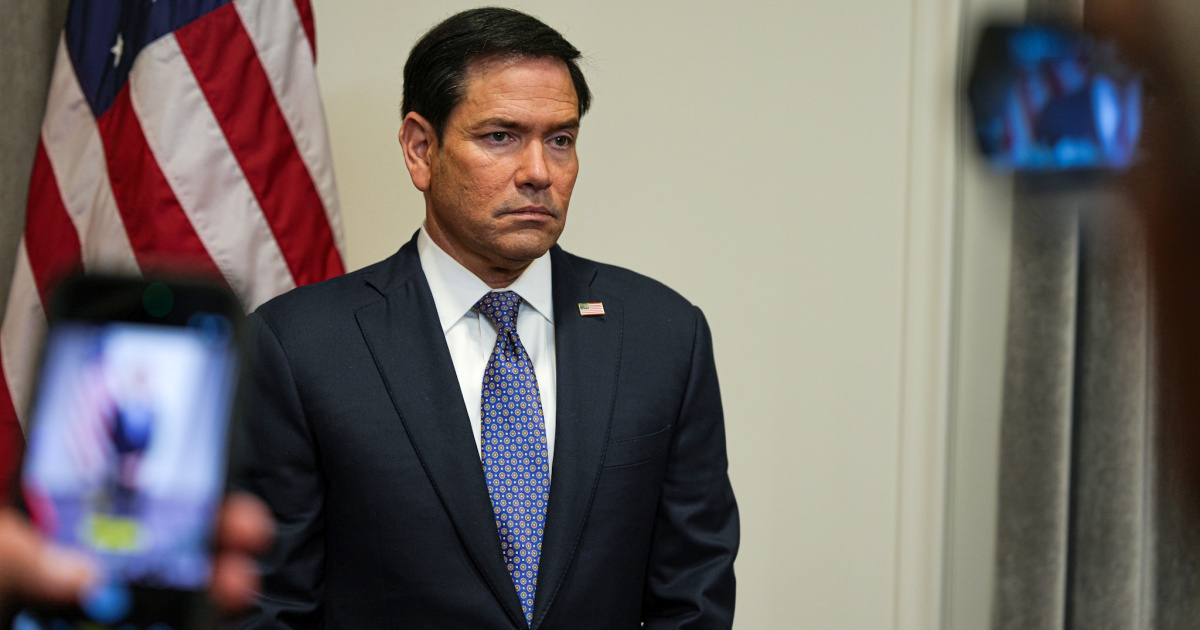
On Wednesday, U.S. Secretary of State Marco Rubio addressed the public concern following a series of technological failures that have recently disrupted critical infrastructure across the United States.
Speaking at a press conference in Manila during the Association of Southeast Asian Nations (ASEAN) summit, Rubio was unequivocal: there is no cyberattack, no conspiracy, and the incidents are unrelated.
A Week of Unprecedented Tech Disruptions
The sequence of failures, which caused public alarm when viewed collectively, prompted Rubio to make his statement.
It all began between November 12 and 13 when a global Microsoft 365 outage left users in 74 countries without access to Outlook, Teams, and Copilot for almost 24 hours, with around 140,000 reports on Downdetector.
The following day, the Federal Aviation Administration (FAA) halted all U.S. departures, marking only the third national air shutdown in modern history. The issue stemmed from a faulty router installed by contractor L3Harris Technologies in Arkansas, which overloaded Cisco equipment manufactured between 2001 and 2006. This stoppage lasted over four and a half hours, resulting in more than 12,000 cancellations that Friday.
Transportation Secretary Sean Duffy had previously warned that the aviation system relies on outdated infrastructure and urged Congress to allocate $50 billion for modernization efforts.
A September 2026 report by the Government Accountability Office (GAO) supported this warning, revealing that more than 75% of the 138 FAA systems evaluated were unsustainable.
On November 16, a software glitch at JPMorgan Chase caused cascading delays at Bank of America, Wells Fargo, Zelle, and other institutions. That same day, United Airlines reported a technical failure that delayed 418 flights.
On November 17, the NSA's classified network experienced degradation during a routine patch application, with additional outages reported at Apple, Gmail, and Marriott.
Rubio's Message: Zero Evidence, Maximum Vigilance
During his address, Rubio emphasized three key points to provide "full transparency" to the public.
First, the incidents are independent. "We have zero evidence, no indication, no proof, and no reason to believe that any of these incidents are connected," he stated.
Second, no malicious actors are involved. "We have no evidence or reason to believe that any of these isolated instances are related to harmful actors, cybercriminals, another nation-state, a malicious actor of any kind, or a disgruntled former employee," he declared.
His message was clear: "We are not experiencing a systemic attack."
Third, while the government acknowledges public concern, it remains vigilant. "We are always hyper-vigilant about this and always on the lookout. But we see no indications that these events are interrelated or the work of malicious actors," he emphasized.
Corporate Transparency as an Amplifying Factor
Rubio also explained why the public perception of a crisis might exceed the technical reality.
He noted that cybersecurity teams sometimes cause disruptions when patching vulnerabilities: "When you fix your system because you've identified a vulnerability, it creates a short-term disruption in your system's operation."
He also pointed to a cultural shift: "We've entered a different era where companies immediately disclose vulnerabilities because they don't want to be accused of covering something up."
This transparency, which Rubio praised, amplifies the sense of collapse even if the failures are technically independent.
The Awkward Question: Visiting Shenzhen Amid U.S. Outages
Rubio made his remarks while accompanying President Donald Trump on a tour that, after Manila, continued to Shenzhen for the Asia-Pacific Economic Cooperation (APEC) forum and a trilateral meeting with Xi Jinping and Vladimir Putin.
A journalist asked directly: What image does visiting one of the world's most technologically advanced cities project at this moment?
Rubio responded candidly: "There isn't a single advanced economy in the world that doesn't face some cybersecurity challenges."
Understanding Recent Tech Failures in the U.S.
What caused the global Microsoft 365 outage?
The outage on Microsoft 365, affecting Outlook, Teams, and Copilot, was part of a series of unrelated technological disruptions. The specific cause of this particular incident has not been detailed.
Why did the FAA halt all U.S. departures?
The FAA halted all departures due to a defective router from L3Harris Technologies in Arkansas, which overloaded older Cisco equipment, causing a significant disruption of over four hours.
What is Marco Rubio's stance on the tech failures?
Marco Rubio stated that there is no evidence of a cyberattack or conspiracy linking these tech failures. He emphasized that the incidents are independent and not the work of malicious actors.
How does corporate transparency contribute to public concern?
Rubio explained that while corporate transparency in disclosing vulnerabilities is positive, it can amplify the public's perception of a crisis even when incidents are technically independent.