On Wednesday, Elizabeth González Aznar, a Cuban resident, took to Facebook to publish a lengthy open letter addressed to President Miguel Díaz-Canel, posing a question that encapsulates the frustration of millions: "When and how will we change what needs changing?"
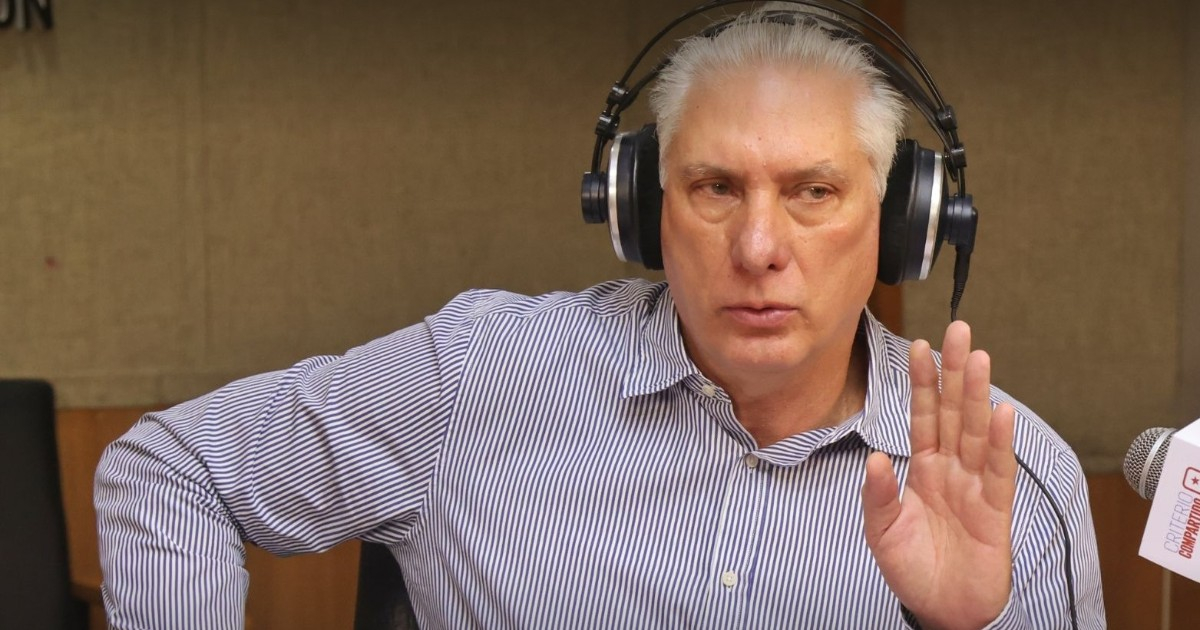
The post emerged just hours after the fifth installment of the radio program "Shared Criteria," aired at 7:15 am on Radio Rebelde, Cuba's official station. The show is co-hosted by Díaz-Canel and journalist Bárbara Betancourt.
This particular episode, titled "No Complaint Goes Unanswered," delved into the so-called "institutional ping-pong" – a term used by Díaz-Canel to describe the practice of deflecting citizen complaints from one agency to another without any entity taking responsibility or offering solutions.
Residing in La Lisa, Havana, González Aznar didn't merely criticize the program; she took aim at the very foundations of the political system. "For instance, if we, the majority of the people, wanted to remove you as president, could we? How? If we wanted to change the electoral law, could we?" she questioned, highlighting the lack of true popular power under the current regime.
She also questioned the logic behind trusting a government that answers to no checks and balances: "The results speak for themselves, and there are no positive outcomes for the people."
Additionally, she remarked, "Working hard does not equate to results if the work is done incorrectly. Results come from efficiency, which is closely linked to the capability of those doing the work."
"You decide everything," she charged. "You decide who has electricity 24/7 and who doesn't, and for those who don't, how many hours you get and when you're cut off, without any planning whatsoever."
González Aznar further criticized the government's handling of basic living conditions: "You force us to survive surrounded by garbage dumps and sewage like pigs, exposing us to illness with poor nutrition and no guaranteed medication."
"The worst part is that none of this is solved from a radio booth, yet you continue with this ineffective approach," she asserted.
During Wednesday's broadcast, the president urged Cubans not to take out their frustrations on one another amidst the ongoing water and electricity crises—a response that starkly contrasts with the severity of the issues raised. Out of the 46 cases discussed in the episode—41 complaints and five opinions—only 20 had been resolved, with 13 still pending due to lack of resources.
In a previous broadcast on November 4, Díaz-Canel admitted that only 39% of the complaints received had been resolved, a figure he himself deemed insufficient.
In 2026, González Aznar has been vocal with multiple open letters challenging Díaz-Canel and state institutions, from the food crisis to the silence of lawmakers amidst the national emergency. On November 10, she addressed the National Assembly, asking, "So what are you there for?" in response to the legislators' inaction during the crisis.
In her latest letter, González Aznar calls for a general public consultation and concludes with a resounding statement: "Let the people decide what we want for our lives, hold a general public consultation; we've given you 67 years to do something for this people, and nothing."
"Tell me one reason to believe you're not mistaken?" she challenged Díaz-Canel.
Key Questions about Political Change in Cuba
What is the main issue Elizabeth González Aznar raises with Díaz-Canel?
González Aznar questions when and how necessary changes will be made in Cuba, highlighting the frustration with the current political system.
What does González Aznar suggest regarding the Cuban presidency and electoral law?
She questions the possibility of the Cuban people being able to remove the president or change the electoral law, implying a lack of true democratic power under the current regime.
How does González Aznar view the government's accountability?
She criticizes the government for not being accountable to any opposing forces and for failing to deliver positive results for the Cuban people.