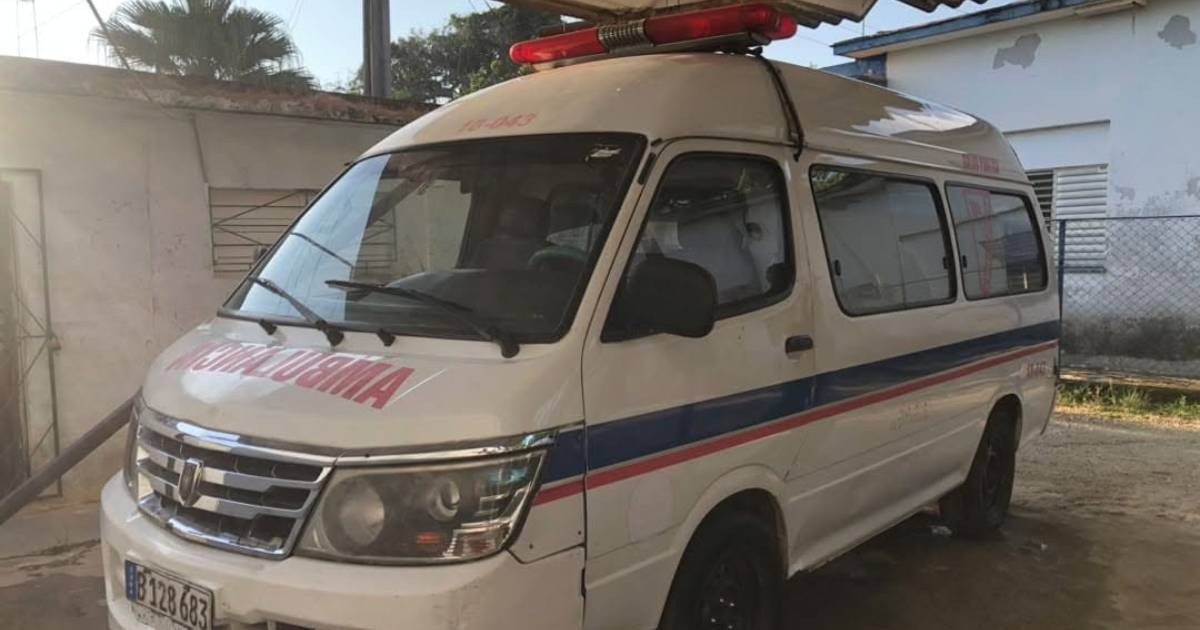
A tragic incident unfolded at the Camilo Torres polyclinic in Santiago de Cuba, where a 58-year-old man passed away after suffering a heart attack while waiting for an ambulance to take him to a hospital. According to a witness, the emergency vehicle took over an hour to arrive, despite numerous calls from the medical staff.
Mary Elena Hernández Rodríguez shared her distressing account on Facebook, explaining that she was at the clinic for bronchitis treatment when she witnessed the heart-wrenching event. Her post begins with the poignant words, "I went for bronchitis. I left with a broken soul."
Witness to a Tragedy
Hernández described waiting for her medical test results when a man experiencing a heart attack arrived at the emergency room. She saw two doctors rush to his aid, successfully reviving him after performing CPR.
Despite their efforts, the patient needed to be transferred to a hospital for further care. "I saw the doctor call repeatedly, three times, for an ambulance that never came," Hernández wrote. During the wait, she overheard the doctor mention the absence of a crucial resource that could have been vital for the man's survival, though she did not specify what it was.
Community Becomes Family
The tense atmosphere in the clinic's waiting area grew as the delay continued, with other patients anxiously observing the situation. "We who were there for our minor ailments stopped being patients. We became witnesses. We became family to this man we didn't know," she expressed.
Tragically, the man died before the ambulance arrived, with his wife and those present witnessing the heart-rending scene. "And then came the scream. That gut-wrenching scream of a wife who lost everything in an instant. I saw the doctor leave in tears. I saw her," Hernández recounted.
Questions and Accountability
Hernández estimated that the patient died 10 to 15 minutes before the ambulance's arrival, after a wait exceeding an hour. She noted that the deceased left behind a wife, who uses a wheelchair and has an amputated leg, and two young children, aged eight and six.
The witness particularly lamented the children's plight, who would return from school unaware of their father's death. She also commended the clinic staff for their valiant efforts to save the man despite the challenges they faced. "To the doctors and workers at PPU 'Camilo Torres': my recognition. My absolute respect," she stated.
Hernández questioned the delay and called for clarity regarding the circumstances of the man's death. "I don't accuse. I just ask. Who answers for that life? How is this recorded in a book of statistics? As a 'heart attack'?" she pondered.
She suggested that timely transportation might have saved the man's life, a possibility she raised based on her observations but not confirmed by medical evidence. Her intent was to ensure that the incident was not forgotten and that other families would not face similar situations.
"Let this be known. Let it not remain in the silence of a hallway," she urged, concluding her message with sorrow for the patient whose name she never learned and empathy for a family she had never met before that day.
Ongoing Crisis in Medical Transport
Unfortunately, similar reports appear frequently online. In April, a woman reported that her husband, Alexis Rosales Aldama, died after waiting over four hours for an ambulance at the Ambrosio Grillo Portuondo Hospital in Santiago de Cuba. The family had repeatedly asked for help, but the emergency vehicle never arrived in time.
In another case, relatives of a deceased patient in Santiago de Cuba complained about delays in hospital transport and care, as well as difficulties obtaining blood for surgery.
The Cuban authorities have acknowledged the issues with emergency transport. In 2023, the Ministry of Public Health admitted that the country only had 39.6% of the ambulances needed for medical emergencies, with officials noting wait times that can extend for hours.
Understanding the Ambulance Crisis in Cuba
What caused the man's death in Santiago de Cuba?
The man suffered a heart attack and died while waiting for an ambulance that took over an hour to arrive, despite repeated calls for urgent transport.
What are the challenges faced by the Cuban healthcare system regarding emergency transport?
Cuba's healthcare system faces significant challenges with emergency transport, as the country only has about 39.6% of the needed ambulances, leading to prolonged wait times for medical emergencies.
How did the witness describe the atmosphere at the clinic during the incident?
The witness described a tense and emotional atmosphere, with patients becoming witnesses and feeling a deep connection to the man and his family despite not knowing them.