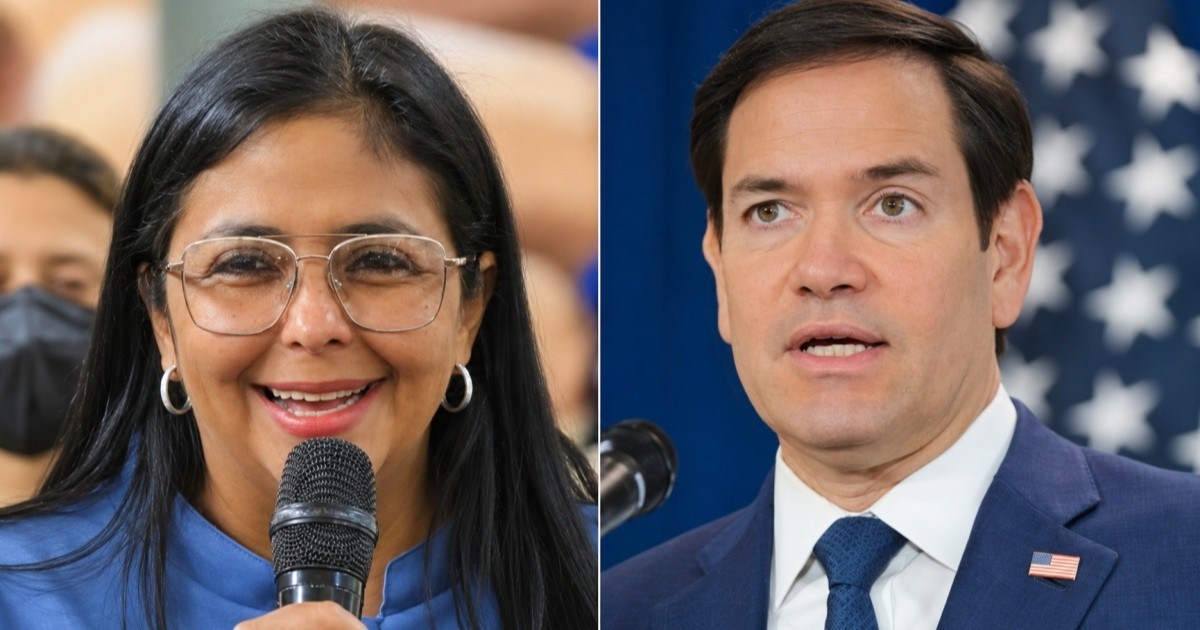
In an unusual move during an interview with The New Yorker, Delcy Rodríguez, the acting president of Venezuela, decided to turn her phone towards journalist Jon Lee Anderson, showing him her WhatsApp conversations with U.S. Secretary of State Marco Rubio.
Her intention was to underscore that their connection is purely formal, countering some media reports suggesting a more casual, friendly interaction.
This gesture was a direct response to a The New York Times article that depicted her exchanging gossip and photos with Rubio. Rolling her eyes at this portrayal, Rodríguez read out loud a greeting she had sent him: "Good afternoon, Secretary."
Emphasizing her point, she added, "I don't call him Marco or Marquito."
A "Formal and Respectful" Relationship
Rodríguez was unequivocal about the nature of their interaction: "I won't share our private conversations, but we maintain an official relationship. It's official. When discussions have arisen about specific work issues, they have been formal. And respectful, which is important, isn't it?"
The interview, titled Venezuela's Collaborator-in-Chief, took place at La Estancia, an estate owned by the Venezuelan state oil company, which Rodríguez uses as an alternative office in Caracas.
This meeting happened against a backdrop of significant political tension. Rodríguez assumed the role of acting president on January 5, 2026, just two days after U.S. special forces captured Nicolás Maduro and his wife Cilia Flores in a military operation.
The Shadow of "Viceroy" Rubio
Rubio's influence over the Venezuelan government extends well beyond WhatsApp messages. As reported by The New York Times, the Secretary of State oversees sanctions, determines which companies can operate in Venezuela, and manages Venezuelan export revenues through the U.S. Treasury under his own terms.
The same report disclosed that Rodríguez once submitted drafts of her social media posts for Rubio's approval before publishing them, a revelation that caused a stir in July.
Even Donald Trump has been candid about this relationship. Referring to Rodríguez, he stated, "She was very nice, but she really has no choice." During a speech in Las Vegas this summer, he boasted, "We're getting a lot of oil from Venezuela and getting along great with them... It's old-fashioned. To the victor belong the spoils, right?"
Drones, Political Prisoners, and Electoral Prospects
The interview with Anderson uncovered more about Rodríguez's initial days in power. She recounted that during her first cabinet meetings following Maduro's capture, around 300 drones hovered overhead and followed her movements.
Her government's initiatives include opening the oil industry to private companies, granting amnesty to nearly 200 political prisoners, and shutting down El Helicoide, a prison associated with Venezuelan intelligence services.
In September, Rodríguez met with Trump in New York, on the sidelines of the UN General Assembly, marking the first face-to-face meeting between a U.S. president and a Venezuelan leader in over 11 years.
"I Never Wanted to Run for Elections"
When discussing her political future, Rodríguez was both evasive and revealing. "I've never wanted to run in elections. It's not my thing," she said. When Anderson pointed out that she might now have to compete in a future election, she simply replied, "I don't know."
Critics haven't been silent. A former advisor to Hugo Chávez called her "the Pétain of Venezuela," drawing a parallel to the leader of the Vichy government's collaborationist regime during World War II.
A former high-ranking U.S. official offered a more nuanced perspective: "I think Delcy has had to betray Chavismo. The question is: does she want to hold onto power or become an agent of change?" According to The New York Times, the decision about when to call elections isn't in Rodríguez's hands, but Rubio's.
Understanding the Political Dynamics Between Venezuela and the U.S.
Who is Delcy Rodríguez?
Delcy Rodríguez is the acting president of Venezuela, who assumed office on January 5, 2026, following the capture of Nicolás Maduro by U.S. forces.
What is the nature of Delcy Rodríguez's relationship with Marco Rubio?
Delcy Rodríguez has described her relationship with Marco Rubio as strictly formal and professional, countering media reports suggesting a more casual connection.
What role does Marco Rubio play in Venezuelan politics?
Marco Rubio, as the U.S. Secretary of State, plays a significant role in overseeing sanctions, determining business operations in Venezuela, and managing export revenues.