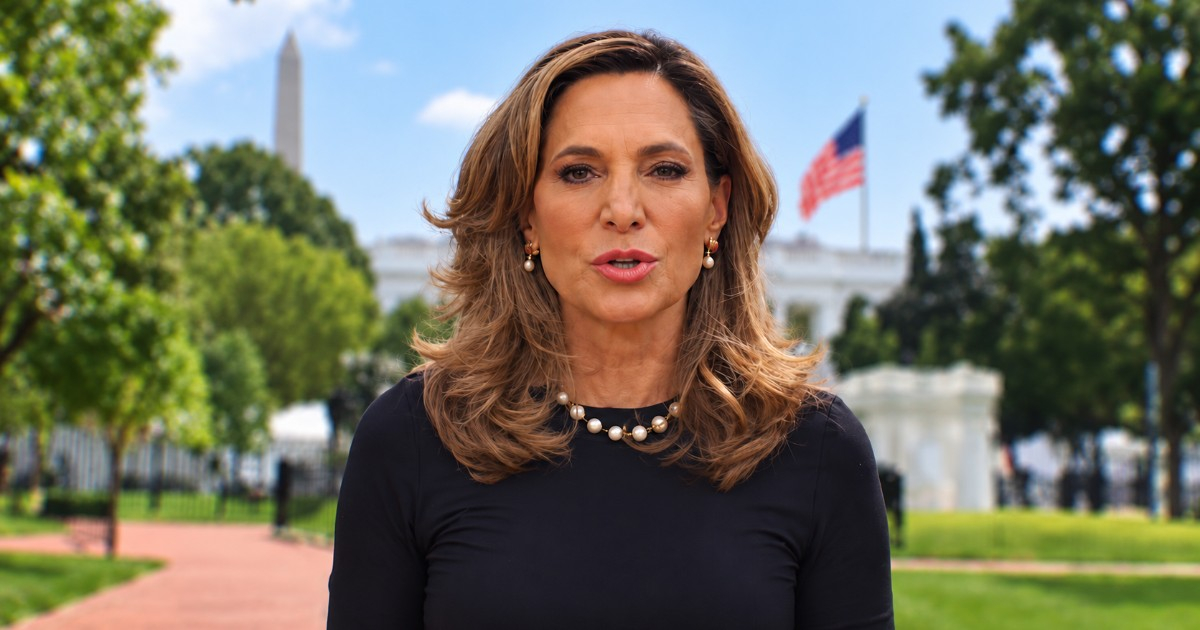
The Cuban-American congresswoman, María Elvira Salazar (R-FL-27), recently announced a significant boost in support for the DIGNITY Act (H.R. 4393), with the addition of 16 new co-sponsors, bringing the total backing in the U.S. House of Representatives to 56 legislators.
A notable addition to this growing list is Cuban-born Congressman Carlos Giménez (R-FL-28), who officially joined the initiative on November 9, as documented in the Congressional record. The other 15 new co-sponsors are Democrats, including representatives such as Steven Horsford, Angie Craig, Seth Moulton, Raja Krishnamoorthi, Sharice Davids, and Josh Gottheimer.
Progress and Bipartisan Support
This announcement marks another step forward for a proposal originally introduced by Salazar and Democrat Verónica Escobar in July 2025. The support for the bill has grown from 35 lawmakers in early 2026 to the current 56. Salazar emphasized the growing support in a statement, noting, "Sixteen more members of Congress are joining an initiative that has been building momentum throughout the year, both in the Capitol and across the nation. This demonstrates that Republicans and Democrats can still come together to address the U.S. immigration crisis."
Salazar advocates that her proposal seeks to balance immigration control with solutions for long-established immigrants in the country. "We are building a coalition around a simple principle: America can have law and order, economic prosperity, and human dignity. We don't have to choose," she stated.
Significance for Cuban Immigrants
The involvement of Carlos Giménez is particularly meaningful for Cuban immigrants seeking a resolution to their immigration status, especially those released by U.S. authorities with the I-220A form. Giménez, alongside Mario Díaz-Balart and Salazar, has been actively engaging with the federal administration to explore alternatives for this group, who face challenges in obtaining permanent residency under the Cuban Adjustment Act.
By supporting this proposal, Giménez reinforces the backing of Florida's Cuban-American Republican congressmen for an initiative that combines border security measures, immigration system reforms, and regularization mechanisms for certain immigrants.
Potential Changes for Immigrants Under the DIGNITY Act
The project proposes the creation of the Dignity Program, targeting specific undocumented immigrants who can prove continuous physical presence in the United States since December 31, 2020. Applicants would need to undergo biometric and background checks, meet established legal requirements, and make an initial payment of at least $1,000.
Participants in the seven-year program would receive a temporary suspension of deportation measures, along with authorization to work and travel under program conditions. They would also be required to regularly report their residence and personal status, fulfill tax and labor obligations, and make restitution payments totaling $7,000, with certain exceptions.
The bill also includes a 1% levy on employment income subject to this provision. Upon successful completion, beneficiaries could obtain a non-immigrant legal status called Dignity Status, valid for seven years with the possibility of renewal. This mechanism does not automatically grant permanent residency or U.S. citizenship.
Unlike the 2023 legislative proposal, the 2025 version does not include the former Redemption Program as a general pathway to residency. However, it does provide provisions that could facilitate status adjustment through other legal channels when the necessary requirements are met.
Special Provisions for Cubans with I-220A
One of the most critical provisions for Cubans appears in section 1503(e) of the bill. This section states that, for the purposes of the Cuban Adjustment Act, individuals released in the United States through an Order of Release on Recognizance issued by Immigration and Customs Enforcement (ICE) by January 31, 2023, would be considered as having received a parole.
This measure could open a pathway for certain Cubans with I-220A to apply for permanent residency under the Cuban Adjustment Act, provided they meet other required criteria. However, it would not automatically benefit all individuals with an I-220A; it would be necessary to verify the circumstances of their release, the issuing authority, and other remaining immigration requirements.
The significance of this proposal grew following a decision by the Eleventh Circuit Court of Appeals on November 17, which ruled that release under section 1226 of U.S. immigration law does not equate to the humanitarian parole needed to qualify for the Cuban Adjustment Act. This decision sets a binding precedent in Florida, Georgia, and Alabama on this legal issue.
If Congress were to approve the provision proposed by Salazar, it could alter the legal treatment of certain cases currently facing this barrier. Nevertheless, the initiative has yet to have legal effects.
More Political Support, Yet No Congressional Approval
According to Salazar's statement, the DIGNITY Act also enjoys support from over 100 national organizations linked to business, agricultural, industrial, religious, and immigration reform advocacy sectors. The initiative has also received formal backing from the bipartisan Problem Solvers Caucus, composed of lawmakers who promote agreements between Republicans and Democrats.
However, the project continues to face resistance from Republican sectors that view its regularization mechanisms as equivalent to amnesty. Congressman Brandon Gill described it as "massive amnesty," an interpretation rejected by Salazar, who insists that her proposal requires controls, legal compliance, and economic responsibilities from beneficiaries.
The DIGNITY Act has not yet been passed. Introduced on July 15, 2025, it was referred to seven House committees and has not yet completed the legislative process necessary to become law. The increase in co-sponsors does not imply its approval or guarantee a vote. To take effect, the initiative must gain the support of both chambers of Congress and receive presidential approval.
Understanding the Implications of the DIGNITY Act for Cuban Immigrants
What is the main goal of the DIGNITY Act?
The DIGNITY Act aims to address the U.S. immigration crisis by balancing immigration control with solutions for immigrants who have been long-established in the country.
How does the DIGNITY Act affect Cuban immigrants with I-220A?
The act includes a provision that may allow certain Cubans with I-220A to apply for permanent residency under the Cuban Adjustment Act, providing they meet specific criteria.
What are the requirements for participating in the Dignity Program?
Participants must undergo biometric and background checks, prove continuous presence in the U.S. since December 31, 2020, and pay an initial fee of at least $1,000, among other requirements.