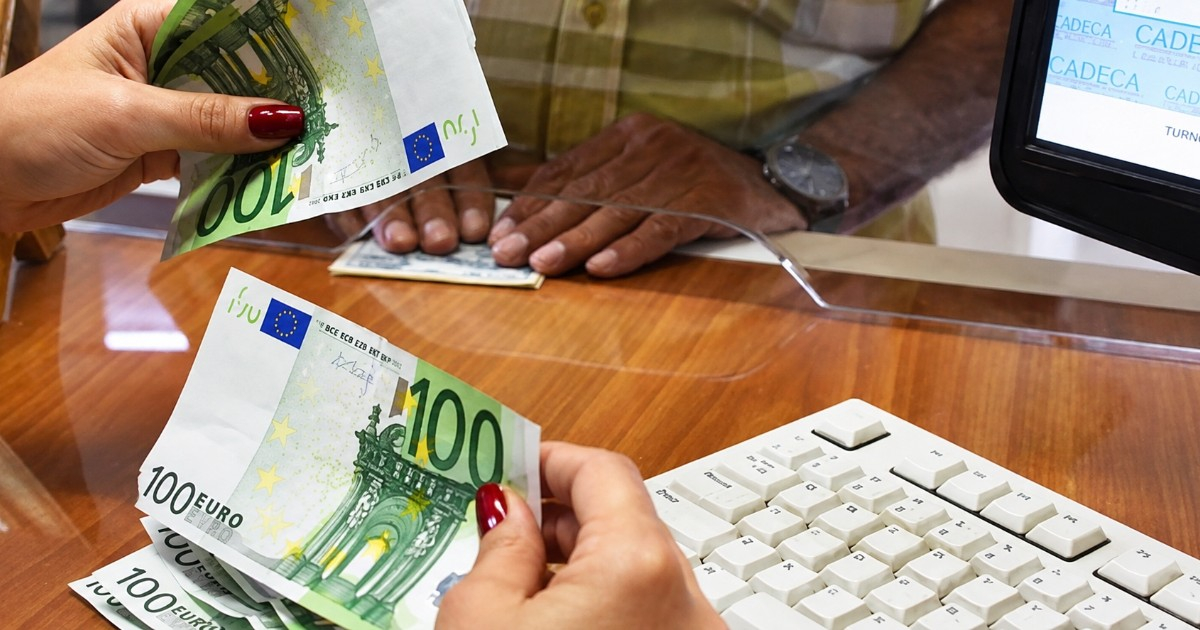
The currency exchange houses in Cuba, known as Casas de Cambio (Cadeca), have taken an unexpected turn in their exchange policy. They have started purchasing U.S. dollars at rates nearly on par with those of the informal market, diverging from the official rates set by the Banco Central de Cuba (BCC).
This move is particularly surprising given the government's long-standing criticism of mechanisms that determine currency values outside the state-run system.
Understanding the New Exchange Rates
Cuban economist Pavel Vidal Alejandro analyzed this development in a report released by elTOQUE, noting that Cadeca began implementing the new exchange system on November 10. By November 13, the entity was buying dollars at 911 Cuban pesos (CUP), compared to the BCC's rate of 825 CUP and the informal market's rate of 910 CUP as calculated by elTOQUE.
The discrepancy between Cadeca and the Banco Central was 86 pesos per dollar, equivalent to a 10.4% increase over the official reference. Meanwhile, Cadeca's purchase rate exceeded the informal rate by just one peso.
The Shift in Cadeca's Policy
Previously, Cadeca adhered to the system introduced on December 18, 2025, when the floating official rate of Segment III of the currency market was established. Both Cadeca and banks set their rates based on the Banco Central's published value, applying relatively small margins.
However, banks have not followed Cadeca's lead. According to Vidal, the Banco Popular de Ahorro (BPA) and the Banco de Crédito y Comercio (Bandec) maintain a 2% margin relative to the BCC's rate, while the Banco Metropolitano offers lower rates.
In contrast, the private exchange house ADT 64 in Santa Clara announced a purchase rate of 915 CUP and a selling rate of 925 CUP per dollar on November 13, further illustrating the potential for authorized operators to set rates closer to the informal market.
Challenges and Opportunities
The emergence of ADT 64 in September demonstrated that authorized operators could establish prices nearer to the informal market than to the official reference. This pilot project was initiated under Banco Central's authorization, though it initially faced questions regarding the actual availability of foreign currency for sale.
The divergence from official discourse is significant, as Cuban authorities and state media have long criticized elTOQUE's reference rate, accusing it of market distortions and supposed economic manipulation. In November 2025, the Banco Central argued that this rate could not be considered a valid reference due to its allegedly misleading signals about currency values.
For Vidal, Cadeca's new rates align with the notion that the informal market better reflects the true conditions of currency supply and demand in Cuba than administratively set prices. He noted that similar scenarios occurred in August 2022 and with the launch of Segment III in December 2025, where Cadeca's rates closely matched the informal value.
Despite this shift, there is still no official explanation regarding the criteria Cadeca will use to update its rates daily, leaving uncertainty about whether the state entity has formally adopted elTOQUE's methodology.
The Future of Cadeca in Cuba's Currency Market
The main question is not just how much Cadeca will pay per dollar, but whether it can supply enough foreign currency to meet the needs of the public and businesses. Vidal doubts Cadeca can outcompete the informal market on its own, as it would require unrestricted buying and selling operations, a challenge in a country where banks and state institutions struggle with foreign currency availability.
If Cadeca buys dollars but cannot sell them in sufficient quantities, those needing currency for imports, travel, or savings protection will continue turning to the informal market.
The economist also pointed out that business demand for foreign currency far exceeds the retail operations managed by Cadeca and private exchange house ADT 64. To capture a larger market share, banks would need to be incorporated, international payments facilitated, and customer trust restored.
Liquidity challenges, connectivity issues, restrictions on international transfers, and the banking system's credibility gap limit the financial institutions' ability to compete with private exchanges.
Historically, Cadeca succeeded in curbing the informal market in the 1990s, aided by fiscal measures, inflation control, and other economic reforms that have yet to be implemented with similar depth today. Additionally, Vidal warned that pressures on the Cuban peso could drive the dollar's exchange rate above 1,000 CUP.
As of Tuesday, November 17, the informal market recorded a reference rate of 925 CUP per dollar, compared to Segment III's official rate of 832 CUP.
Understanding Cadeca's New Currency Strategy
Why did Cadeca change its exchange rates?
Cadeca adjusted its rates to align more closely with those in the informal market, moving away from the Banco Central's official rates, possibly to better reflect real market conditions in Cuba.
What impact might Cadeca's new rates have on the informal market?
If Cadeca can supply enough foreign currency, it might compete with the informal market. However, given current conditions, the informal market is likely to remain dominant due to its flexibility and availability.
Will banks follow Cadeca's lead in changing exchange rates?
So far, banks have not mirrored Cadeca's changes. They continue to apply smaller margins relative to the official rates, indicating a cautious approach to currency exchange.