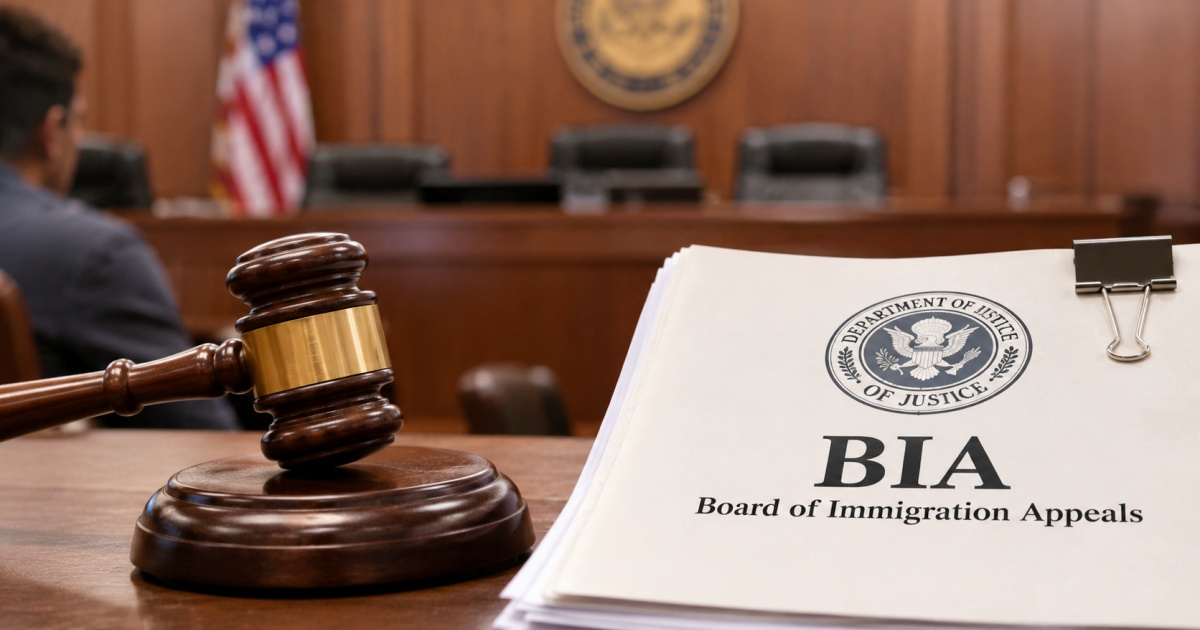
On November 17, the U.S. Department of Justice announced a final rule that reinstates certain limitations on immigration appeals, previously partially struck down by a federal court.
Set to take effect on December 17, 2026, this regulation will impact proceedings before the Board of Immigration Appeals (BIA).
The revision includes a significant change, reducing the time to file many appeals against immigration judge decisions from 30 days to just 10 days. Additionally, it introduces a streamlined system for handling appeals and demands more precise arguments from the outset.
Published in the Federal Register under the title Appellate Procedures for the Board of Immigration Appeals, this rule finalizes a provisional regulation initially proposed in February, with adjustments made following public feedback.
Judicial Setback and Subsequent Adjustments
The Department of Justice first introduced these changes on February 6, 2026, aiming to expedite the immigration appeals process and alleviate the backlog at the BIA.
However, a federal court in the District of Columbia partially invalidated the rule in the case of Amica Center for Immigrant Rights v. EOIR in March. The court’s decision impacted three core aspects: the shortened appeal period, restrictions on arguments not outlined in the initial notice, and the summary dismissal process.
The court's issue was with the administrative process used to implement these changes, particularly concerning public participation requirements. The content of the restrictions themselves was not deemed unlawful.
Following the reception of 1,615 public comments, the Department of Justice finalized the rule, asserting that the revised process addresses the administrative shortcomings highlighted in the earlier ruling.
Significant Changes in Appeal Deadlines
A notable amendment is the reduction of the standard time to appeal certain immigration judge decisions to the BIA from 30 days to just 10 calendar days. The timeline for appeals will adhere to the specific rules applicable to each decision, and appeals must be submitted in a timely manner to the appropriate authority.
Exceptions remain for certain asylum application decisions, which will retain a 30-day appeal window. However, this exception does not apply universally to all asylum denials. Some decisions based on specific ineligibility grounds may still be subject to the shortened timeframe.
Therefore, individuals receiving an adverse decision should verify the applicable timeline for their case before preparing their appeal.
Expedited BIA Decision-Making Process
The reform also establishes a summary dismissal procedure, enabling the BIA to resolve many appeals without issuing an extensive legal opinion. Generally, the Board must issue a summary dismissal order within 15 days of the appeal submission unless the appeal is selected for broader review.
This process requires a majority vote from permanent BIA members within the first 10 days to proceed. The Department of Justice clarifies that summary dismissal does not preclude file examination but allows confirmation of the judge's decision without exhaustive justification.
Another change involves the EOIR-26 form, used to initiate an appeal. Grounds for contestation must be identified at this initial stage, as omitted arguments may be considered waived during administrative review. If the appeal progresses and further written submissions are allowed, initially raised arguments can be elaborated on in greater detail.
Impact on Cuban Nationals Facing Immigration Proceedings
The reform could affect Cuban nationals involved in deportation proceedings, seeking migration protection, or facing other appealable decisions before the BIA.
While the regulation does not impose specific restrictions on Cubans or independently alter their immigration status, its impact will vary depending on the specific procedure and decision involved.
For individuals without legal representation, the 10-day timeframe could complicate the process of preparing an appeal, gathering necessary documents, and identifying potential judicial errors.
The limited timeframe also underscores the importance of accurately identifying appeal arguments on the initial form.
A BIA dismissal does not necessarily exhaust all legal options. Depending on the case, there may be opportunities to seek review by a federal appellate court or use other mechanisms provided under immigration law.
However, filing for judicial review does not automatically halt deportation. Where applicable, a stay of removal must be requested through the appropriate procedure.
Immigrants seeking assistance can refer to the EOIR's official list of free legal service providers.
The final rule is set to be enforced on December 17, 2026. The complete text, including exceptions and the Department of Justice's responses to public comments, is available in the United States Federal Register.
Understanding the Impact of New Immigration Appeal Rules
What changes are being made to the immigration appeal process?
The main changes include reducing the time to file appeals from 30 days to 10 days and implementing a faster process for resolving appeals, which requires more precise arguments from the beginning.
How might these changes affect Cuban nationals?
Cuban nationals facing deportation or other appealable decisions may find the shortened 10-day appeal period challenging, especially if they lack legal representation. The impact varies by individual case and procedure.
Are there exceptions to the 10-day appeal deadline?
Yes, some asylum application decisions will maintain a 30-day appeal period, though this exception does not apply to all asylum denials.