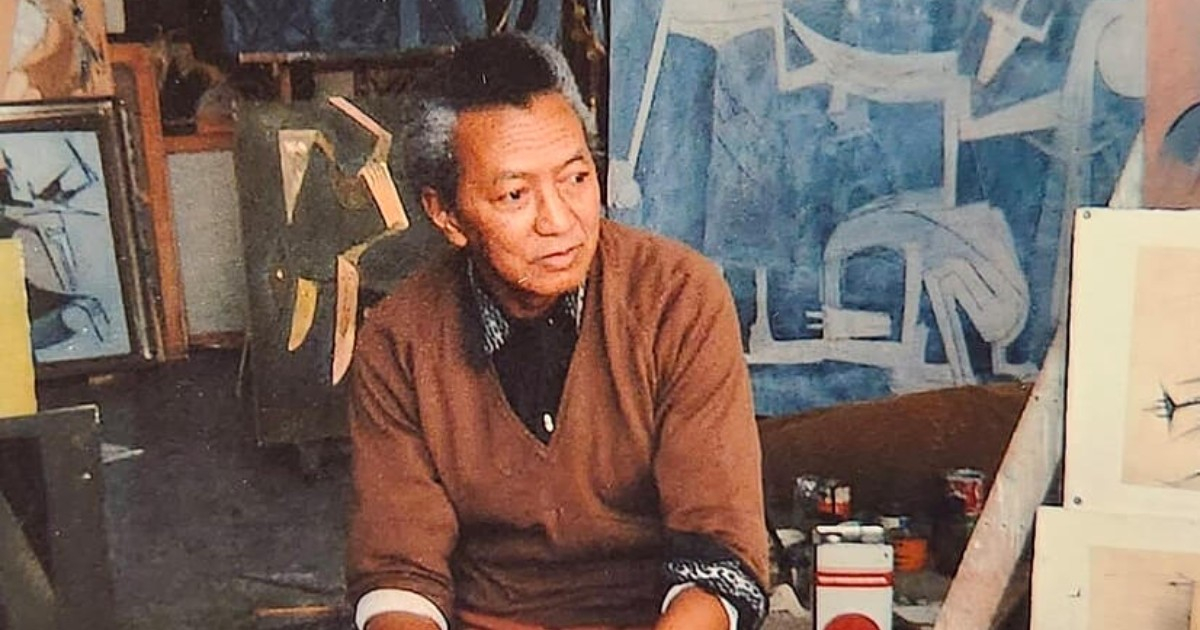
The oil painting Ogue Orisa (Eggue Orissa, l'herbe des dieux), crafted in 1943 by renowned Cuban artist Wifredo Lam, is set to be auctioned this Tuesday, November 17, at Christie's in New York. With estimates ranging between $10 and $15 million, this sale could potentially set a new world record for Lam's artwork.
Listed as lot 14A in the 20th Century Evening Sale, the auction will commence at 6:30 p.m. local time, according to Christie's official schedule.
Lam's current record is held by Omi Obini, another 1943 piece that fetched approximately $9.6 million, including commissions, during a Sotheby’s auction in June 2020. At the time, CiberCuba reported on this historic sale, which exceeded Lam's previous record.
If Ogue Orisa achieves its minimum estimate of $10 million, it will surpass that record. However, the figure announced by Christie's is a pre-sale estimate, and the final outcome will depend on the bids and applicable commissions.
The Artwork's Provenance and Exhibition History
The painting originates from the collection of Clarissa and Edgar Bronfman Jr., as documented by art historian Julia P. Herzberg in a study published by Arte al Día. It was also featured in a retrospective dedicated to Lam at the Museum of Modern Art (MoMA) in New York, held between November 2025 and April 2026.
Wifredo Lam's Artistic Legacy and Ogue Orisa's Significance
Born in Sagua la Grande, Cuba, in 1902, Wifredo Lam's career is closely associated with European cubism and surrealism, which he reinterpreted using symbols, hybrid figures, and elements from Afro-Cuban spiritual traditions.
His return to Cuba in 1941, after nearly two decades in Europe, marked a pivotal shift in his artistic style. Ogue Orisa is part of this period of intense artistic experimentation. Created in 1943, it coincides with his work on La jungla, completed between 1942 and 1943 and housed at MoMA. Both pieces reflect Lam's exploration of the connections between nature, spirituality, and Caribbean cultural identity.
The significance of this era was highlighted in the exhibition Wifredo Lam: When I Don't Sleep, I Dream, organized by MoMA. This exhibition showcased over 130 works, tracing six decades of the Cuban artist's creations.
Ogue Orisa's Journey in the International Market
The history of Ogue Orisa in the international art market dates back to at least 1979, when its image graced the cover of the catalog for the first Latin American art auction organized by Sotheby Parke Bernet in New York. This exposure helped to introduce Lam's work to new international collectors.
Nearly five decades later, the piece returns to the market in a session dedicated to major 20th-century art figures. Its inclusion alongside works by Pablo Picasso, Claude Monet, and Wassily Kandinsky once again places Lam's production in the highest echelons of artistic and commercial valuation.
Frequently Asked Questions About Wifredo Lam and Ogue Orisa
What is the significance of Wifredo Lam's painting Ogue Orisa?
Ogue Orisa is a significant work from Wifredo Lam's period of intense artistic experimentation, reflecting his exploration of the connections between nature, spirituality, and Caribbean cultural identity.
Where has Ogue Orisa been exhibited?
Ogue Orisa was part of a retrospective at the Museum of Modern Art (MoMA) in New York and has been featured in significant international art auctions and exhibitions.
How could the auction of Ogue Orisa impact Wifredo Lam's legacy?
If Ogue Orisa sets a new auction record, it would further cement Wifredo Lam's status as a pivotal figure in 20th-century art, highlighting the global appreciation and valuation of his work.