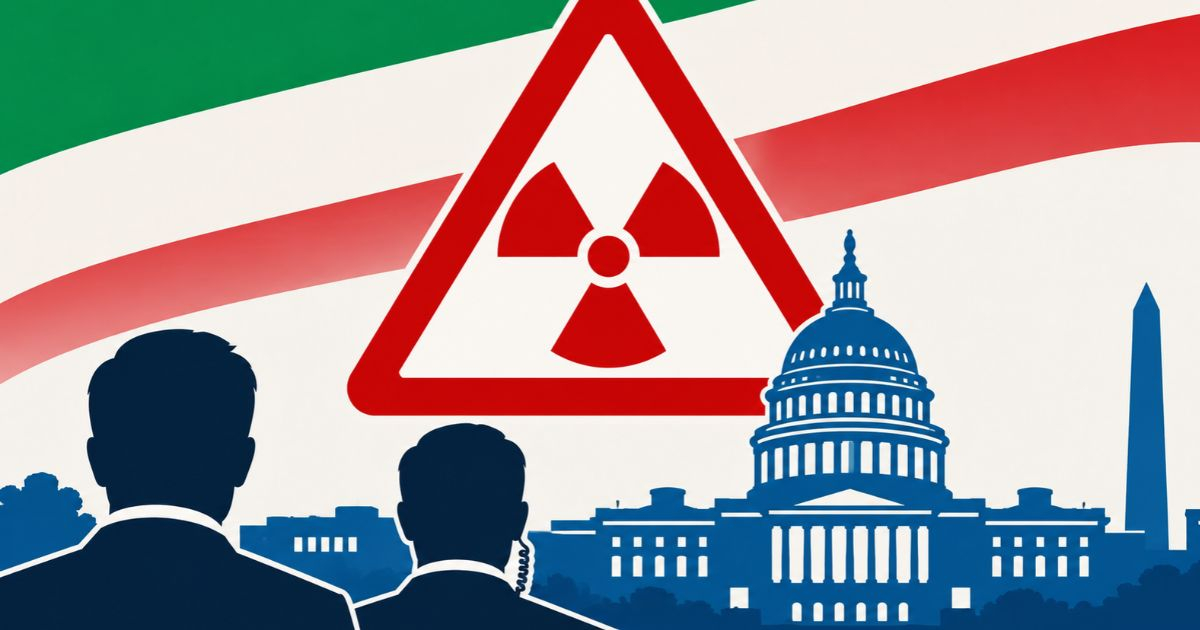
In a report released Monday by CNN, U.S. intelligence agencies have reportedly gathered information suggesting that Iran is plotting to target senior officials of former President Donald Trump's administration. The potential attack could involve either a radioactive bomb or a chemical weapon in Washington, D.C.
According to seven U.S. officials cited in the investigation, there is an ongoing debate among authorities about Iran's capability and intentions to carry out such a high-profile attack.
The officials described the preparations more as a strategy to keep various attack options available rather than an indication of an imminent operation.
However, two officials revealed that intelligence has identified specific targets and locations, prompting U.S. authorities to ramp up security measures and develop contingency plans.
The White House, through spokesperson Lauren Bis, responded by stating that the government is "monitoring all potential threats, but no credible threats against U.S. territory exist at this time."
This information surfaces amid continued U.S. military actions against Iran and an economic blockade imposed by the Trump administration, which senior officials assert has severely impacted Iran.
As reported by CNN, U.S. officials interpret this intelligence as a potential indication that Tehran might be considering extending the conflict to U.S. soil.
One major concern involves the possible use of a "dirty bomb," a device that combines conventional explosives with radioactive materials to disperse them over a targeted area.
Unlike a nuclear bomb, a dirty bomb does not result in a nuclear explosion. Its danger lies in the conventional detonation and possible radioactive contamination, which could cause health issues and require area evacuations.
Experts consulted by CNN noted that while constructing such a device isn't necessarily more difficult than building a conventional bomb, acquiring radioactive materials presents a significant challenge.
An official privy to the intelligence mentioned that the U.S. has intercepted Iranian communications claiming that explosive materials are already hidden within the United States.
Nevertheless, there is disagreement among authorities about the reliability of these claims, and no confirmation has been made public regarding the presence of such materials on U.S. soil.
The intelligence also indicates that Iran might not need to deploy new operatives to the U.S. to perform such an attack, as they might utilize individuals already residing in the country.
In the past week, U.S. officials convened several meetings to assess potential threats and devise response strategies.
CNN reported that the warnings from Iran were linked to the Secret Service's decision to temporarily relocate Treasury Secretary Scott Bessent to a residence within a military installation.
The revelations come on the heels of other reports suggesting Iranian plans to target Trump and his administration members using explosive-laden drones.
In response, Homeland Security Secretary Markwayne Mullin acknowledged receiving frequent intelligence on threats from Iran, although he did not publicly confirm any specific plan.
CNN's investigation highlights that threats attributed to Iran against U.S. officials are not unprecedented.
In recent years, authorities have probed alleged plots to assassinate current and former government officials, including a purported 2024 assassination attempt against Trump.
Meanwhile, Iran's mission to the United Nations has denied accusations about potential chemical weapon use.
"Iran considers the use of chemical weapons under any circumstance to be entirely illegitimate and categorically rejects and refutes the false and fabricated allegations circulated in this regard," an Iranian representative stated.
The Iranian mission did not specifically address the allegations regarding plans to use a dirty bomb in Washington.
U.S. intelligence is also scrutinizing reports suggesting Iran might deploy chemical weapons against U.S. troops stationed in the Middle East, according to two officials speaking to CNN.
Such warnings have led to additional precautions to ensure U.S. diplomatic and intelligence personnel in the region are equipped and trained to handle a potential chemical attack.
According to CNN, U.S. authorities believe Iran is aware of the repercussions of using radioactive or chemical weapons against U.S. targets.
Nonetheless, one official warned that Iranian leaders might find such risks acceptable if they perceive their government's survival is at stake.
The Department of Defense deferred CNN's inquiries to the Office of the Director of National Intelligence, which declined to comment on the obtained information.
The escalating concern over potential attacks coincides with stalled negotiations aimed at resolving the standoff between Washington and Tehran.
Secretary of State Marco Rubio recently criticized Iran's proposal to end the conflict as unacceptable, as disputes persist over the U.S. blockade, Iran's nuclear program, and the reopening of the Strait of Hormuz.
Trump had suggested last week that the conflict might soon end, but diplomatic efforts have yet to yield an agreement to halt hostilities.
Key Questions on Iran's Alleged Attack Plans
What kind of attack is Iran allegedly planning?
Iran is allegedly planning to target senior Trump administration officials with either a radioactive bomb or a chemical weapon in Washington, D.C.
How has the U.S. government responded to these threats?
The U.S. government has increased security measures and developed contingency plans. However, they have stated that no credible threats against U.S. territory exist at this time.
What are the potential consequences of using a dirty bomb?
A dirty bomb can cause radioactive contamination, leading to health issues and the need to evacuate and restrict access to affected areas.
Have similar threats from Iran been made in the past?
Yes, threats attributed to Iran against U.S. officials have been investigated in recent years, including plots to assassinate government figures.