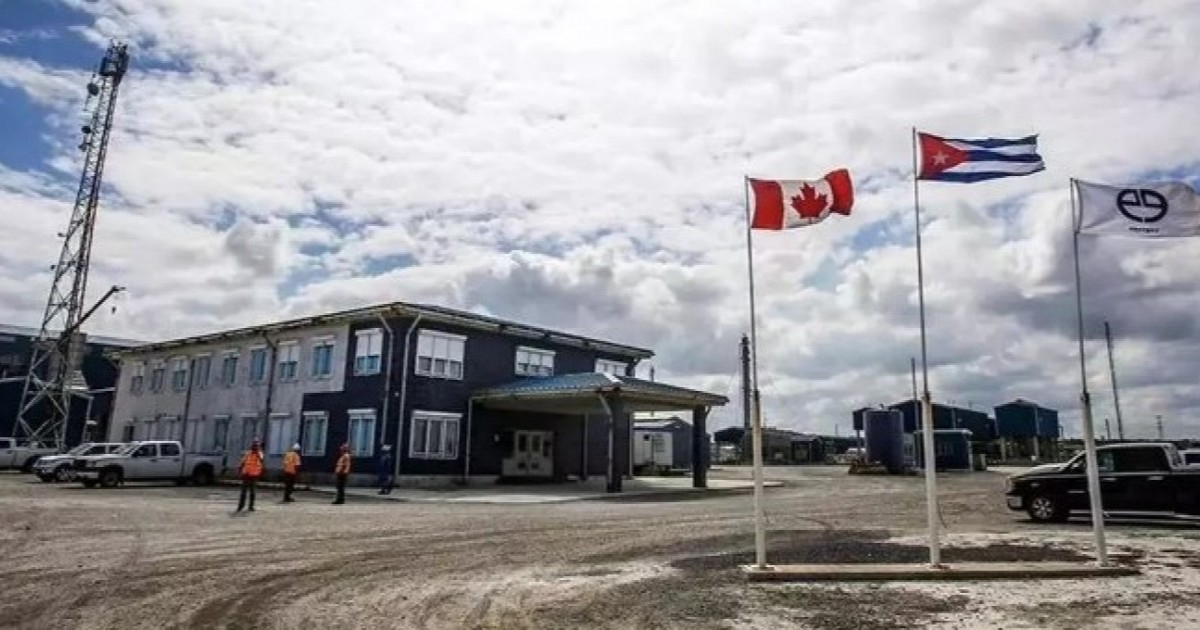
Sherritt International, the principal Western investor in Cuba, announced significant financial setbacks in its third-quarter 2026 report, revealing a net adjusted loss of 55 million Canadian dollars. Operations for nickel and cobalt production in Moa have been at a standstill since late June.
The crisis originated on May 7 when the Trump administration's sanctions, stemming from Executive Order 14404, directly impacted Moa Nickel S.A., a 50-50 joint venture between Sherritt and Cuba's state-owned General Nickel Company. The company ceased its direct involvement in all Cuban operations on that day. Without fuel and essential supplies, mining and processing activities in Moa came to a complete halt by the end of June, leading to the depletion of mixed sulfide stocks at the Fort Saskatchewan refinery in Alberta on June 22.
This led to a dramatic decline: nickel and cobalt production fell to zero tons for the quarter, a stark contrast to the 2,426 tons of nickel and 228 tons of cobalt produced during the same period the previous year. Mixed sulfides plummeted to just 73 tons, a 98% drop compared to 3,720 tons in 2025.
Sherritt's total net loss from continuing operations reached 79.3 million Canadian dollars, quadrupling the loss from the same quarter last year. Combined revenues were halved, dropping to 54.1 million.
Energas and Electrical Challenges
The Energas power subsidiary, in which Sherritt owns a third alongside Unión Eléctrica and CUPET, continued operations using domestically sourced natural gas. However, its power generation fell by 30%, from 243 GWh to 169 GWh for the quarter. The company cites Energas' increased role in "frequency control" to support Cuba's National Electric System, which is on the verge of collapse. With an installed capacity of 506 MW, roughly 10% of the nation's electrical capacity, this 30% decrease exacerbates the power outages that plagued the island, with a forecasted deficit of 1,730 MW on Monday.
Financial Strain and Strategic Moves
Adding to the operational crisis is a dire financial situation. On October 30, Sherritt missed an 11.5 million Canadian dollar interest payment on its senior secured notes, resulting in a technical default. The company's credit line shows a 37.8 million deficit, with no capacity for further withdrawals. Furthermore, 123.5 million Canadian dollars are trapped in Cuba—120 million held by Energas—since the currency mechanism tied to Moa operations was severed in April.
In an emergency response, approximately 280 employees—47% of its Canadian workforce—are on temporary layoff for about 90 days starting Monday, including 134 unionized workers from Fort Saskatchewan.
To resume Moa's operations, Sherritt secured an initial license from OFAC in October, permitting fuel shipments to the mines, but an additional emergency license is necessary. The company warns that "there is no guarantee that OFAC will issue any of the additional licenses requested." Negotiations are underway with Gillon Capital, a Texas firm linked to Ray Washburne, who led OPIC during Trump's first term, as it seeks to acquire 55% of Sherritt's shares. A competing consortium led by Glencore is also vying for company control.
Moreover, a legal paradox exists: to send fuel to Moa, Sherritt had to reach an agreement with Moa Bay Mining Co., which holds an 88.35 million dollar certified claim for mining properties confiscated by Fidel Castro's regime in 1960. In exchange for not filing lawsuits under Title III of the Helms-Burton Act, the company allows fuel shipments in return for "consent fees."
"The third quarter reflected the full impact of the disruption to our mining and refining operations," acknowledged Sherritt's interim President and CEO, Peter Hancock, while presenting the results. "We have taken difficult but necessary measures, including temporary layoffs, to preserve liquidity as we seek the required regulatory approvals and financing for the restart."
Understanding Sherritt's Operational Crisis
What led to Sherritt's operational halt in Cuba?
Sherritt's operations in Cuba halted due to the Trump administration's sanctions, derived from Executive Order 14404, which impacted Moa Nickel S.A., leading to a suspension of operations without fuel and supplies.
How did the halt in operations affect Sherritt's financial performance?
The halt resulted in a net adjusted loss of 55 million Canadian dollars for the third quarter and a dramatic decline in nickel and cobalt production, with revenues dropping to half compared to the previous year.
What steps is Sherritt taking to address the financial and operational challenges?
Sherritt secured an initial OFAC license to send fuel to Moa and is negotiating further licenses. They have also implemented temporary layoffs and are seeking new financing and regulatory approvals.