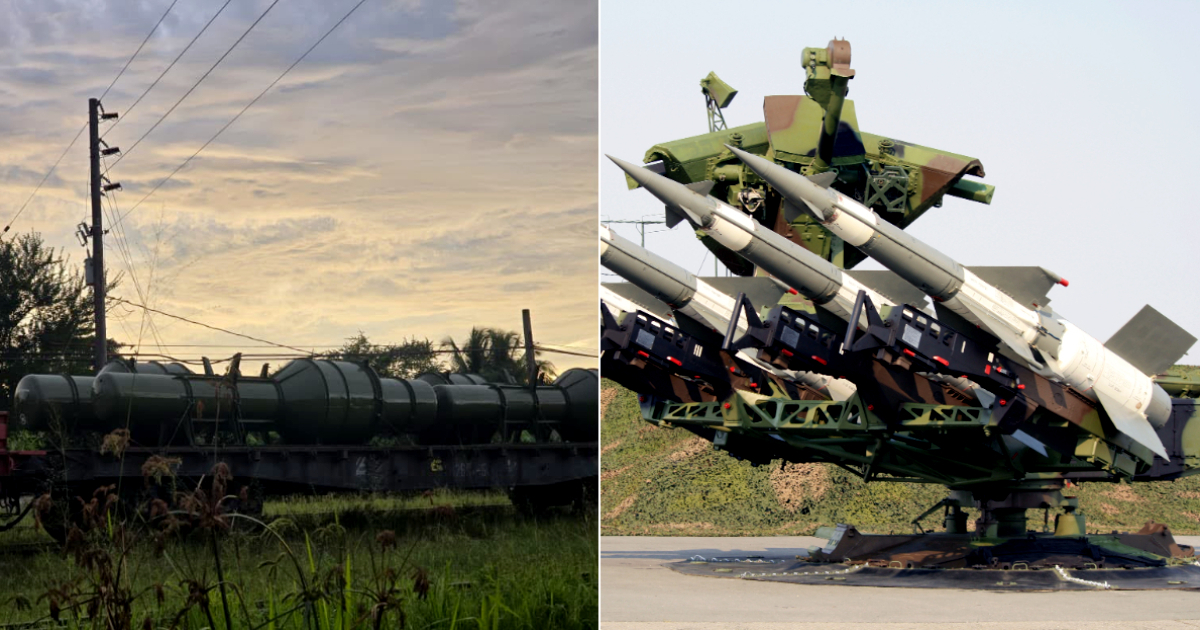
A concerned individual has brought to light the transportation of missiles from the Soviet-era S-125 Pechora anti-aircraft system from Holguín, as reported by journalist Mario J. Pentón. This took place on November 12, just a week after the Moncada 2026 Strategic Exercise, during Cuba's most severe energy crisis in decades.
Pentón shared on his X account that the missiles were seen being loaded at the cargo center next to the Héroes del 26 de Julio plant in Holguín. "They left Holguín on November 12, loaded at the cargo and discharge center near the Héroes del 26 de Julio plant. What they are transporting are S-125 anti-aircraft system missiles, known as Pechora," the source recounted.
This military activity starkly contrasts with the fuel crisis affecting the Cuban population. In May 2026, Energy and Mines Minister Vicente de la O Levy acknowledged that Cuba had no reserves of diesel or fuel oil to support its electrical grid.
Following Venezuela's cessation of oil shipments in November 2025 and Mexico's near-total reduction of supplies in January 2026, the island has been left without imported oil for around four months. This shortage has led to seven total collapses of the National Electric System in 18 months, causing blackouts lasting over 24 hours and impacting more than 60% of the territory.
Pentón sharply criticized the inconsistency: "There's never fuel for the people's needs, but there's always plenty for transporting weapons. Yet another demonstration of the regime's true priorities: military toys over the most urgent needs of the population."
The missile transport coincided with a visit by U.S. Southern Command Chief General Francis L. Donovan, who oversaw live-fire Marine exercises at the Guantánamo Naval Base, involving over 140 personnel in the Southern Guard Joint Task Force.
Prior to this, between November 4 and 6, the regime conducted the Moncada 2026 Strategic Exercise, the largest military maneuver of the year, under the slogan "The War of All the People: Guarantee of Victory." Holguín was a major site, featuring specific anti-aircraft defense exercises involving aircraft detection and system relocation to firing positions.
The S-125 Pechora is Cuba's primary anti-aircraft defense asset, a Soviet-designed system over 60 years old. In May 2025, Cuba announced a partial upgrade to the Pechora-2BM standard with the Belarusian state company ALEVKURP under a military agreement with Minsk signed in January 2024. The upgraded version boasts a claimed range of up to 30 km.
Despite this partial modernization, analysts highlight the significant disparity between this aging arsenal and the military strength of the United States. Cubans quickly pointed this out: reactions to the Moncada Exercise on social media were mostly dismissive and mocking.
"The war isn't for all the people. The war is yours," a user replied to Miguel Díaz-Canel on November 7, capturing the frustration of a citizenry enduring years of blackouts, food shortages, and lack of medicine while the regime mobilizes troops and weapon systems with resources denied to basic needs.
Key Questions About Cuba's Missile Transport and Fuel Crisis
What missiles were transported in Cuba?
Missiles from the Soviet-designed S-125 Pechora anti-aircraft system were transported from Holguín.
Why is the transportation of missiles controversial?
The transportation of missiles is controversial because it occurs during a severe fuel crisis, highlighting the regime's prioritization of military assets over the basic needs of the population.
What is the current state of Cuba's fuel reserves?
Cuba reportedly has no reserves of diesel or fuel oil, contributing to frequent blackouts and a failing electric system.
How has the public reacted to Cuba's military exercises?
Public reaction has been largely negative, with many Cubans expressing frustration and mocking the exercises on social media.