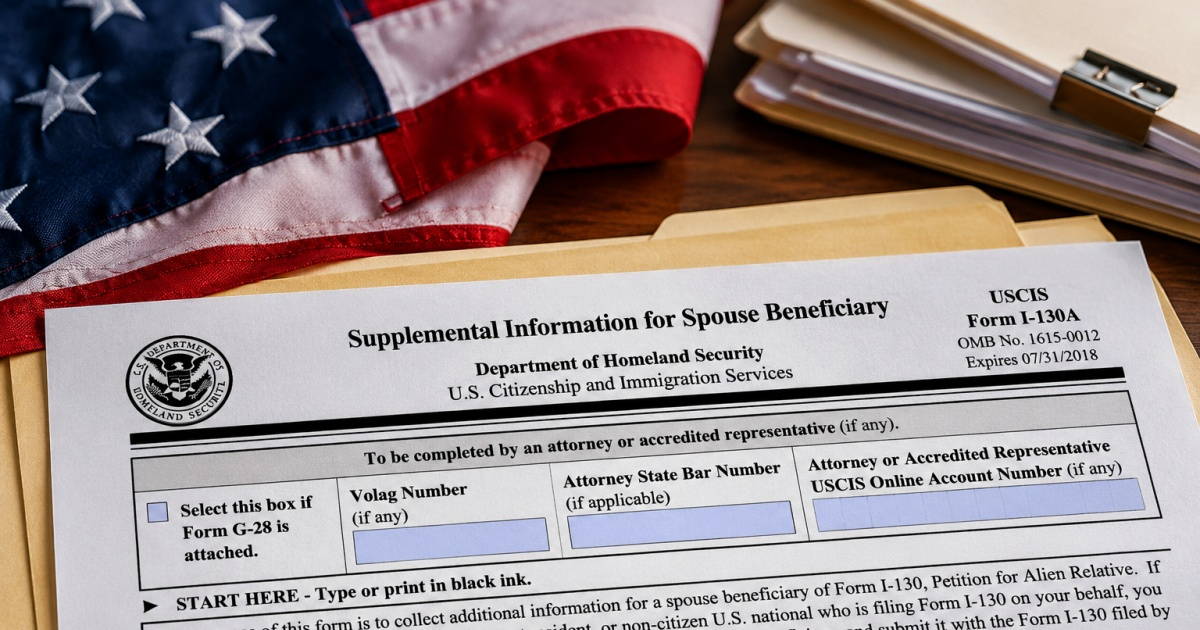
If you're an American citizen or a permanent resident and you're considering bringing a family member from Cuba to the United States, you might be wondering whether it's worthwhile to submit a family petition now, given the current visa restrictions for Cuban immigrants.
The short answer is that while the I-130 form can still be filed, many visa applications are currently hindered by immigration restrictions.
For those in family preference categories, submitting the petition promptly is crucial, as it establishes the priority date, which determines their position on the waiting list.
On the other hand, immediate relatives of American citizens are not subject to annual visa quotas. While they can also file the I-130, they do not gain the advantage of securing a place on a visa availability waiting list.
It's important to understand this distinction to avoid unrealistic expectations. Approval of a family petition does not guarantee that the beneficiary will receive a visa or be able to travel to the United States soon.
Understanding the Dual Process: USCIS Approval and State Department Issuance
The family petition process involves two primary stages, managed by different agencies:
The USCIS Petition: The American citizen or resident files the I-130 form (Petition for Alien Relative) to establish family ties. As per federal regulations (8 CFR 204.1), this is the appropriate form for citizens or permanent residents to request a family member.
The State Department Visa: Once USCIS approves the petition, the case might be transferred to the National Visa Center (NVC), responsible for preparing the consular processing when applicable. Travel restrictions primarily impact visa issuance and entry to the United States but do not prevent the filing of the I-130 or the approval of petitions that meet legal requirements.
Who Can Petition Whom?
The law categorizes family members into two main groups, significantly affecting wait times.
Immediate Relatives of U.S. Citizens: According to the Immigration Law (8 U.S.C. 1151), this category includes spouses, unmarried children under 21, and parents of U.S. citizens. Citizens must be at least 21 to petition for parents. The Child Status Protection Act (CSPA) may protect the immigration age of children in certain cases. These relatives are not bound by annual immigrant visa limits but must meet other requirements and may face entry or issuance restrictions.
Family Preference Categories: Other eligible relations fall under annual visa limits, as defined by section 1153 of the law:
- F1: Unmarried sons and daughters, 21 years or older, of U.S. citizens.
- F2A: Spouses and unmarried children under 21 of permanent residents.
- F2B: Unmarried sons and daughters, 21 years or older, of permanent residents.
- F3: Married sons and daughters of U.S. citizens.
- F4: Brothers and sisters of U.S. citizens, provided the petitioner is at least 21.
Permanent residents can only petition for their spouses and unmarried children. To file petitions for parents, siblings, or married children, they must first attain U.S. citizenship.
The Importance of Securing a Priority Date
In family preference categories, visas are subject to annual quotas and allocated based on priority dates and availability rules. Federal regulations generally state that the date USCIS properly receives the I-130 petition determines the priority date, which represents the beneficiary's place on the waiting list. Each month, the Department of State releases the Visa Bulletin, outlining which dates can progress in each category.
Delaying a preference category petition until restrictions are lifted could result in losing valuable waiting time. Recently, the Visa Bulletin advanced several family categories by a year.
Immediate relatives of U.S. citizens have a different scenario. Since they don't rely on annual quotas, their main reason for filing early might be to expedite processing rather than securing a spot in a visa queue.
Moreover, under certain circumstances, a petition can switch categories while retaining its priority date. The regulations (8 CFR 204.2) allow for various conversions:
- If a permanent resident who filed for their spouse becomes a citizen, the beneficiary typically moves to the immediate relative category.
- For children, the category depends on their immigration age and applicable rules.
- If a permanent resident's single adult child with an F2B petition gains citizenship, they generally shift to F1 without losing the priority date, though they may choose to remain in F2B.
- If a U.S. citizen's unmarried child marries, they may transition to F3, provided the petition requirements are still met.
Reaching 21 doesn't necessarily mean losing minor status. The CSPA can protect the beneficiary's immigration age based on category, relevant dates, and case circumstances. Therefore, before assuming a petition should convert to another category, it's wise to check if legal age protection exists.
Current Restrictions Impacting Cubans
Presidential Proclamation 10998, signed on December 16, 2025, and effective January 1, 2026, places Cuba among countries with partial entry and visa issuance restrictions. This measure affects all immigrant visa categories for Cuban nationals under the proclamation, along with certain non-immigrant visas.
Immediate relative immigrant visas for U.S. citizens, such as IR-1/CR-1, IR-2/CR-2, and IR-5, no longer have a general automatic exception. The proclamation includes several provisions:
- Does not revoke valid visas issued before its enactment.
- Excludes U.S. legal permanent residents.
- Provides exceptions for dual nationals applying or traveling with a valid passport from a non-suspended country, as applicable.
- Allows specific individual exceptions for national interest and other expressly provided categories.
- Applies to people outside the U.S. when effective and without a valid visa at that time.
A second suspension affecting 75 countries, including Cuba, was lifted. From January 21, 2026, the Department of State paused immigrant visa issuance for nationals of these countries due to public charge assessments.
However, on August 28, the Department of State confirmed that this pause ended on August 21, 2026, in compliance with a court order. Lifting this measure did not remove the independent restrictions of Proclamation 10998. Therefore, Cuban nationals under this proclamation still face hurdles in obtaining immigrant visas, even if their family petitions are approved.
The U.S. Embassy in Havana notes that it processes immigrant visa categories but warns that individuals subject to the proclamation can apply and attend interviews without assurance of visa issuance or entry to the U.S.
Steps to Avoid Losing Your Petition
Filing the I-130 can be advantageous, but keeping the case active during the wait is essential. Here are some main risks:
- Not Responding to the NVC: The Department of State warns that failing to initiate the visa process when required can have consequences. By law, the record can be canceled if the beneficiary doesn't apply for the visa within a year of the availability notification. Recovery mechanisms exist if the delay was due to circumstances beyond the applicant's control. Keeping contact information updated and responding to official communications is crucial.
- Death of the Petitioner: Regulations (8 CFR 205.1) provide for automatic revocation of approved petitions if the petitioner dies, though exceptions and protection mechanisms exist, including the possibility of humanitarian reinstatement in eligible cases.
- Divorce: Legal termination of marriage can invalidate a petition filed by a spouse.
- Marriage of a Permanent Resident's Child: If the beneficiary marries while the petitioner remains a permanent resident, they lose eligibility in F2A or F2B categories. If the petitioner has become a U.S. citizen, a conversion to F3 may be appropriate.
Next Steps: What Should You Do Now?
Identify Your Family Member's Category: Determine whether you are a citizen or permanent resident and whether your relative falls into an immediate or preference category. If you are a resident and can naturalize, consider how it would affect your relatives' classification.
Gather Proof of Relationship: Prepare birth, marriage certificates, and other required documents. CiberCuba's I-130 form guide offers information on the process.
Consider Timing for Filing the Petition: In family preference categories, filing early can establish the priority date sooner. For immediate relatives, submitting the petition might expedite processing, though it doesn't eliminate visa restrictions. Consider costs, requirements, and specific circumstances of the case.
Preserve Documents and Respond to the NVC: Keep the USCIS receipt, update your contact details, and adhere to official communications within applicable deadlines.
Check for Exceptions: If your relative holds another nationality, such as Spanish, investigate if they qualify for the dual nationality exception using a valid passport from a non-suspended country.
Be Wary of Promises to Bypass Restrictions for Money: Consult official sources and stay updated on active processes at the U.S. Embassy in Havana.
Legal Notice: This article provides general information and does not constitute legal advice. U.S. immigration laws and policies may change. For specific cases, consult a licensed immigration attorney or a Department of Justice-accredited representative.
Key Considerations for Petitioning Family from Cuba
Can I still file an I-130 for a family member in Cuba?
Yes, you can file an I-130 for a family member in Cuba, even though visa issuance might be restricted currently.
What is the importance of the priority date in family petitions?
The priority date determines a beneficiary's place in the waiting list for immigrant visas, crucial for family preference categories due to annual visa limits.
How does Presidential Proclamation 10998 affect Cuban immigrants?
The proclamation imposes partial entry and visa issuance restrictions on Cuban nationals, affecting all immigrant visa categories, despite petition approvals.
What are the risks of not maintaining an active petition?
Risks include automatic revocation if the petitioner dies, invalidation if the beneficiary marries (in certain categories), and cancellation for non-response to official communications.