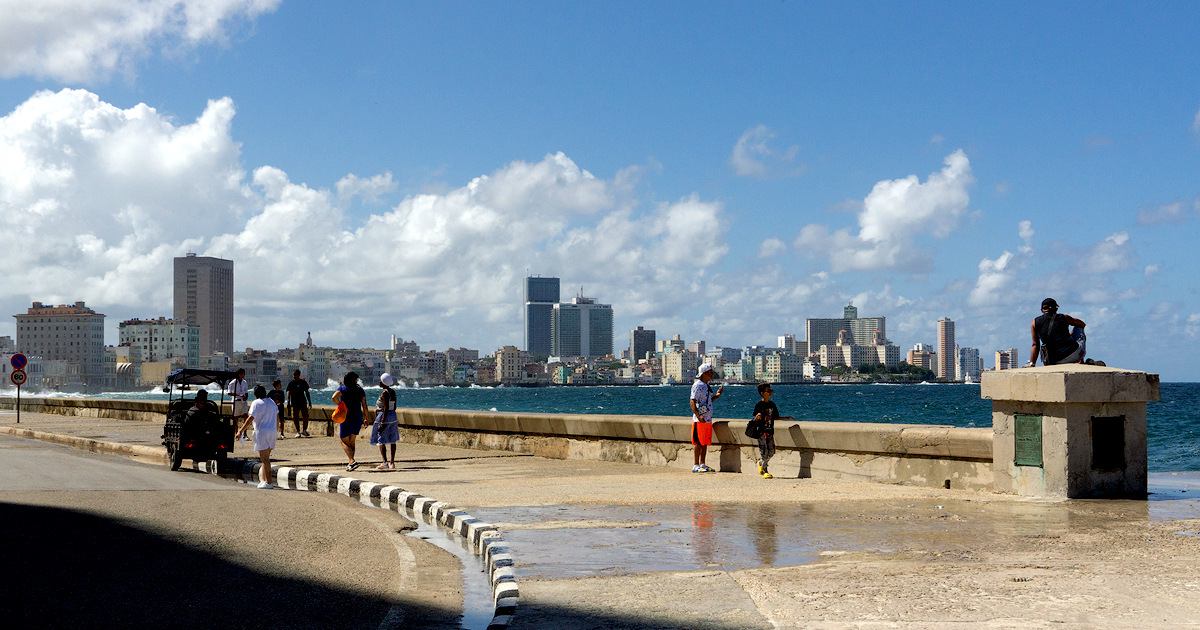
On Monday, November 16, Havana commemorates its 507th anniversary since establishing its permanent settlement in 1519. Yet, the city is now a shadow of its former self, where crumbling buildings, trash-strewn streets, frequent power outages, and widespread shortages of water, food, and medicine plague the daily lives of its residents.
Once a prominent cultural and urban hub in the Caribbean, Cuba's capital now finds much of its architectural heritage in disrepair. Many structures are either dilapidated or at risk due to neglect, with a housing stock that has suffered from decades of insufficient maintenance.
However, Havana's crisis extends beyond its physical structures. The poverty of its people, ongoing emigration, deteriorating public services, protests, and the gradual erosion of hopes for economic recovery—promised by the government for years—underscore a broader social malaise.
While tourists can still visit restored monuments, plazas, and buildings, they often overlook the neighborhoods where propped-up facades, debris, stench, leaks, and uninhabitable dwellings are part of everyday life.
The Roots of Urban Decay
The decay in Havana has been fueled by a combination of aging infrastructure, scarcity of construction materials, economic hardships, external restrictions, and, crucially, public policies on housing and conservation that have failed to halt urban degradation over the decades.
Significant historical structures have not been spared. The Palacio de Aldama, a gem of colonial Cuban architecture, faces severe deterioration. Similarly, the former building of the Instituto Superior de Diseño Industrial (ISDI) was demolished this year after prolonged neglect and structural failures.
For many Havanans, the threat of structural collapse is not abstract—it is a daily reality. They live amidst cracked walls, damaged roofs, and balconies held up by makeshift supports, often due to the lack of financial means to find alternative housing.
In September, two elderly individuals died following the collapse of a house's porch in Lawton. This incident adds to a long list of building failures resulting in casualties, lost homes, and irreversible damage to architecturally significant structures.
Public Services Under Pressure
The streets of Havana are littered with waste, and power outages are common, exacerbating the already challenging living conditions. Recent photographs leading up to the anniversary paint a particularly stark picture of the city.
In areas like Monte and Fernandina in Cerro, residents have reported piles of garbage, stagnant water, and pest infestations. Similar situations have been documented on streets such as Montes, Infanta, Reina, and Neptuno, where trash coexists with dilapidated buildings and rodent infestations.
The collection of waste has become another public service failing to meet the capital's needs consistently. Fuel shortages, a deteriorating fleet of trucks, and staffing issues mean mountains of garbage can remain uncollected for days in populated areas.
Adding to the unsanitary conditions are the frequent power cuts. On Saturday, November 14, residents of Calabazar and Las Cañas in Boyeros took to the streets after enduring over a week without electricity, as reported on social media. Their protests reflect a growing fatigue that is increasingly evident across other neighborhoods in the capital, such as El Fanguito.
Power outages plunge homes into darkness, complicate food preservation, cooking, rest, and work, and disrupt the water pumping systems that supply much of the city.
The Disparity of Priorities
Amid these dire conditions stands the Torre K, a towering symbol of the stark contrast between the Cuban regime's economic priorities and the needs of Havana's residents. This 42-story luxury hotel, built by the military conglomerate GAESA in Vedado, known colloquially as the López-Calleja Hotel, was funded by Almest, a company linked to the military, and designed for international tourism.
The project's actual cost has not been officially disclosed, but estimates suggest it could be around or exceed $200 million. Despite its launch in 2025, the hotel closed in March 2026 amid the energy crisis and the collapse of tourism. The Spanish chain later confirmed its withdrawal from managing the establishment.
The imposing tower visibly represents the Cuban government's economic priorities: while resources were allocated to erect a luxury hotel, thousands of homes continued to crumble, and essential services like water, electricity, and waste collection suffered from ongoing failures and shortages.
A Society on the Brink
Beyond the material decay lies an equally profound social crisis. Wages and pensions paid in pesos lose purchasing power as food and other essentials become more expensive, while dollarization widens the gap between those who receive foreign currency and those reliant solely on state income.
For many households, purchasing food, obtaining medicine, or paying for private transport is an unattainable expense. The pharmacy shortages force people to seek treatments through family, donations, or private sellers, often at high prices.
The severity of the pharmaceutical shortage was highlighted in April 2026 when official figures revealed that 461 out of 651 essential medicines were unavailable, over 70% of the products intended for the health system.
Poverty particularly affects the elderly, the sick, and those without family abroad. Emigration, which has long been a means of escaping the crisis, has also left homes fragmented and older people without close support networks.
National data outlines this deterioration. According to the IX Report on the State of Social Rights in Cuba by the Cuban Observatory of Human Rights, eight out of ten respondents reported skipping meals in the previous six months due to lack of money or food. While the study doesn't exclusively describe Havana, it reflects the challenges faced by numerous Cuban households.
The discontent also spills onto the streets. Protests over power outages, water, and other essential needs demonstrate some citizens' willingness to publicly voice their dissatisfaction, despite the risks of doing so in a country where past protests have been met with detentions and legal actions.
Alongside frustrations with failing services is the weariness from decades of unfulfilled promises of recovery. Successive economic reforms, maintenance plans, sanitation campaigns, and programs to address the housing deficit have not reversed the conditions fueling disillusionment.
The demand for political change, emigration as an alternative, and skepticism towards official rhetoric are part of a society grappling with diverse expectations but facing persistent uncertainty.
As Havana marks its 507th year, a glaring contradiction is undeniable: while authorities celebrate the capital's historical legacy, a significant portion of that heritage is disappearing amid rubble and neglect, and its residents continue to wait for solutions to basic needs.
In a city accustomed to hearing about recovery plans that never materialize, the question "how much longer?" has expanded beyond power outages, queues, or water shortages. It also captures the exhaustion of those who have been waiting for years for a change in their living conditions.
Understanding Havana's Urban Challenges
What are the main causes of Havana's urban decay?
Havana's urban decay is primarily due to aging infrastructure, scarcity of building materials, economic difficulties, external restrictions, and ineffective public policies on housing and conservation.
How does the Torre K symbolize the priorities of the Cuban government?
The Torre K, a luxury hotel built amidst widespread urban decay, symbolizes the Cuban government's focus on tourism and luxury investments over addressing essential needs like housing, health, and public services.
How have public services in Havana been affected by the crisis?
Public services in Havana, including waste collection and electricity, have suffered due to fuel shortages, deteriorating infrastructure, and staffing issues, leading to uncollected garbage and frequent power outages.
What impact has the economic crisis had on Havana's residents?
The economic crisis has severely impacted Havana's residents, with many struggling to afford basic needs like food, medicine, and transportation due to declining purchasing power and widespread shortages.