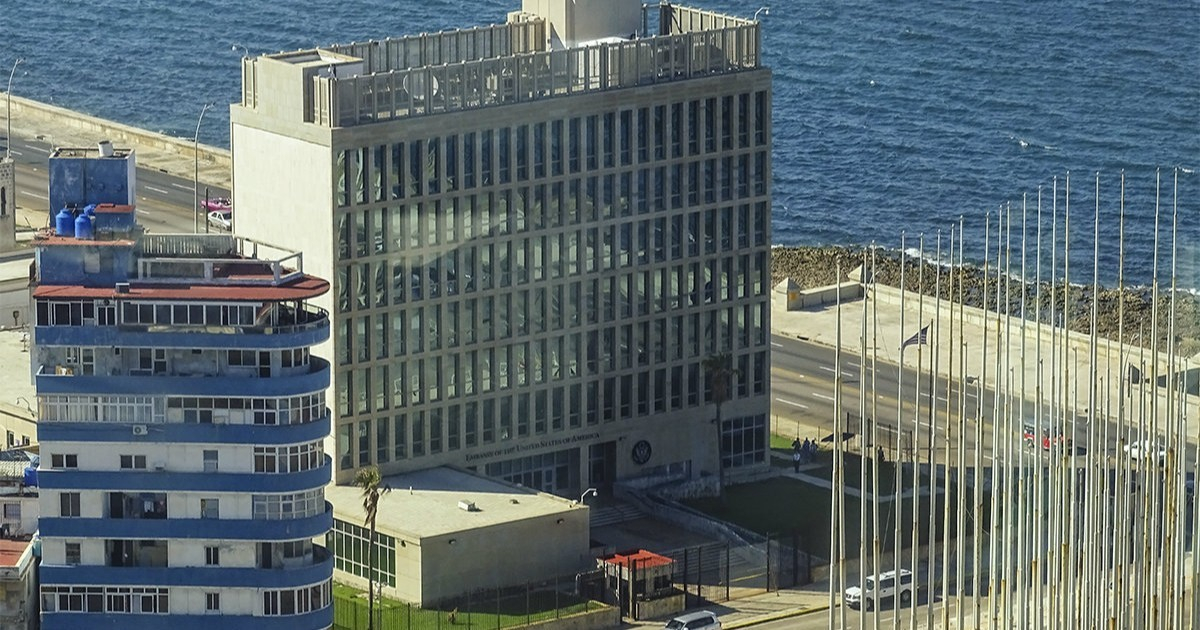
On Monday, the U.S. Embassy in Havana held the Cuban regime directly accountable for the island's humanitarian crisis. This statement echoed the sentiments of State Department spokesperson Tommy Pigott, who attributed the dire situation to the decisions made by the government itself.
"The humanitarian crisis in Cuba results from the actions of the regime," the diplomatic mission posted, quoting Pigott. He had shared this message the previous day on his Twitter account @statedeptspox.
In earlier comments to Fox News, Pigott attributed Cuba's humanitarian plight to the regime's "incompetence" and warned that the situation poses a direct threat to U.S. national security.
Humanitarian Aid Offer
The embassy reiterated its offer of $100 million in humanitarian assistance, stipulating that the aid must reach the Cuban people directly, bypassing the government and the military conglomerate GAESA.
"We have offered $100 million in humanitarian aid, provided it is delivered directly to the Cuban people, in collaboration with trusted third parties responsible for verifying its distribution," the Embassy specified.
Of this amount, $60 million is channeled through Catholic Relief Services and Caritas Cuba, while $40 million is directed through other independent humanitarian organizations.
The program commenced on July 21, with approximately 18 tons of supplies shipped from Miami. At least four shipments have already reached various dioceses, including Santa Clara, Camagüey, Ciego de Ávila, and Pinar del Río.
Catholic Relief Services estimates that the program could benefit nearly 200,000 households, impacting over 500,000 individuals.
Continued U.S. Pressure
Pigott warned that Washington will continue to identify and sanction the networks that allow the military elite to seize the country's resources: "We will keep taking steps to identify and sanction those networks," he asserted.
These statements are part of a continuing escalation of U.S. pressure on Havana.
Last week, Donald Trump expressed his intention to address the Cuban issue before his presidency ends, not ruling out the use of military force and emphasizing the role that Secretary of State Marco Rubio could play.
Earlier, Rubio had warned at the G7 foreign ministers' meeting in Paris that Cuban instability "must change."
The State Department spokesperson reiterated the ultimate goal of U.S. policy toward the island: "Our aim is to achieve a Cuba where the Cuban people can be free, happy, and prosperous, just like Cubans are in so many places around the world."
Understanding the Humanitarian Crisis in Cuba
What is causing the humanitarian crisis in Cuba?
The humanitarian crisis in Cuba is attributed to the actions and incompetence of the Cuban regime, as stated by U.S. officials.
How is the U.S. assisting Cuba?
The U.S. has offered $100 million in humanitarian aid to Cuba, ensuring it reaches the Cuban people directly through trusted third parties.
What role does the U.S. Embassy in Havana play?
The U.S. Embassy in Havana plays a critical role in communicating and facilitating the U.S.'s humanitarian aid efforts and political stance toward the Cuban regime.