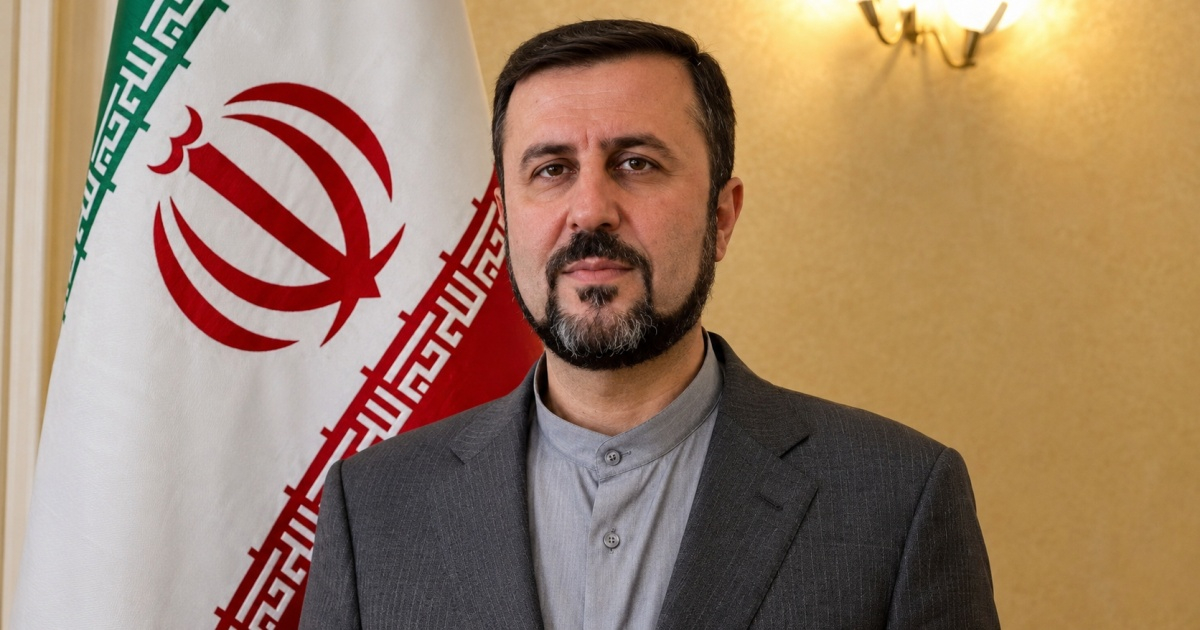
Iran's Deputy Foreign Minister, Kazem Garibabadi, recently invoked Cuba and Venezuela as examples while cautioning the United States that Tehran will not succumb to blockades and economic sanctions. His comments come amidst ongoing conflict and stalled negotiations to resolve the crisis.
In an interview with Iranian state television on Sunday night, Garibabadi stated, “Iran is not like Cuba, which can be subjected to a blockade, nor like Venezuela, which can be forced to surrender,” according to EFE, as reported by several media outlets.
The statement refers to Washington's pressure on Havana and the U.S. operation that led to the arrest of Nicolás Maduro in January 2026. Using these examples, the Iranian diplomat argued that his country will not yield to American economic and military pressures.
Questioning the Impact of U.S. Sanctions on Iran
Garibabadi criticized the effectiveness of U.S. sanctions on Iran, asserting that Washington has failed to achieve its objectives. The sanctions include a naval blockade and increased economic restrictions.
Among these measures are the "Economic Pariah" operation targeting Iranian airlines and the "Iron Gate" operation aimed at restricting the transport of sanctioned goods via land and the Caspian Sea.
His remarks were a response to U.S. Secretary of State Marco Rubio, who on November 10 defended the sanctions' impact on Iran, claiming they were "taking effect." Rubio further warned that Iranians "ultimately need to eat," a comment that Iranian Foreign Ministry spokesman Ismail Bagaei condemned as an "open and blatant threat of starvation."
The Cuban Connection and Tehran's Ties
The mention of Cuba is significant due to the political and diplomatic relations between Havana and Tehran, both of which have long opposed U.S. sanctions and advocated for bilateral cooperation.
In September 2026, Cuban Foreign Minister Bruno Rodríguez reiterated Cuba's interest in strengthening ties with Iran and coordinating within the framework of the BRICS nations. Garibabadi's comparison positions Cuba as an example of a nation under U.S. blockade, though his words do not suggest an announced shift in Tehran-Havana relations.
Iran's War-Torn Economy
Garibabadi's warning comes as Iran faces severe economic challenges following nearly nine months of war and intensified international sanctions.
According to EFE data, the annual inflation rate has soared to 89%, and the gross domestic product contracted by 10.1% annually between March 21 and June 20, 2026. The Iranian national currency has also depreciated by 66% against the dollar since the conflict began on February 28.
In October, Iranian President Masud Pezeshkian acknowledged that many citizens struggle to secure "daily bread" due to the war and economic uncertainty.
Impact of Sanctions and International Relations
How has Iran responded to U.S. economic sanctions?
Iran has rejected the effectiveness of U.S. sanctions, arguing that they have not achieved their intended goals. Iranian officials assert that their country will not be coerced into submission through economic and military pressures.
What is the significance of mentioning Cuba in Iran's warning to the U.S.?
Cuba is highlighted as an example of a nation enduring U.S. blockades, illustrating Iran's stance against similar pressures. The mention underscores the political and diplomatic ties between Cuba and Iran, both resistant to U.S. sanctions.