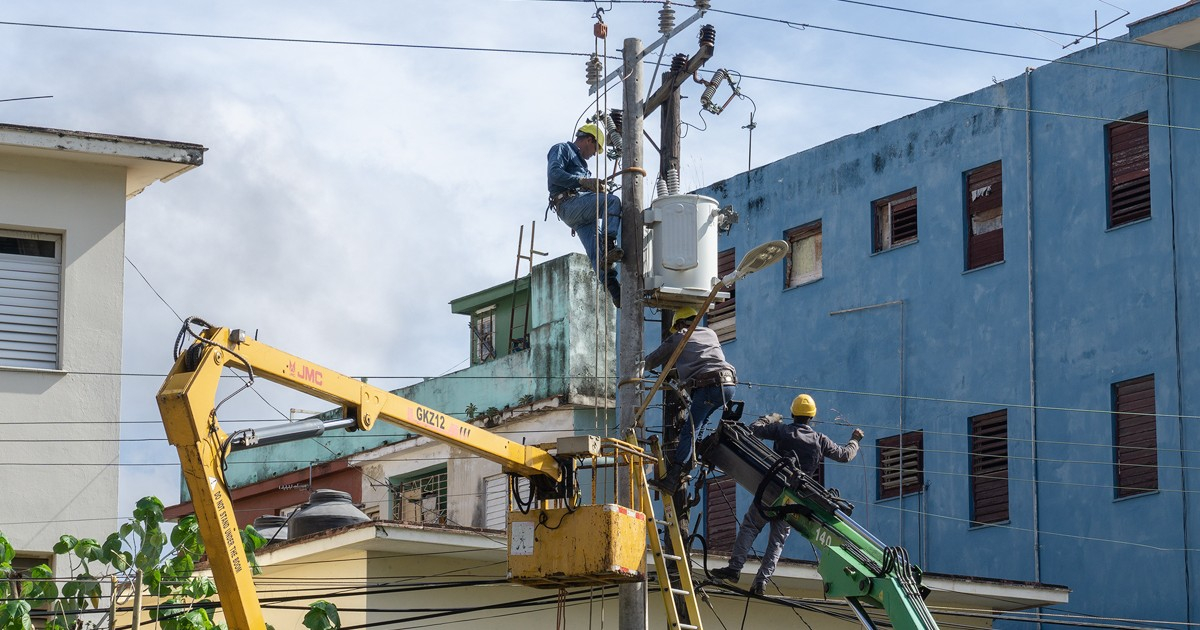
Residents of Tulipán in Cienfuegos endured 12 days—equivalent to 288 continuous hours—before the Electric Company even managed to send a vehicle to their area following the explosion of their block's transformer. When locals initially reported the issue, they were met with a disheartening response: they were the "16,000th complaint of the month," and only two emergency vehicles were available to cover the entire city.
Upon arrival, the linemen inspected the damaged transformer, touched it at three points, and declared it beyond repair. They left it hanging in its place and departed without taking it away. In a follow-up call, the company informed residents that the transformer needed to be transported to Santa Clara for repair—further delaying any resolution—and stated, "we cannot provide a minimum or maximum time frame due to high demand." For residents of another block with a similar issue, the company estimated a waiting period of 30 to 50 days.
As highlighted by a report from elTOQUE: "Saying 50 days is simple. Living them in complete darkness is not."
The situation in Tulipán isn't unique; it's a recurring issue across the island. According to state media data gathered by elTOQUE, an average of 25 transformers fail each day in Havana, with some days exceeding 60 failures.
Nationwide Transformer Crisis
On October 30, Matanzas reported 162 damaged transformers, as per the state-run Girón newspaper. The provincial factory responsible for repairs was, according to its director Alejandro Rodríguez Azpeitía, "practically at a standstill due to a lack of oil."
The root of the problem is structural. A Telecommunications and Electronics engineer consulted by elTOQUE explained that power surges when electricity returns after prolonged outages, extreme voltage spikes, and aging equipment lead to a chain reaction of transformer failures.
Adding to the issue is the systematic theft of the dielectric oil that cools these transformers. This oil, as the specialist noted, "is very clean and can be used as fuel for cars and motorcycles," making it highly sought after amid fuel shortages. In Matanzas alone, 175 thefts were recorded with over 55,950 liters stolen by the end of August, affecting 43 of its 98 substations.
The Vicious Cycle of Transformer Failures
Without oil, transformers explode. Without oil, the factory can't repair them either. This creates a perfect cycle of dysfunction, and the responsibility lies with the regime and the Electric Company, which have neither invested in nor maintained a long-neglected power distribution network.
Importing a transformer from abroad is not a feasible solution either. In Mexico, such equipment costs between $3,000 and $6,000, excluding shipping, customs, and installation—an expense the Cuban state cannot cover, often leaving communities or the diaspora to shoulder the burden informally.
In the face of institutional inaction, protests have become the only effective recourse. On October 16, 45 families in Vertientes (Camagüey) regained electricity after 51 days without it, but only following a public demonstration. In September, residents of El Condado (Santa Clara) blocked a street after enduring 36 hours without power. In July, La Gallega (Guanabacoa) residents protested to prevent their transformer's removal. Just last Saturday, a day after Boyeros locals protested and set fire to the Las Cañas bridge after more than a week without power, service was restored.
Meanwhile, in Tulipán, residents continue to wait in darkness, hoping for someone to remove the broken transformer, transport it to Santa Clara, and eventually, within an indeterminate 30 to 50 days, restore their electricity.
Understanding Cuba's Power Grid Issues
Why are transformers in Cuba failing so frequently?
Transformers in Cuba are failing due to structural issues such as power surges following outages, extreme voltage spikes, aging equipment, and theft of dielectric oil used for cooling.
What is the government's role in the transformer crisis?
The Cuban government, along with the Electric Company, has failed to invest in and maintain the power distribution network, leading to a systemic breakdown in infrastructure.
Can importing transformers solve the problem?
Importing transformers is not a practical solution due to high costs, including purchase, shipping, customs, and installation, which the Cuban state cannot afford.