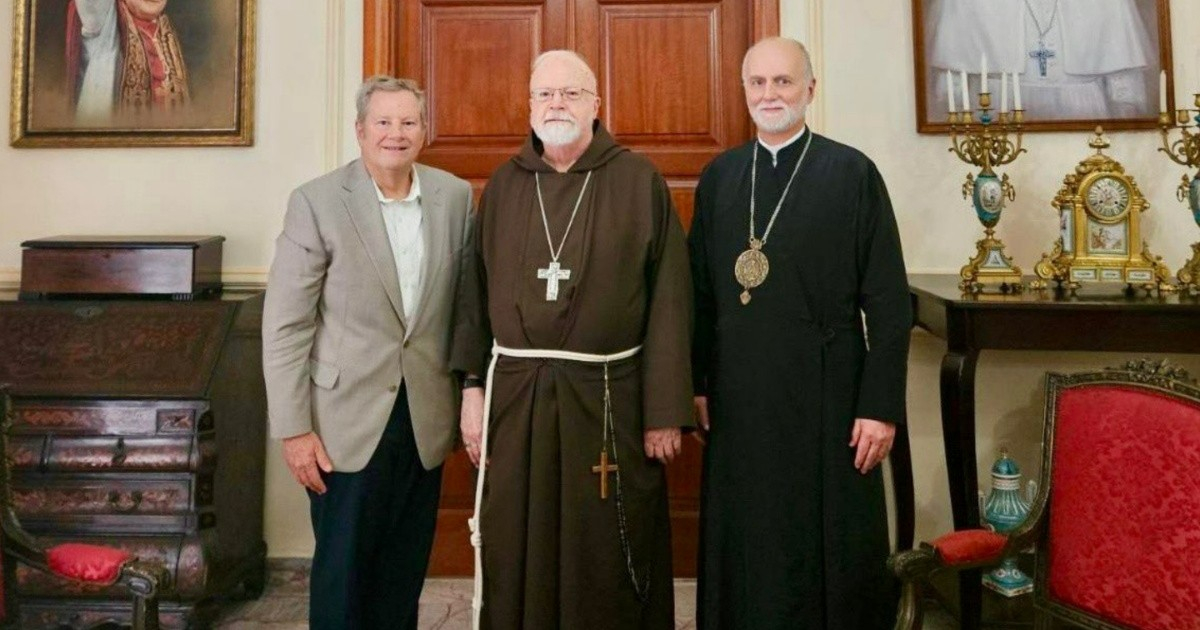
Mike Hammer, the head of the United States diplomatic mission in Cuba, engaged in discussions this past Sunday with members of the United States Conference of Catholic Bishops (USCCB). This delegation was led by Cardinal Sean O'Malley, the emeritus archbishop of Boston, and Archbishop Borys Gudziak. Confirmation of this meeting came via the U.S. Embassy in Cuba through their social media platform, X.
The focus of the meeting was on the current circumstances in Cuba and the coordination of humanitarian aid deliveries initiated during the Trump Administration. These efforts are channeled through Cáritas Cuba to aid the country's most vulnerable populations.
This encounter took place a day after the same group met with Miguel Díaz-Canel at Havana's Palace of Conventions. The Cuban leader expressed gratitude, as noted by the official Presidential website, for the Church's role in facilitating humanitarian assistance from various countries.
During the meeting with Díaz-Canel, participants included Christopher Ljungquist, director of the USCCB's Office of International Justice and Peace, and Mario Jesús Paredes, CEO of SOMOS Community Care. Also present were Caridad Diego Bello, head of the Communist Party's Office of Religious Affairs, and Carlos Fernández de Cossío, Deputy Minister of Foreign Affairs.
A notable ecclesiastical figure at the meeting was Monsignor Juan Gabriel Díaz Ruiz, newly appointed as the Archbishop of Santiago de Cuba by Pope Leo XIV on November 7, marking one of his initial public appearances in this role.
The visit by the American bishops aligns with a $100 million humanitarian aid program announced by Secretary of State Marco Rubio in May 2026, following his meeting with Pope Leo XIV in Rome.
Of this sum, $60 million is directed through Catholic Relief Services (CRS) and Cáritas Cuba, aiming to reach nearly 200,000 households — impacting over 500,000 individuals across the nation.
The distribution mechanism deliberately excludes the Cuban government and the military conglomerate GAESA. CRS procures supplies in the United States, while Cáritas Cuba handles direct distribution via parishes and home visits.
Initial distributions commenced in July 2026 in towns such as Bejucal and Alquízar. By this month, the aid had reached provinces including Havana, Matanzas, Villa Clara, and Camagüey.
The Cuban regime framed the bishops' visit as a reflection of "respectful ties" with the Catholic Church, omitting any public discussion on the issue of political prisoners.
This isn't Cardinal O'Malley's first involvement in Cuban matters. He visited Havana in September 2021, amid the crackdown following the July 11 protests, advocating for clemency for detainees.
In April 2023, Ariel Suárez, Secretary of the Cuban Episcopal Conference, mentioned to Reuters that discussions with Díaz-Canel included the plight of political prisoners and the potential for amnesty, a promise the regime has yet to fulfill.
Key Aspects of Cuba-US Relations and Humanitarian Aid
What was the main purpose of the meeting between US diplomat Mike Hammer and the Catholic Bishops' delegation?
The meeting aimed to discuss the situation in Cuba and coordinate humanitarian aid efforts managed through Cáritas Cuba, focusing on assisting the country's most vulnerable populations.
How is the humanitarian aid from the US being distributed in Cuba?
The aid is distributed through Catholic Relief Services and Cáritas Cuba, reaching nearly 200,000 households across the country, excluding the Cuban government and military entities from involvement.
What was discussed during the meeting with Cuban leader Miguel Díaz-Canel?
The meeting with Díaz-Canel involved discussions on the role of the Church in facilitating humanitarian aid and acknowledged the Church's contributions, though it notably avoided mentioning the issue of political prisoners.