The Cuban Ministry of Public Health (MINSAP) has publicly acknowledged the simultaneous active transmission of both dengue and chikungunya across all of Cuba's provinces, with dengue leading as the most prevalent disease.
This revelation was made by Dr. Madelaine Rivera Sánchez, the national director of Vector Surveillance and Control, whose statements were shared on MINSAP's official Facebook page.
By the end of the 44th statistical week, seven regions reported higher incidence rates compared to the previous week: Pinar del Río—which tops the list for complexity in dealing with both illnesses—Matanzas, Villa Clara, Ciego de Ávila, the special municipality of Isla de la Juventud, Santiago de Cuba, and Guantánamo.
Challenges in Vector Control Amid Economic Struggles
Dr. Rivera Sánchez highlighted the domestic habits of the Aedes aegypti mosquito, which thrives indoors and requires clean water for breeding. She urged the public to cover water containers, clear yards and lots, and participate in community sanitation efforts. "Fewer breeding sites mean fewer chances of falling ill," she emphasized.
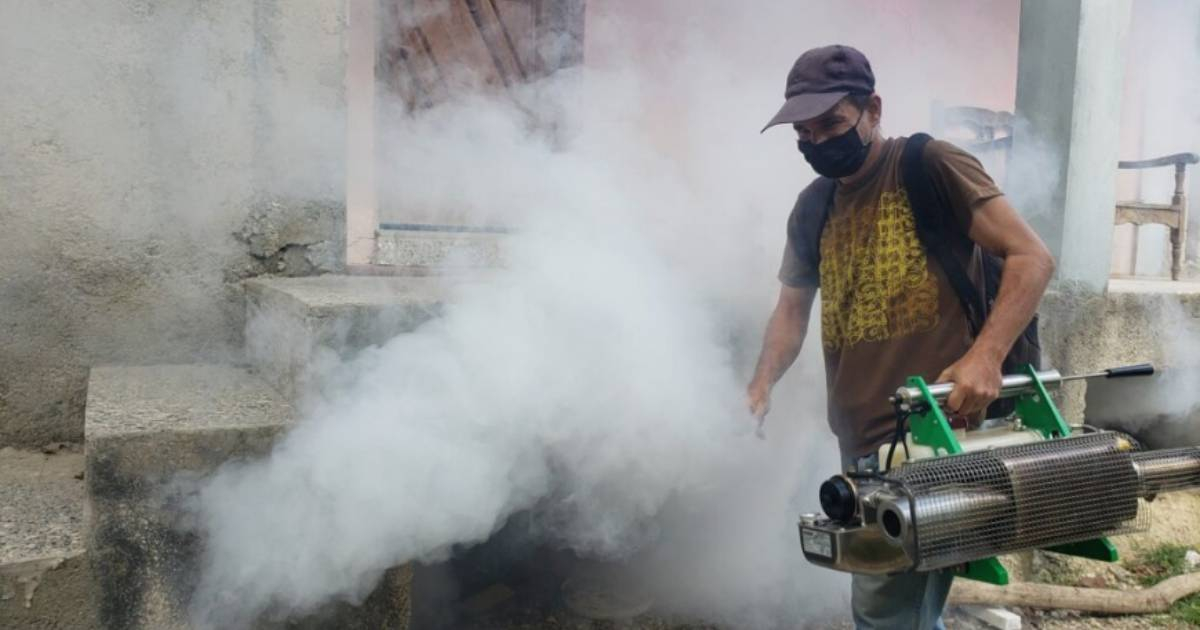
One significant aspect of her address was the candid admission of the system’s limitations in combating the vector. The national director conceded that vector control efforts "have been hampered by the country's economic situation, particularly the shortage of fuel for fumigation machines."
Alternative Measures and Community Involvement
As a partial solution, MINSAP has retrofitted some equipment to replace diesel with water, enabling fumigation activities to continue through October and into November, focusing on areas with the highest transmission rates. The official strategy has shifted towards larvicide treatments in household water containers and, to a lesser extent, adulticide treatments.
The fuel shortage had already stalled fumigation brigades in multiple provinces. In Santiago de Cuba, the Red Cross provided portable spraying equipment to partially offset the inactivity of motorized brigades, according to recent reports.
Ongoing Surveillance and Historical Context
MINSAP also reported ongoing active surveillance of Zika and Oropouche viruses, with no confirmed cases of either so far in 2026.
The current crisis follows a devastating year for arboviral diseases in 2025. According to the Pan American Health Organization (PAHO), Cuba reported 30,692 suspected dengue cases and 19 associated deaths that year.
Chikungunya, which re-emerged in Cuba in July 2025 after nearly a decade without detected transmission, sparked an epidemic throughout the country. PAHO's report indicated that by the end of that year, there were 51,217 reported cases of the disease, including 1,959 laboratory-confirmed cases and 46 associated deaths.
The transmission continued into 2026. The Global Dengue Observatory of the London School of Hygiene & Tropical Medicine estimated 15,859 cumulative dengue cases in Cuba up to October, a figure 10.6 times higher than expected for that time of year.
However, the last month for which the platform has official data reported by Cuba is June 2026, meaning subsequent figures rely on statistical estimates rather than confirmed diagnosis counts.
Infrastructure Challenges Exacerbate the Problem
Structural issues worsen the spread of the vector. Prolonged power outages disrupt water pumping and supply, forcing families to store water in containers that become mosquito breeding grounds if not properly treated.
In September, Deputy Minister of Public Health Carilda Peña García had already acknowledged the circulation of chikungunya and admitted to a "complicated hygienic situation" in several high-incidence areas. Two months later, not only does the situation persist, but it has spread throughout the archipelago, with the fuel crisis hindering fumigation efforts showing no signs of resolution.
Understanding the Dengue and Chikungunya Outbreak in Cuba
What measures can residents take to prevent mosquito breeding?
Residents are advised to cover water containers, keep yards and lots clean, and participate in community sanitation efforts to reduce mosquito breeding sites.
How has the economic situation in Cuba affected vector control efforts?
The economic struggles in Cuba have led to a shortage of fuel for fumigation machines, limiting the effectiveness of vector control measures.
What is the current status of Zika and Oropouche viruses in Cuba?
As of now, there have been no confirmed cases of Zika or Oropouche viruses in Cuba, although active surveillance continues.
Why are power outages contributing to the mosquito problem?
Power outages disrupt water supply systems, forcing residents to store water in containers, which can become mosquito breeding sites if not adequately treated.