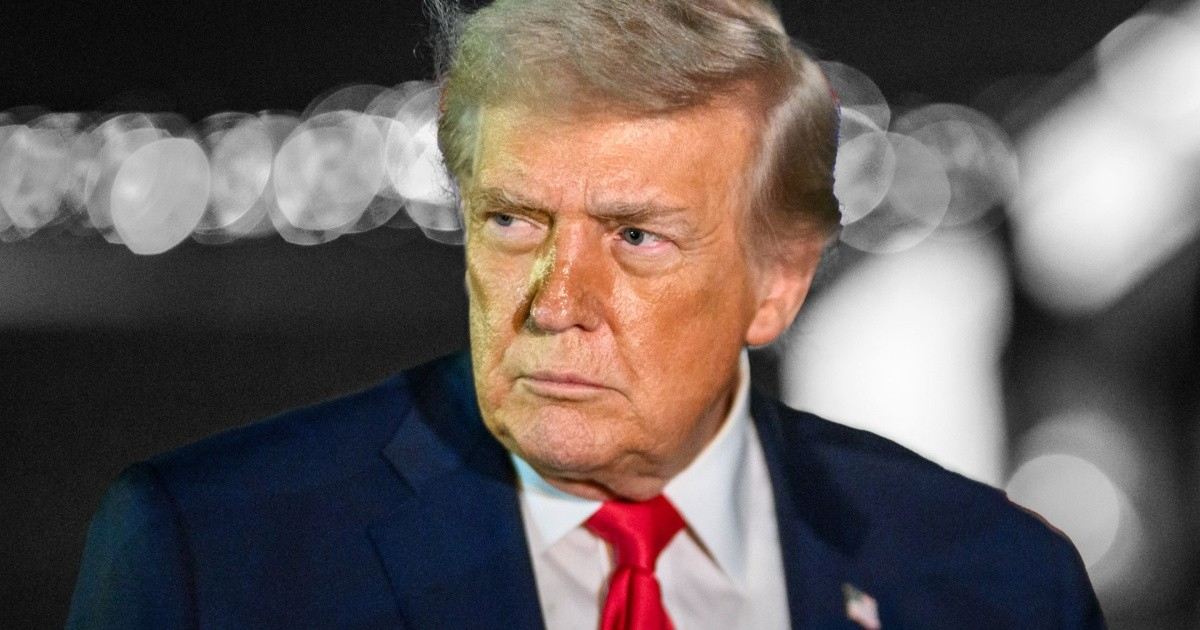
President Donald Trump is encountering unexpected resistance from within his own Republican Party as he attempts to expedite the appointment of federal judges before Democrats take over the Senate.
Several senators from his party have either blocked or raised questions regarding candidates chosen by the White House, while time is running out to confirm pending judicial appointments.
A Reuters report highlights that this dispute affects at least three nominations and showcases the dissatisfaction among Republican lawmakers who feel their recommendations for judicial vacancies in their respective states have been overlooked by the administration.
This situation prompted a reaction from Florida Governor Ron DeSantis, who expressed his frustration on social media platform X, stating, "Ugh. And Republicans wonder why they struggle with their base's enthusiasm."
Internal Republican Discontent
DeSantis's comment follows his repeated criticism of party leaders for not utilizing their majority in Congress to advance their political priorities.
Trump has successfully confirmed 57 federal judges during his second term, but still has 23 nominations awaiting confirmation. His administration is trying to finalize as many as possible before January 3, 2027, when Democrats will assume control of the Senate and have the power to block further confirmations.
Republican Senators Challenge the Administration
Among those showing resistance are Senators Thom Tillis of North Carolina, John Cornyn of Texas, and Alan Armstrong of Oklahoma. Their objections are primarily due to disagreements over the selection of candidates for federal courts in their states.
Armstrong claims his office submitted numerous highly qualified candidates, but the White House chose to go with its own pick.
"We provided a lot of highly qualified candidates to the White House, and they basically ignored them and just proposed their own," he told Reuters.
Senate Traditions and the Blue Slip Process
The controversy partly stems from a Senate tradition allowing state legislators to express approval or disapproval of judicial candidates via a "blue slip" form. If a senator withdraws support, a district judge nomination can be stalled before reaching a vote.
Tillis, a member of the Senate Judiciary Committee, criticized the administration's approach to some nominations.
"This isn't how things work here," he commented, warning that the administration should expect pushback when it disregards senators' involvement in these decisions.
High-Profile Nomination Withdrawals
One of the most visible confrontations occurred in Arkansas, where Republican senators John Boozman and Tom Cotton opposed the nomination of federal judge Lee Rudofsky for the Eighth Circuit Court of Appeals. In response, the White House withdrew his nomination and instead proposed J. Cody Hiland, a Supreme Court judge in Arkansas.
In Texas, Cornyn has not yet pledged support for T. Elliot Gaiser, Trump's nominee for a federal court in Dallas. The objection is due to the candidate being selected without the usual consultation process with state senators.
Cornyn's lack of support is currently preventing Gaiser from advancing to a scheduled hearing on Wednesday before the Senate Judiciary Committee.
In Oklahoma, Armstrong withdrew his support for Zach West, a state Attorney General's office lawyer who had conservative backing for his stances on abortion restrictions and the inclusion of religious schools in public education programs.
With Tillis supporting the Oklahoma senator's objections, West currently lacks the necessary votes to move past the committee. However, this situation could change when Armstrong vacates his seat on November 30, to be succeeded by Republican Kevin Hern.
The Race to Shape the Judiciary
Judicial appointments are a priority for Trump because federal judges hold lifetime positions and can influence the interpretation of laws long after his presidency ends.
During his first term, from 2017 to 2021, Trump appointed 234 federal judges, including three Supreme Court justices, where conservatives maintain a six-to-three majority.
According to Reuters, approximately one-third of the active federal judges were appointed by Trump. The White House hopes to complete the remaining 23 nominations before the year's end.
John Thune affirmed that judicial confirmations are a priority for Republicans in the remaining weeks of their Senate majority.
However, the internal party opposition threatens to delay votes just as the political calendar leaves little time to resolve disagreements.
DeSantis Warns Against Wasting Time
DeSantis's concerns are not isolated. On November 4, following Republican losses in the midterm elections, he accused party legislators of squandering their congressional control and urged Senate Majority Leader John Thune to expedite judicial confirmations before January.
"I'd put beds in the Senate lobby. I'd make them work nonstop because they won't be able to confirm any conservative judges after January 3 for the remainder of Trump's term," the governor stated during a Fox News interview.
DeSantis also linked the lack of legislative achievements to Republican voter apathy. According to his analysis, many party supporters abstained from the November 3 elections due to frustration with their representatives' performance in Washington.
The internal discord follows an electoral defeat that prompted criticism from Republican leaders and strategists against Trump, with some holding him directly responsible for losing control of Congress.
Understanding the Republican Resistance to Trump's Judicial Nominations
Why are Republican senators opposing Trump's judicial nominations?
Republican senators are opposing Trump's judicial nominations due to disagreements over candidate selections and the administration's disregard for their recommendations in filling state judicial vacancies.
What is the "blue slip" process?
The "blue slip" process is a Senate tradition that allows state legislators to express approval or disapproval of judicial candidates. If a senator withdraws support, a nomination can be stalled before reaching a vote.
How many federal judges has Trump appointed during his presidency?
During his first term, Trump appointed 234 federal judges, including three Supreme Court justices. In his second term, he has confirmed 57 judges so far, with 23 nominations still pending.