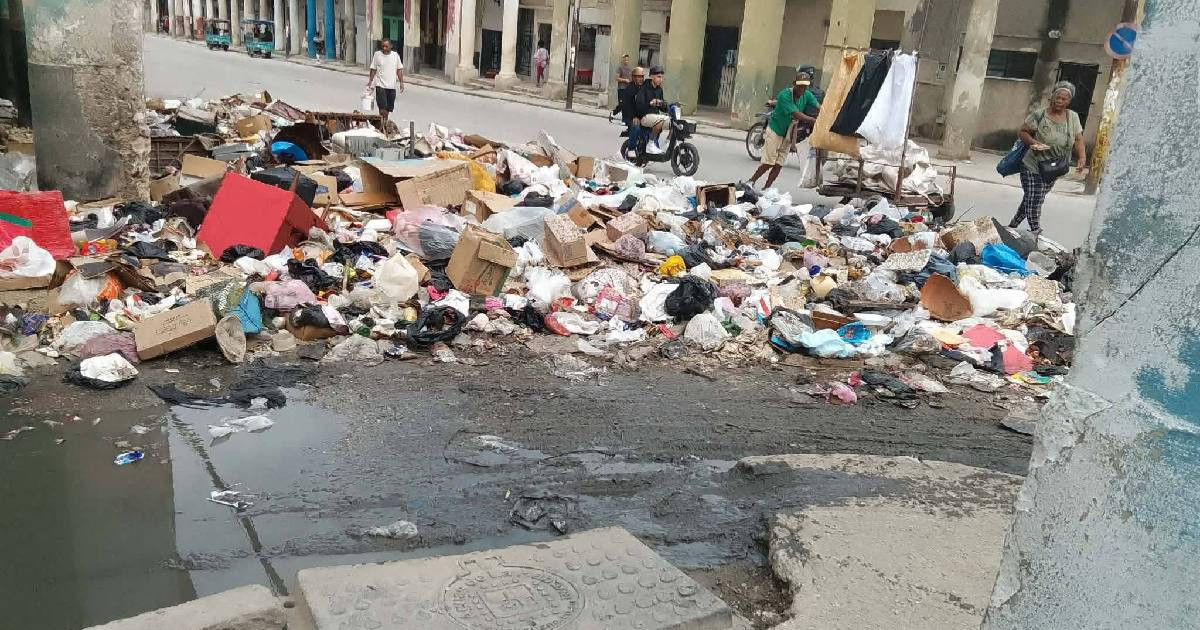
Residents living at the intersection of Monte and Fernandina in Havana's Cerro district have voiced their frustration over the constant buildup of garbage, stagnant water, and the increased presence of disease-carrying pests. Despite numerous complaints to the government, no effective action has been taken.
Photographs shared this past Saturday on the Facebook page "La Cuba Real" depict towering piles of trash, cardboard boxes, plastic bags, debris, and organic waste littering the sidewalks and encroaching onto the roadway. The images also reveal pools of murky water and deteriorating colonial buildings surrounding this trash-laden crossroads.
"It’s not just the garbage and all the problems it causes; the stagnant water breeds mosquitoes by the thousands," the post warned, criticizing government leaders for their persistent inaction despite repeated appeals from the local community.
Recently, a resident highlighted Monte, Infanta, and Reina streets as areas severely affected by corner trash heaps and condemned both national and municipal authorities for their handling of the situation.
"What a display of incompetence, apathy, and negligence by our national and municipal leaders! Epidemics hover over us like the sword of Damocles," one person remarked.
Another individual painted a stark picture of the city's decline, stating simply, "We live inside a garbage bin." A neighbor from the Sevillano area expressed outrage at the unsanitary conditions, declaring, "If they think we can live surrounded by filth and decay, they must think we are animals."
The Cuban capital is deeply entrenched in a waste management crisis, exacerbated by a lack of functioning garbage trucks, a diesel shortage, and insufficient manpower. In February, the government announced a set of 49 measures aimed at tackling the issue, and by September, it introduced 20 trucks and over 240 Chinese-manufactured containers, investing more than a million euros. However, officials admitted these resources fall short of providing a comprehensive solution for maintaining hygiene in Cuba's largest city.
The buildup of waste has also led to an increase in rodents and other pests. Recently, residents of Neptuno Street reported seeing rats "the size of cats," while those living between Ayestarán and Infanta warned of a rat infestation threatening homes and a nearby food processing center.
According to the World Dengue Observatory, Cuba reported 15,859 dengue cases by October, a figure 10.6 times higher than the average for the same period over the previous five years. In the prior year, the country recorded at least 81,909 official cases of dengue and chikungunya, along with 65 fatalities.
Cerro has seen grassroots efforts arise in the face of government inaction. In May, residents of Casino Deportivo organized their own community garbage collection, and by June, another severe trash buildup, described as a "swamp," was documented in the area.
In October, the state-run newspaper Trabajadores suggested Havanans pay 100 pesos for each private garbage collection, a proposal that would shift part of the public service cost onto citizens due to the government's inability to reliably provide this essential service.
Addressing the Waste Crisis in Havana
What are the main causes of the waste crisis in Havana?
The waste crisis in Havana is primarily due to a shortage of functioning garbage trucks, insufficient diesel fuel, and a lack of workers needed for collection and disposal.
How is the government addressing the garbage problem in Havana?
The government has announced several measures, including the introduction of new trucks and containers. However, these efforts are acknowledged as insufficient to resolve the comprehensive waste management issues facing the city.
What are the health impacts of the garbage accumulation?
The accumulation of waste contributes to the proliferation of vectors such as mosquitoes and rats, increasing the risk of diseases like dengue fever and other health hazards.