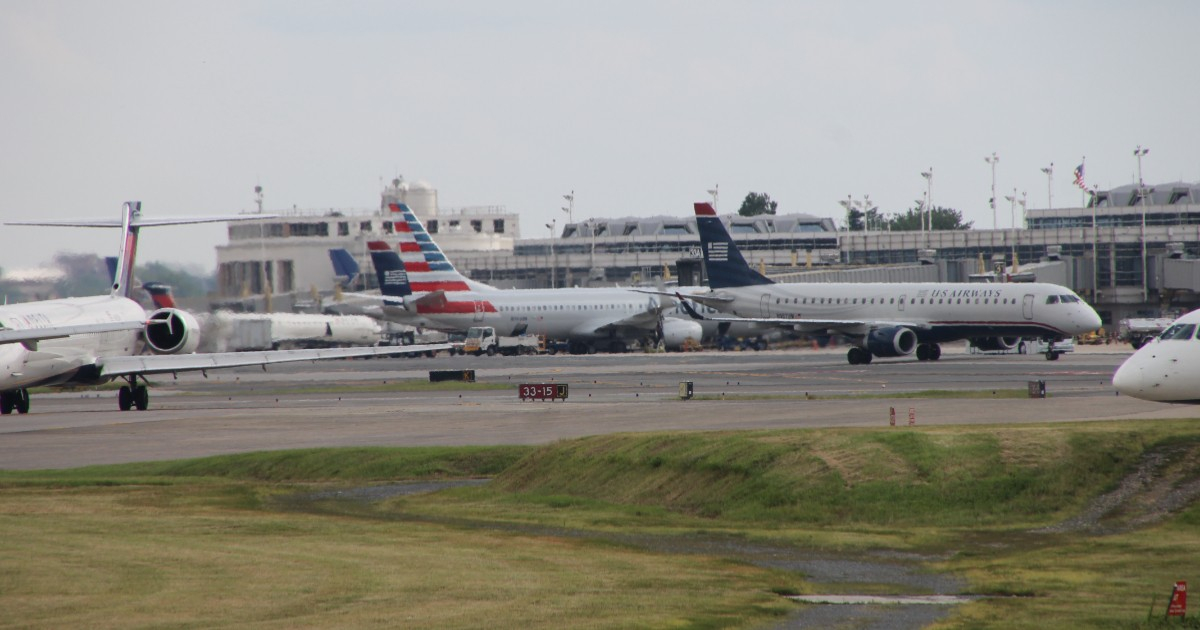
The U.S. skies remain fraught with disruption as more than 1,454 flights have been canceled and 2,258 have faced delays this Sunday, according to data from FlightAware as of 9:18 a.m. Eastern Time. Airlines are still grappling to restore normal operations after the most significant air travel halt in decades.
On Friday, November 13, the chaos began when the Federal Aviation Administration (FAA) ordered a halt on all outgoing flights for over four and a half hours due to a communication failure affecting all 22 regional air traffic control centers. Although Saturday ended with 6,695 cancellations and 9,011 delays, Sunday's figures show a slight improvement, yet full normalcy remains elusive.
Lingering Impact Despite Open Airspace
The Department of Transportation confirmed that airspace remains operational, but warned that residual disruptions could persist throughout the day. Meanwhile, American Airlines is actively repositioning aircraft, crews, and cargo to resume usual operations. Delta Air Lines has issued a travel advisory allowing itinerary changes without fees for flights scheduled from November 13 to 15.
Miami International Airport Hit Hard
At Miami International Airport, flights to cities like Austin, Houston, Las Vegas, Los Angeles, and New York faced cancellations, alongside various delays. Routes between Miami and Cuba also suffered setbacks: American Airlines flight AA2705 to Havana, initially set for 10:32 a.m., was rescheduled to 1:45 p.m., a delay of over three hours. Saturday's flight was outright canceled. Other flights, including AA252 and World Atlantic 502 to Havana, and World Atlantic 522 to Camagüey, experienced significant delays, though some, like flights AA017 and AA242 to Havana and AA1519 to Santiago de Cuba, departed nearly on time.
Technical Causes and Government Response
Transportation Secretary Sean Duffy detailed the technical cause: a fault occurred during the transition from copper to fiber optic connections by contractor L3Harris Technologies at an FAA remote facility. A router being replaced inundated the network with over 1,000 connection attempts every few seconds, overwhelming older Cisco routers from 2001-2006. Duffy stated, "We're investigating whether it was user error, installer error from L3Harris, or a defective router."
Homeland Security Secretary Markwayne Mullin ruled out external threats, affirming, "We found no evidence of a cyberattack or AI attack."
This incident marks only the third national ground stop in U.S. aviation history, following September 11, 2001, and the NOTAM system collapse in January 2023.
Cuban Air Travel Crisis
For Cubans and Cuban Americans, this U.S. turmoil is compounded by Cuba's own air crisis. Ten of the island's airports have fuel unavailability notices for Jet A-1 lasting until December 1, 2026, resulting in over 1,700 flight cancellations this year and prompting at least 11 airlines to suspend or reduce services to the island.
Duffy cautioned that without congressional approval for additional funding to modernize infrastructure, similar incidents could recur: "There will be more disruptions unless the American people and Congress authorize us to build the new system."
Understanding the Recent U.S. Air Travel Disruptions
What caused the recent halt in U.S. air travel?
A communications failure at FAA regional centers, due to a router replacement issue, prompted the halt.
How is the situation affecting flights to Cuba?
Flights between Miami and Cuba have experienced significant delays and some cancellations due to the ongoing disruptions.
What steps are airlines taking to manage the disruption?
Airlines like American and Delta are repositioning aircraft and offering fee waivers for itinerary changes to manage the situation.
Is there a risk of similar incidents occurring in the future?
Yes, without additional funding for infrastructure modernization, similar disruptions could happen again.