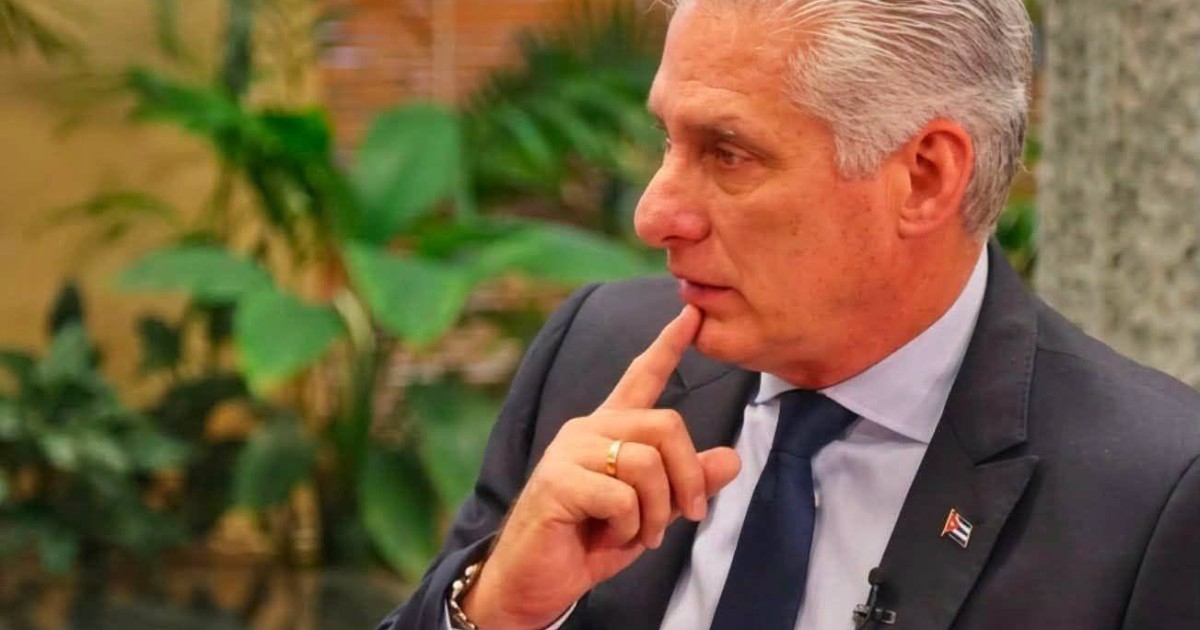
On Thursday, Miguel Díaz-Canel joined Raúl Castro in congratulating the Border Brigade on its 65th anniversary. This faction of the Revolutionary Armed Forces oversees the perimeter of the U.S. Naval Base in Guantanamo, and Díaz-Canel's endorsement sparked a wave of mockery and criticism on social media.
In a Facebook post, Díaz-Canel stated, "We join the General of the Army in congratulating the Border Brigade on its 65th anniversary. A strong embrace and all our recognition to those who protect national sovereignty at the edge of the illegal U.S. naval base in Guantanamo."
This message was based on a letter signed by Castro on November 9, which the Communist Party of Cuba shared three days later. In it, the 95-year-old general assured the fighters that "amidst the complex situation facing the country today, we will achieve VICTORY" (emphasizing the word with exaggerated capitalization), while labeling the Guantanamo base as a usurpation of national territory.
However, this martial rhetoric did not sit well with many Cubans. One particularly striking comment declared, "These people live in war, with paper generals and mud soldiers." Another user bluntly asked, "What exactly are we defending against?" Another commenter suggested those supporting the post were likely fake profiles, emphasizing, "With the struggles in this country, they must be fake."
Public Discontent Overlooked by the Regime
Many users took to Díaz-Canel's page to highlight issues the regime tends to ignore. One user reported that the gc19 circuit in Guanabacoa had been "without power for over 24 hours," leading to food spoilage with no response from authorities. Another mentioned that in Las Guasimas, Arroyo Naranjo, an entire block had been without electricity for 16 days due to a broken transformer, affecting elderly residents.
The precarious state of Cuba's electrical grid adds to the frustration: this Saturday, the Electric Union anticipates power interruptions of up to 1,860 MW during peak nighttime hours, with only 970 MW available against a projected demand of 2,800 MW.
One internet user encapsulated the contradiction, suggesting it could serve as an epitaph for the official narrative: "They've had 67 years to build an empire, yet they've destroyed a prosperous nation, turning it into rubble... the largest prison in the world, where millions of Cubans live without water, without food..."
Youth and the Reality of Military Service
The irony deepens when considering who actually stands guard at this celebrated border. Mandatory military service begins at age 17, and many of those stationed in the border area are young conscripts. The Cuban Observatory of Citizen Audit has documented at least 97 deaths of recruits during obligatory military service from 2001 to 2026, with an average age of 18.7 years.
Equally noteworthy is the source of these congratulations. Castro, who missed the central event of July 26 for the first time in three decades, now primarily communicates through letters. The missive to the Border Brigade was his third public letter in just four days, following congratulations to Military Counterintelligence and Nicaraguan dictator Daniel Ortega.
Díaz-Canel himself described the veteran military leader in April as "retired for health reasons" and "fragile." While the regime celebrates its "defenders of the fatherland" with triumphant rhetoric, Cubans are left questioning the point of defending a border when the nation is crumbling from within.
Common Questions About Cuban Military Celebrations and Criticisms
What sparked criticism of Díaz-Canel's congratulatory message?
Díaz-Canel's message congratulating the Border Brigade on guarding the U.S. Naval Base in Guantánamo was criticized for its martial rhetoric and perceived disconnect from the issues facing everyday Cubans.
Why are Cubans frustrated with the regime's focus on the military?
Many Cubans feel the regime prioritizes military achievements over pressing issues like power shortages and basic living conditions, leading to widespread discontent.
What is the current state of Cuba's electrical grid?
Cuba's electrical grid is struggling, with projected power shortages and frequent outages, exacerbating the daily challenges faced by citizens.