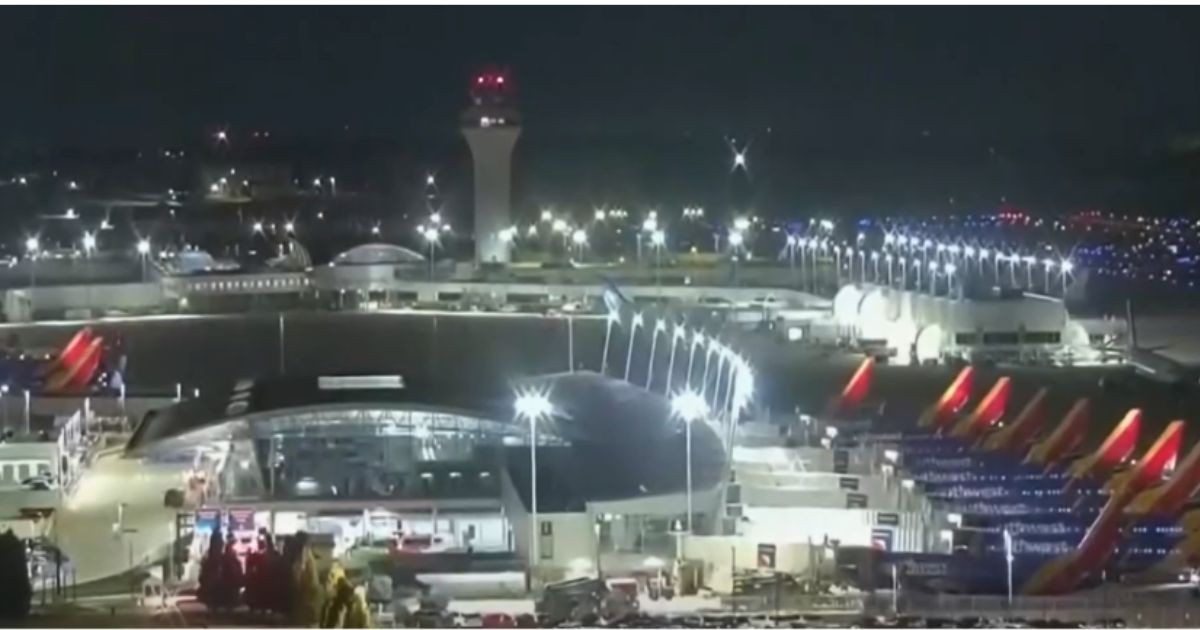
The United States government announced the reopening of its national airspace this Friday, following a technological failure that led to the suspension of takeoffs and the management of landings for over 3,000 aircraft.
Transportation Secretary Sean Duffy detailed at a White House press briefing that the incident began at 3:36 p.m. when radar and communication systems at air traffic control centers started showing instability across various parts of the country.
Duffy stated that the Federal Aviation Administration (FAA) ordered a halt to takeoffs as a precautionary step, due to inconsistencies in radar data and communications between controllers and aircraft.
At the start of the emergency, more than 3,500 planes were airborne. Duffy reported that fewer than 400 aircraft remained in the airspace at the time of his briefing, with the rest having been safely guided to the ground according to established safety procedures.
The secretary acknowledged that communication and radar signals were sporadic. When questioned about the possibility that some planes might have entirely lost contact with controllers at times, he confirmed that this could have occurred.
Nevertheless, he emphasized that emergency protocols were effective in preventing accidents, praising the preparedness of pilots and controllers. "We managed to land over 3,500 aircraft safely using a systematic, albeit slow, procedure," Duffy stated.
Secretary of Homeland Security Markwayne Mullin indicated that while a cyberattack has been ruled out, investigations are ongoing. The issue appears to stem from outdated technology systems managing flights, and both officials stressed the urgent need for funding to update these systems.
The incident caused a nationwide airport standstill, leading to over 6,500 flight cancellations and nearly 10,000 delays, affecting hundreds of thousands of passengers, according to El País. This disruption is the longest suspension of flights in the U.S. since the terrorist attacks on September 11, 2001.
U.S. authorities confirmed that airspace was reopened at 8:15 p.m. Eastern Time after technical teams successfully restored the functionality of control centers and facilities managing airport approaches.
However, reopening does not equate to an immediate return to normal operations. Duffy warned that recovery depends on the availability of pilots, flight attendants, and aircraft, meaning some services could resume overnight and others by the following morning.
The official acknowledged that tens of thousands of travelers were stranded at airports, separated from their families, and uncertain about where they would spend the night. He also mentioned that the government is collaborating with airlines to reorganize operations and transport passengers to their destinations.
During the crisis, certain essential flights continued, including those for medical evacuations, the transportation of medicine and transplant organs, as well as law enforcement operations. Duffy clarified that these exceptions were possible because there was not a total loss of communications and radar.
Mullin revealed that the Federal Emergency Management Agency (FEMA) activated its centers to cater to the needs of affected passengers, particularly those requiring medication during their disrupted travel.
When questioned about potential impacts on Thanksgiving travel, Duffy expressed confidence that the system will regain full operational capacity before peak travel times. However, he conceded that resolving the accumulated disruptions from the day would still be necessary.
Key Questions on Air Travel Disruptions in the U.S.
What caused the suspension of flights in the U.S.?
A technological failure affecting radar and communications systems led to the suspension of flights as a precaution to ensure safety.
How many flights were affected by the airspace closure?
The incident resulted in over 6,500 flight cancellations and nearly 10,000 delays, impacting hundreds of thousands of passengers.
Are there measures in place to prevent future disruptions?
The need for updated technology systems has been highlighted, and officials are advocating for urgent funding to prevent similar issues.