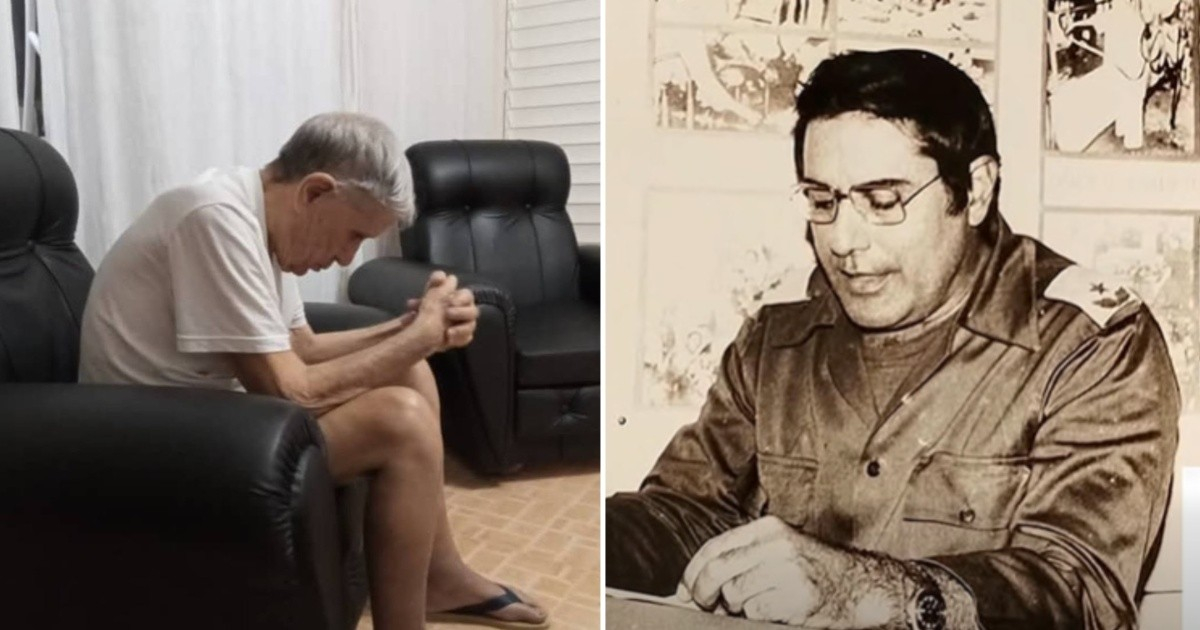
The recent death of Brigadier General Gustavo Fleitas Ramírez, a retired member of the Cuban military, has brought to light a heart-wrenching revelation: his own son disclosed that during his imprisonment by the Cuban regime, his father requested his execution for being a "traitor to the nation."
One of Fleitas' sons, who goes by Guitera Antonio on Facebook, announced his father's passing in a post filled with sorrow and conflicting emotions. "He dedicated his entire life to that damned Revolution, abandoning his family," he lamented, encapsulating years of pain with the words, "He was my executioner, but my heart refused to hate him."
Written with the rawness of spontaneous grief, the message concludes with a "Rest in peace, General," capturing both the bitterness and love of a son for a father who valued ideological loyalty over family bonds.
The son had previously shared on social media that his father lived in utter neglect after serving the regime.
The Official Narrative and Family Fracture
The Ministry of the Revolutionary Armed Forces (MINFAR) announced Fleitas Ramírez's death with a customary solemn and laudatory note aired on national television, portraying him as a model soldier while omitting any mention of his family's rift.
According to the official statement, Fleitas joined the July 26th Movement at a young age and took part in the insurrectional fight in the Sierra Maestra, under Commander Juan Almeida Bosque. After the Revolution's victory, he was promoted to first lieutenant and held significant roles, including tank battalion chief and head of various military divisions.
An Ideological Commitment Over Family Ties
Fleitas's career included four international missions: two in Angola, where he served as the head of southern troops and deputy chief of the military mission, and two in Ethiopia, commanding a tank brigade and leading the Cuban military mission there. He also fought in the Bay of Pigs invasion and the "Escambray cleanup." As a founding member of the Cuban Communist Party, his accolades included the Antonio Maceo, Camilo Cienfuegos, and Ernesto Che Guevara orders of valor.
Following his death, his body was cremated, and his ashes are to be placed in the Veterans' Pantheon at the Colón Necropolis, with plans for eventual transfer to the Third Front Mausoleum in Santiago de Cuba, where he will receive military honors.
The juxtaposition of these narratives—the official, crafting a heroic figure, and the personal, revealing a father who sought his son's execution—highlights a fracture the Cuban regime has yet to acknowledge: the systematic subordination of familial bonds to ideological fidelity.
The passing of Fleitas Ramírez marks the continued fading of Cuba's historical revolutionary military generation. Several reserve generals have died in 2026, including William Gálvez Rodríguez and Alcibíades Wilmer Pérez Rivero in July, and Claro Orlando Almaguel Vidal in January.
Understanding the Impact of the Cuban Revolution on Families
How did Gustavo Fleitas Ramírez contribute to the Cuban Revolution?
Fleitas Ramírez joined the July 26th Movement as a young man and participated in the insurrectional fight in the Sierra Maestra. Post-revolution, he rose through the ranks to hold several key military positions and served on international missions in Angola and Ethiopia.
What does the son's revelation about his father signify about family dynamics in Cuba?
The son's revelation exposes the deep personal sacrifices made by families, where ideological loyalty often superseded family ties, leading to emotional scars and unresolved conflicts.
Why is the death of these military figures significant?
Their deaths mark the passing of a generation that played pivotal roles in establishing and maintaining Cuba's revolutionary government, highlighting the end of an era and the potential for change in future leadership dynamics.