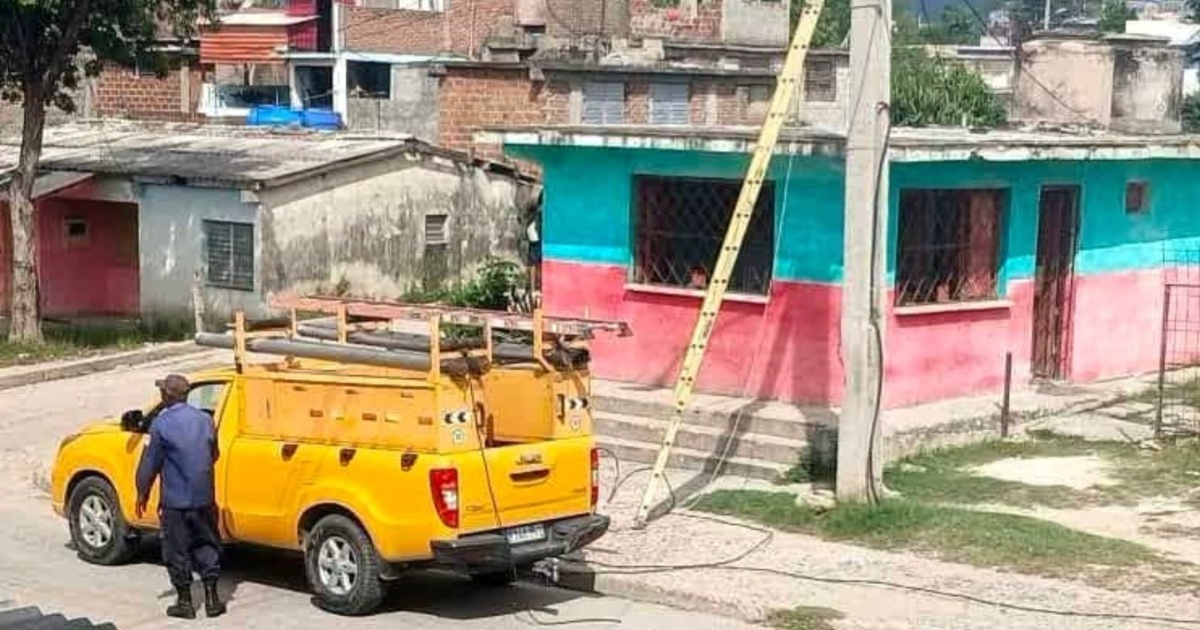
In the early hours of the morning, residents of Los Pinos Avenue, located between streets E and 11 in the Jiménez neighborhood of Santiago de Cuba, successfully prevented the theft of electrical lines that provided power to several homes in the area.
The incident was reported by Yaneydis Hechavarría, the president of the Municipal Assembly of People's Power in Santiago de Cuba. She praised the coordinated efforts of the community members, the local delegate of precinct 33 named Isabel, and the Electric Company.
"The quick action of the residents, along with the initiatives taken by Isabel and the prompt response from the Electric Company, enabled the recovery of the cables and the restoration of electricity to the affected homes," Hechavarría stated.
This collective effort ensured that the stolen cables were retrieved and power was reestablished in the homes that had been left without service following the theft attempt.
Community Vigilance and Recent Challenges
This event is part of a broader context of organized neighborhood watch efforts in Santiago de Cuba initiated at the end of October. These efforts, under the movement "My Neighborhood for the Homeland," involve night patrols to safeguard public infrastructure amidst increasing thefts targeting the electrical grid.
Los Pinos Avenue has faced similar issues before. In June, thieves stole power cables, conductors, and breakers from the ETECSA radio base, rendering it non-operational. In August, another cable theft left several buildings in the Micro 7 area without electricity for five days.
The problem extends beyond Santiago de Cuba. Just two days prior, the National Revolutionary Police apprehended a man in Songo-La Maya linked to multiple thefts of dielectric oil from transformers, with stolen equipment found in his residence.
Legal Repercussions and National Impact
On a national scale, the Attorney General's Office has reported over 460 criminal investigations related to the electrical system from 2025 through the first half of 2026, with occurrences in all 15 provinces and 97 municipalities across the country.
The current legal framework is stringent. The Supreme People's Court's Ruling 475/2025 classifies the theft or damage of electrical system components as sabotage, with penalties ranging from seven to 30 years in prison, and the possibility of life imprisonment in aggravated cases.
Recent sentences demonstrate the enforcement of these laws: in November, four men received between 15 and 20 years in prison for stealing oil from a transformer in Havana, and three others were sentenced to between eight and 15 years for similar crimes in Matanzas.
"Any act that disrupts the normal functioning of an electrical plant is of utmost importance to the country and thus falls under sabotage crimes," warned the judge who presided over one of these trials in Havana.
Understanding Electrical Theft and Legal Consequences in Cuba
What triggered the community's response to the theft attempt?
The community's response was prompted by the organized neighborhood watch efforts and the increasing frequency of thefts targeting the electrical infrastructure.
How has legal action been taken against electrical system thefts?
Legal action has been severe, with the Supreme People's Court classifying such acts as sabotage, resulting in sentences ranging from seven to 30 years, and life imprisonment in severe cases.
What has been the impact of thefts on Santiago de Cuba's electrical infrastructure?
Thefts have led to significant disruptions, including a five-day power outage in the Micro 7 area and operational halts at key installations like the ETECSA radio base.