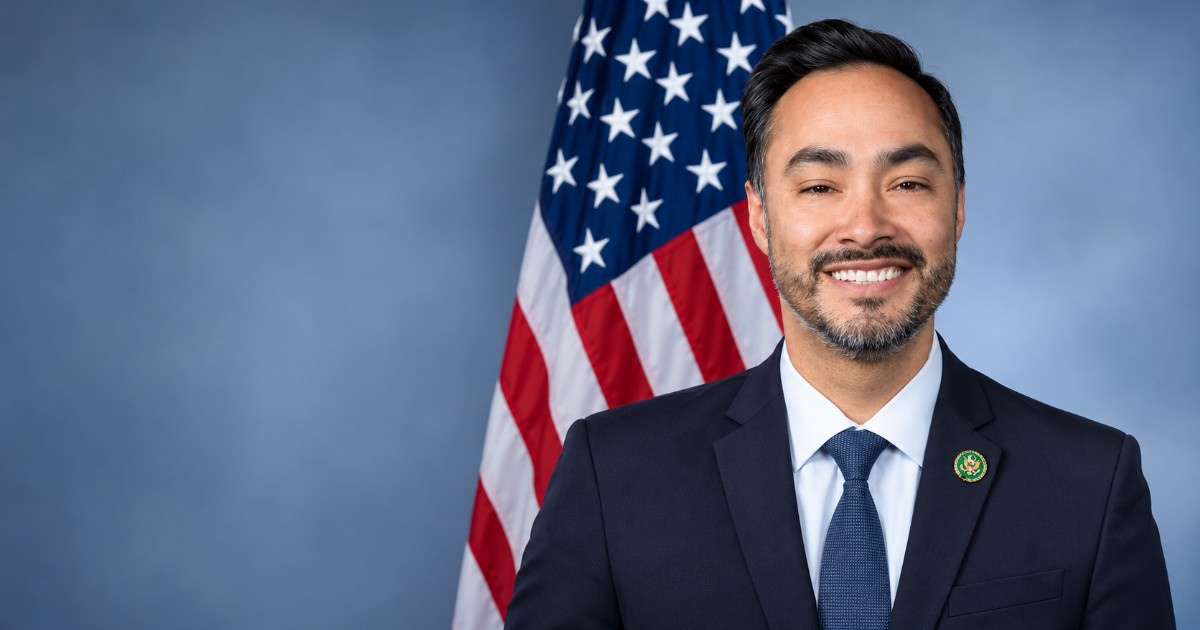
Democratic Congressman Joaquin Castro has voiced his concerns over any attempts by Washington to enforce regime change in Cuba or to undertake military action aimed at installing a leader of its choosing. His remarks, reported by the Mexican newspaper La Jornada on Thursday, caution against such interventions.
"It is not the role of the United States to choose a new leader or president, nor to invade a country to install someone," Castro stated when asked about how Democrats plan to tackle President Donald Trump's policy toward the island.
Castro was unequivocal in addressing signals from the Republican administration: "As you know, President Trump and others in his administration have made statements and implemented policies suggesting that a Venezuela-style invasion of Cuba remains on the table. We hope it doesn't happen."
When questioned about concrete steps Democrats might take to prevent such actions, the congressman succinctly replied, "We are working on it."
Joaquin Castro's Upcoming Role
Castro is poised to become the next chair of the House Subcommittee on the Western Hemisphere when the new Democratic-controlled Congress takes office on January 3, 2027. In this capacity, he will have the authority to hold hearings and oversee the administration's policies toward Cuba and Latin America.
President Trump has expressed a strong personal interest in resolving the "Cuba issue" before leaving office. During a phone interview with conservative host Hugh Hewitt on the Salem News Channel, Trump suggested he would "certainly consider" a brief military campaign against Cuba.
Trump emphasized his intention, saying, "I want to resolve the issue of Cuba before I leave, and we have a very good and talented man for Cuba named Marco Rubio," referring to the Secretary of State.
While Trump depicted Cuba as "essentially a failed place, a failed nation," invoking the plight of mistreated Cubans who have arrived in the U.S., his rhetoric escalates sharply from his earlier stance. In late September, he had dismissed military options in favor of a negotiated settlement.
Contrasting Rhetoric and Military Suggestions
Since then, Trump proposed sending warships within 50 yards of the Cuban coast during a rally in Fort Myers and declared on October 31 that "no Castro will be in power" when he leaves the White House.
Joaquin Castro, born on September 16, 1974, in San Antonio, Texas, is the identical twin brother of Julian Castro, a former Secretary of Housing and Urban Development under the Obama administration. A Stanford graduate with a Harvard law degree, Castro has represented Texas's 20th district since January 2013, securing his eighth term in the November 3, 2026 elections.
Castro's Consistent Criticism
He has been a persistent critic of Trump's military threats in Latin America. In February 2025, Castro introduced a resolution to disallow any military action in Mexico, warning that "Trump's government's threat of military action against Mexico is dangerous and will lead us down a dark path."
During a congressional hearing this year, he questioned the ongoing pressure tactics on Cuba, stating, "We have tried a strategy with the island for decades. What I see is they are living an outdated life, and what we are doing now is making their existence even harder."
A Democratic Senate legislative aide, consulted by La Jornada, cautioned that Cuba will not be a priority for the new Congress, which will center its focus on affordability, healthcare, immigration, and ending the war with Iran.
The same aide noted that Rubio's presidential aspirations could be a crucial factor: "He hasn't kept it a secret that he wants to see a different government in Cuba, so it's hard to see him leaving his current post and running for president without achieving that goal."
Understanding U.S.-Cuba Relations
What is Joaquin Castro's stance on U.S. intervention in Cuba?
Joaquin Castro opposes U.S. military intervention in Cuba and advocates against any efforts by Washington to install a new leader in the country.
What role will Castro assume in the new Congress?
Joaquin Castro is expected to chair the House Subcommittee on the Western Hemisphere, allowing him to oversee policies related to Cuba and Latin America.
How has Trump's position on Cuba changed over time?
Initially, Trump favored a negotiated settlement, but his rhetoric has since shifted to suggest military action, including sending warships close to Cuba's shores.
What are Marco Rubio's views on Cuba?
Marco Rubio has been vocal about his desire for a different government in Cuba and is seen as a key figure in shaping U.S. policy towards the island.