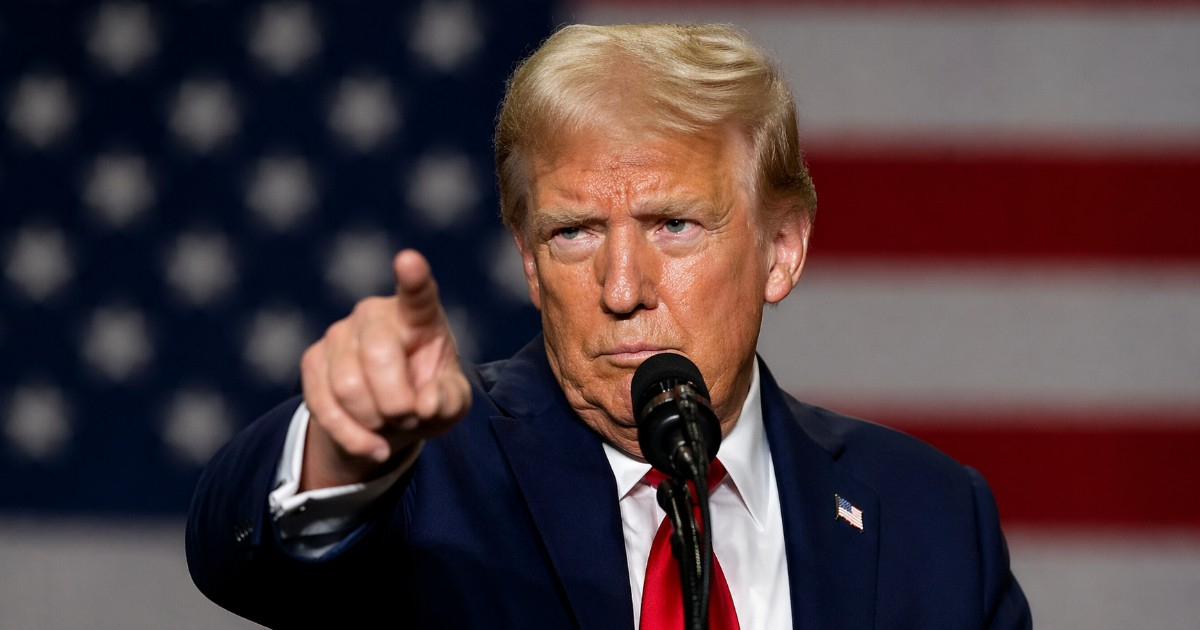
President Donald Trump has issued a fresh warning regarding the migrant caravans making their way through Mexico with the aim of reaching the U.S. border. On Thursday, Trump made it clear he would not allow their entry into the country and threatened to immediately double tariffs on Mexico if their authorities fail to halt the movement.
In a post on Truth Social, Trump linked the progression of the caravans to the results of the midterm elections, in which Democrats regained control of Congress. He claimed, "Here we go again! Following the apparent defeat of Republicans in the midterm elections—I WAS NOT ON THE BALLOT—the INVASION of our country is happening again."
He emphasized the formation of large caravans starting their illegal journey through Mexico, adding that many of those involved have been rejected by their home countries. Trump was unequivocal about their admission: "But they will not be accepted!"
Tough Stance on Mexico
Trump's warning also targeted the Mexican government: "Mexico must stop them NOW, and if they do not, tariffs on Mexico will be doubled IMMEDIATELY," he asserted.
He mentioned that Mexican authorities, the governor of Texas, the new governor of the state, Border Patrol, and ICE had already been informed of his stance. "There will be no leniency!" he concluded.
This tariff threat arises amid ongoing trade negotiations between Washington and Mexico City.
Mexican Response and Migrant Dispersal
Mexican President Claudia Sheinbaum responded to Trump's remarks, stating that no migrant caravan had reached Mexico's northern border since January 2025, when Trump returned to the White House. She highlighted that a group of around 600 migrants moving through Chiapas had largely dispersed after learning about the challenges of entering the United States.
She also mentioned that Mexican authorities were in talks with another group of Honduran citizens to encourage their return home and ruled out the use of force to break up the caravans.
Caravan Movement and Political Repercussions
The confrontation unfolds as a Central American migrant caravan began advancing from Tapachula, Chiapas, earlier this week. Reuters estimated its size at around 1,500 individuals, while EFE reported approximately 2,000 participants, mainly from Honduras, El Salvador, Guatemala, and Nicaragua.
Some caravan members expressed hope that the Democratic victory could prompt changes in U.S. immigration policy. However, the election results have not altered current restrictions on asylum applications or entry into the country.
On Wednesday, Tom Homan, Trump's administration's border czar, had already cautioned that the shift in congressional majorities would not lead to a relaxation of border security. "Congress may be bluer, but the White House is red, very red," Homan stated in a Fox News interview.
Homan stressed that while the caravans could approach the border, their members would not be released into the U.S. if they attempt to enter illegally. "We will not give up an inch of this border," he affirmed, urging the Mexican government to strengthen surveillance at its southern and northern borders.
Democratic Victory and Migrant Expectations
Former White House spokeswoman Karoline Leavitt responded to the migrants' movement, linking it to the Democratic Party's victory. "Democrats win the midterms, and thousands of illegal immigrants immediately form a caravan to enter the U.S. en masse," Leavitt wrote, accusing Democrats of wanting to welcome the migrants. "President Trump will not let that happen!" she proclaimed.
The Democratic triumph has raised expectations among thousands of migrants stranded in Mexico, including Cubans seeking an opportunity to apply for protection in the U.S.
Immigration lawyer Irene Pascual recently analyzed potential changes that could benefit these individuals following the elections. She noted, "Firstly, I believe a more favorable scenario at the border could emerge for those seeking refuge or political asylum who are stuck in Mexico."
However, Pascual clarified that the election results do not imply an immediate opening of border crossings: "This doesn't mean the border will open, but there will be more political pressure to resume asylum procedures."
She also dismissed the idea that deportations would cease due to the Democratic victory, although she noted the possibility of increased executive oversight when the new Congress begins its term on January 3, 2027.
Key Questions on Migrant Caravans and U.S. Policy
What actions has Trump threatened against Mexico over the migrant caravans?
Trump has threatened to double tariffs on Mexico if its authorities do not stop the migrant caravans from advancing toward the U.S. border.
How has the Mexican government responded to Trump's warnings?
The Mexican government has stated that no migrant caravan has reached its northern border since January 2025 and is engaging in talks with migrants to encourage their return home.
Have the midterm election results influenced U.S. immigration policy?
Despite the Democratic victory in the midterms, the election results have not changed current restrictions on asylum applications or entry into the United States.