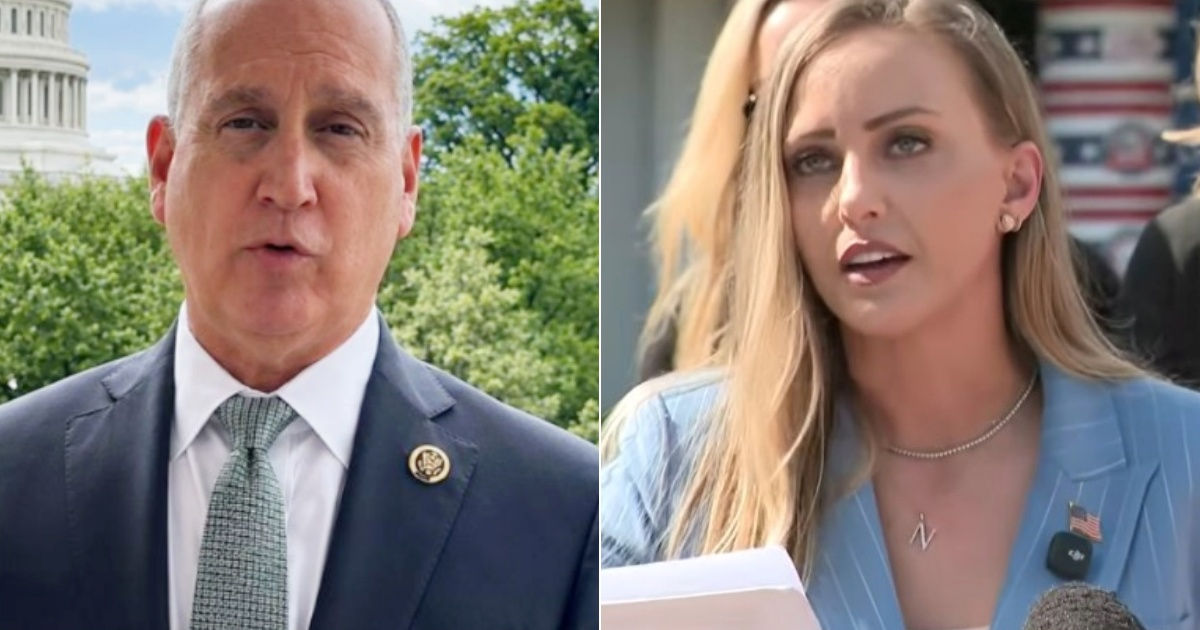
Nicole Locklin, the Democratic challenger in Florida's District 26 race, has threatened to file a federal lawsuit unless the Miami-Dade Elections Supervisor provides a clear and verifiable explanation for voting discrepancies observed during the election night on November 3, where she competed against Republican incumbent Mario Díaz-Balart.
Locklin emphasized that she is not contesting the election results but is seeking clarification about a temporary discrepancy in the election data that briefly showed her leading significantly over Díaz-Balart. She stated, “We have requested an explanation from the Miami-Dade elections supervisor. We won't be satisfied until this discrepancy is fully explained and supported by verifiable proof.”
The issue arose when, during the night of November 3, a data entry error briefly placed Locklin well ahead. The Associated Press (AP) acknowledged this mistake, attributing it to an input error, and confirmed it was quickly corrected.
Despite this, Locklin finds the explanation lacking, partly because the inflated figures were also visible in public data accessed by independent services, not just in AP's transmission.
Current results show Díaz-Balart leading by 1,704 votes—114,578 to 112,874—less than a one-point margin but above the 0.5% threshold that would trigger an automatic machine recount in Florida.
Joeffe Miyar, also known as El Gussi, a member of Locklin’s campaign, emphasized their sole intent is to gather answers: “Nicole and the team you see here, of which I am very proud, are just seeking answers.”
Election Supervisor's Role Under Scrutiny
Alina García, the Miami-Dade Elections Supervisor, defended her role and dismissed any allegations questioning her impartiality. “My actions show that I am impartial and fair. I do what needs to be done and follow the law,” she asserted.
The situation also reignites the debate over the nature of García’s position. Recently, Miami-Dade changed its system to have the elections supervisor elected in partisan elections, creating tension highlighted by political analyst Alex Penelas: “We expect the supervisor to refrain from partisan activities, yet they must run in a partisan election.”
García, a Republican elected in 2024, is the first to hold this constitutional office and will face reelection in 2028. She was previously involved in controversy in neighboring District 27, where a federal judge denied a request to remove her from a recount due to alleged conflicts of interest.
Mario Díaz-Balart, a Cuban-American congressman with over two decades representing South Florida districts, retained his seat by a narrow margin in a race made more competitive by the 2026 redistricting.
Certification of Miami-Dade’s results is scheduled for Monday, November 16, with state certification following on Tuesday, November 17.
In response to criticism, García calmly stated, “You have to do your best. I will be on the ballot in two years, and if people aren't happy with me, they’ll vote me out.”
FAQs on the Election Discrepancy in Florida's District 26
What prompted Nicole Locklin to threaten legal action?
Nicole Locklin threatened legal action due to unexplained discrepancies in the election data that momentarily showed her leading significantly over her opponent, Mario Díaz-Balart, on election night.
How did the discrepancy occur according to the Associated Press?
The Associated Press attributed the discrepancy to an input error in their data entry process, which was quickly corrected.
What are the current results of the District 26 election?
As of now, Mario Díaz-Balart leads with 114,578 votes to Nicole Locklin’s 112,874, a margin of 1,704 votes.