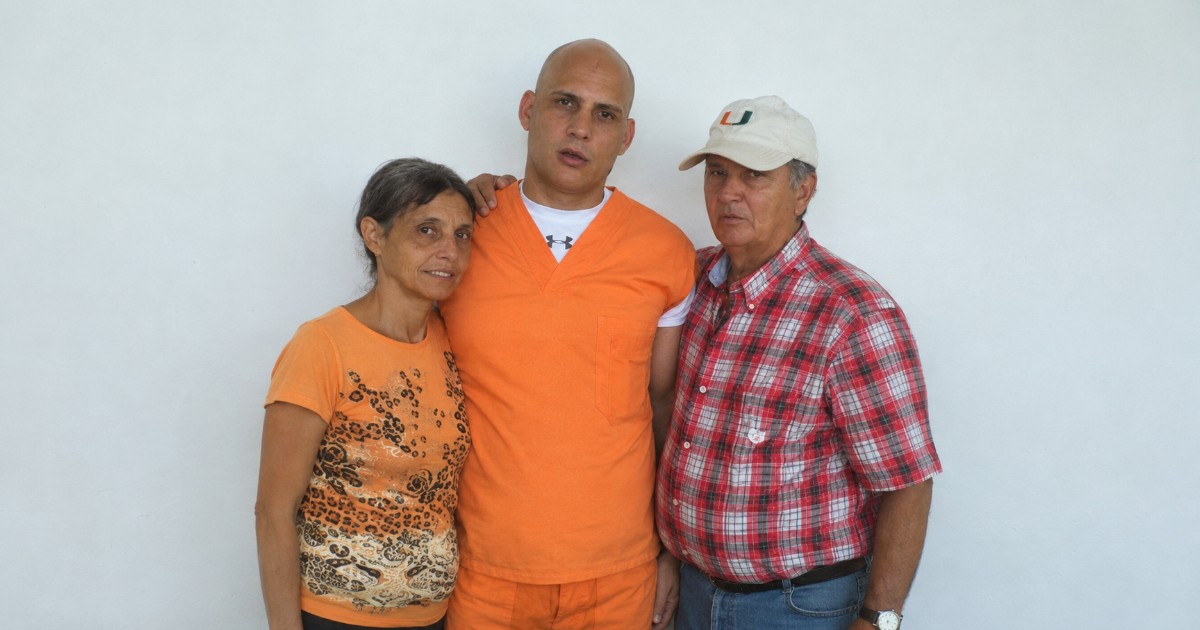
After spending 27 years in a Cuban prison, Joel Dorta García, now aged 54, has spent exactly half his life serving a life sentence. Activist Anamely Ramos is urging the Cuban courts to reevaluate his case, making her appeal public on Facebook this Thursday.
Dorta was apprehended on July 4, 1999, after arriving on a speedboat from the United States to the Cuban shores, intending to reunite with his family and the families of other passengers.
While returning to Florida, the boat, carrying 14 individuals—five men, four women, and five children—capsized approximately seven miles off the coast. Tragically, Sergio Maurilio Martínez drowned, though a Cuban patrol managed to rescue the remaining survivors.
The Cuban government charged Dorta with human trafficking and swiftly brought him to trial a mere 45 days following his arrest. The proceedings lasted eight hours. According to a message Dorta managed to send from prison, he was pressured by authorities to sign a statement incriminating the U.S. government, which he refused, maintaining his opposition to the Cuban regime. He was sentenced to life imprisonment, becoming the first individual in Cuba to receive such a sentence for this charge.
This conviction was based on a penal reform approved by the National Assembly in February 1999, which imposed life sentences for human trafficking cases that endangered others' lives. Fidel Castro had publicly advocated for at least such a penalty for speedboat pilots. In October 2026, Cubalex highlighted that life imprisonment in Cuba is incompatible with human rights protection.
Dorta is imprisoned in the maximum-security section of Guanajay prison in Artemisa, a facility notorious for violent searches, prolonged isolation, and retaliation against political dissenters. Last October, Ramos reported a massive operation involving over 30 officers against political prisoner Maykel Osorbo in the same prison.
According to Dorta, he has survived due to his family's support amidst severe shortages and poor-quality food provided to inmates, and he continues to face reprisals for his critical stance against the regime.
Ramos openly questions the fairness of Dorta's sentence: "Is a life sentence justified? Could such an accusation and sentence be imposed without considering the circumstances of the trip, the goal of reuniting a family, and the pain of separation felt by so many Cuban families?"
Ramos, associated with the San Isidro Movement and now living in exile after being expelled from the Instituto Superior de Arte in 2021, is using Dorta's case to launch a series of posts focusing on "lifers": prisoners serving life or over twenty years for politically related acts.
"These individuals, their shattered lives, their children who grew up fatherless, their parents who passed without a final embrace, represent one of the deepest wounds we bear as a people and a nation. Nothing will be set right without justice and some form of recompense for the suffering they've endured," Ramos wrote.
The Fight for Justice in Cuba's Judicial System
Why is Joel Dorta's case being reevaluated?
Activist Anamely Ramos is calling for a review due to concerns about the fairness of his life sentence and the political motivations behind his trial.
What led to Joel Dorta's arrest?
Dorta was detained after attempting to transport his family and others from Cuba to the United States, which the Cuban government classified as human trafficking.
How has Joel Dorta managed to survive in prison for so long?
He attributes his survival to the support of his family, despite facing numerous hardships such as inadequate food and constant reprisals.