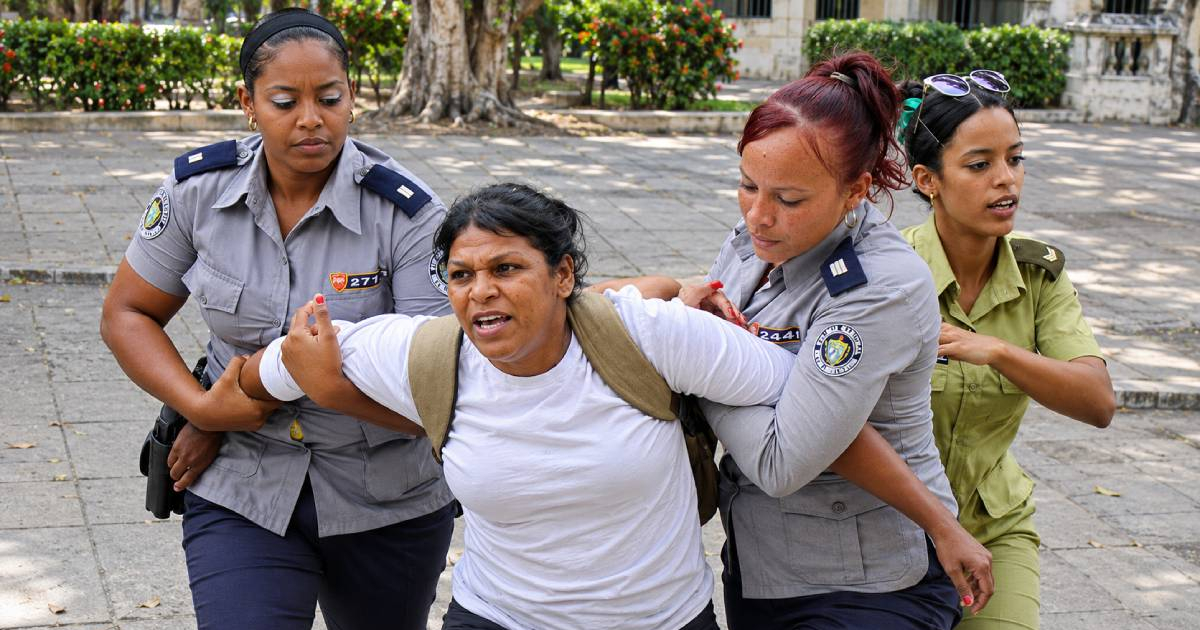
The group Justicia 11J has gathered evidence of 389 instances of repression targeting 106 women who are relatives of political prisoners in Cuba, spanning from July 11, 2021, to October 31, 2026.
This data was unveiled in the report titled "Women Who Sustain the Struggle," released on Wednesday. The document highlights that 271 of these cases involved 59 mothers, wives, sisters, and daughters of individuals imprisoned due to the July 11th protests, accounting for nearly 70% of the recorded incidents.
According to the report, the regime's most frequently used tactics included summoning and interrogations (102 incidents), threats (87), arbitrary detentions (77), and police surveillance or encirclement of homes (69).
The report also detailed 66 repressive actions related to prison visitations: detentions at the entrance or exit of penal facilities, withholding food and medicine, seizing correspondence, and suspending visits as a form of punishment.
In 22 instances, as reported by Justicia 11J, authorities used the incarcerated individual as a hostage, threatening to transfer them to distant facilities or apply internal reprisals if their families did not stop their denunciations.
The oppressive pattern intensified in response to specific defense actions such as social media posts, attendance at masses for detainees, family gatherings, and meetings with diplomatic representatives.
The report also exposes a gender-based violence aspect that exacerbates the situation. The organization reported incidents of forced strip searches during interrogations, threats to revoke custody of children, and other pressures exploiting motherhood and childhood.
The State Security was identified as the primary perpetrator of these documented events by the organization.
At least six women, who initially supported an imprisoned relative, ended up being prosecuted or incarcerated themselves. One woman received a 14-year prison sentence, according to Justicia 11J.
Women interviewed for the report lost their jobs or ceased working while simultaneously handling caregiving responsibilities, legal procedures, provision of food and medicines, and public denunciations.
Justicia 11J emphasized that these documented incidents reflect the state's failure to uphold obligations to protect family bonds, ensure dignified treatment of visitors, and shield relatives from reprisals. The organization asserted that the rights violations suffered by those affected "demand documentation, recognition, and response."
This report was released ahead of the 16 Days of Activism Against Gender-Based Violence, an international campaign running from November 25 to December 10.
As of April 2026, Justicia 11J reported there were 775 political prisoners in Cuba, with 338 sentenced in connection to the July 11th events.
Insights into Repressive Actions in Cuba
What is the focus of the report by Justicia 11J?
The report by Justicia 11J focuses on documenting 389 repressive acts against 106 women who are relatives of political prisoners in Cuba, highlighting the state's oppressive tactics and the gender-based violence endured by these women.
How does the report describe the involvement of State Security?
The report identifies State Security as the main entity responsible for the oppressive actions documented, implicating them in various tactics such as arbitrary detentions and threats.
What are some of the repercussions faced by the women involved?
The women involved have faced job loss, imprisonment, and pressure through tactics exploiting their roles as mothers. They are compelled to manage caregiving, legal, and public denunciation responsibilities.