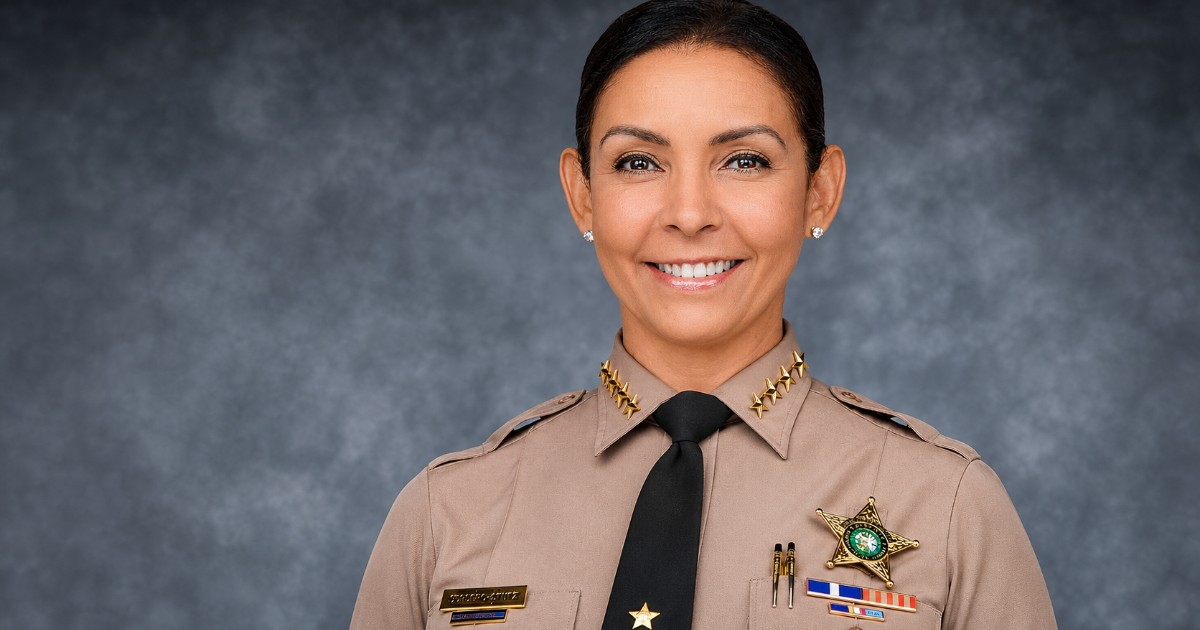
Miami-Dade Sheriff Rosie Cordero-Stutz is facing scrutiny over a contract she signed with the law firm of her personal friend, Israel Reyes. This firm, led by the former judge who swore her into office, is allowed to retain up to 35% of assets seized from businesses and individuals, as reported by WLRN.
The contract was finalized about six months after Cordero-Stutz took office in January 2025. It outlines contingency fees based on assets successfully recovered. The firm receives 30% of the first million dollars, 25% of the second, and 20% of any amounts beyond that. If the property owner legally contests the seizure, the commission on the first million rises to 35%.
Additionally, the deal includes an extra 5% when appeals are filed or further actions are required to enforce a judgment. Although the firm only collects these fees if assets are recovered, the Sheriff's Office must cover investigation and litigation expenses, even if the proceedings yield no recovery.
A Questionable Arrangement
Louis Rulli, a professor at the University of Pennsylvania, cautioned WLRN that "the conflict of interest undermines the very foundations of our justice system, neutrality, and the pursuit of justice. The ability to seize property without charges and then maximize recovery based on contingency fees is highly concerning."
In the two months following the contract signing, the Sheriff's Office seized over $45 million in assets and bank accounts from local businesses, with legal proceedings managed by the Reyes firm.
The most notable case involves SH Americas, the largest authorized Samsung distributor in South Florida. The Sheriff's Office confiscated $42.5 million from the company, leaving it unable to meet payroll and on the brink of closure. Notably, the company has faced no criminal charges.
Reyes claimed to have identified an additional $2.6 billion as seizable, which could have earned him over $500 million in fees. However, the court determined those funds were outside its jurisdiction.
The Sheriff's Office's revenue from fines and seizures skyrocketed from $396,000 at the start of Cordero-Stutz's term to $9.6 million in the next fiscal year, marking a 2,325% increase. This money doesn't go to the county treasury but is recorded as departmental income.
Understanding the Legal Mechanism
The legal framework enabling this is civil asset forfeiture, a process allowing authorities to legally claim assets allegedly linked to criminal activities. In Florida, the law specifies conditions and exceptions for such seizures and does not necessarily require a criminal conviction of the owner.
Rulli explained, "In civil forfeiture, we operate under the fiction that the property did something wrong, not necessarily the individual, so convicting the individual of a crime isn't required."
The seizures are part of an investigation into an alleged money laundering network associated with two Chinese nationals, though none of the affected electronics companies have faced criminal charges.
Represented by attorney Lisandra Guerrero, the defendant companies claimed due process violations. Circuit Judge Ariana Fajardo Orshan refused to disqualify Reyes, asserting that the Sheriff's Office retains decision-making authority in each case. The companies appealed to the Third District Court of Appeal in Florida.
Additional Controversies Surrounding the Miami-Dade Sheriff
This controversy adds to recent issues for Cordero-Stutz. In October, her office spent $132,000 on cowboy hats for deputies and discontinued the security program that protected the mayor and county commissioners amid a budget conflict with the county administration.
Neither the Sheriff's Office nor the Reyes firm responded to WLRN's requests for comment.
The position of Miami-Dade sheriff was abolished in 1966 due to widespread corruption. Cordero-Stutz became the first elected sheriff in nearly 60 years after winning the November 2024 election with 55% of the vote. The companies have appealed to the Third District Court of Appeal in Florida over the decision allowing the Reyes firm to continue participating in seizure proceedings.
Key Questions About Miami-Dade Sheriff's Controversial Contract
What are the terms of the contract signed by Sheriff Rosie Cordero-Stutz?
The contract allows the law firm to keep up to 35% of seized assets, with contingency fees based on successful recoveries.
How does civil asset forfeiture work in Florida?
Civil asset forfeiture allows authorities to claim assets linked to criminal activities without a criminal conviction, under specific legal conditions.
Why is the contract considered controversial?
The contract raises concerns about conflicts of interest and the ethics of maximizing recovery through contingency fees without criminal charges.