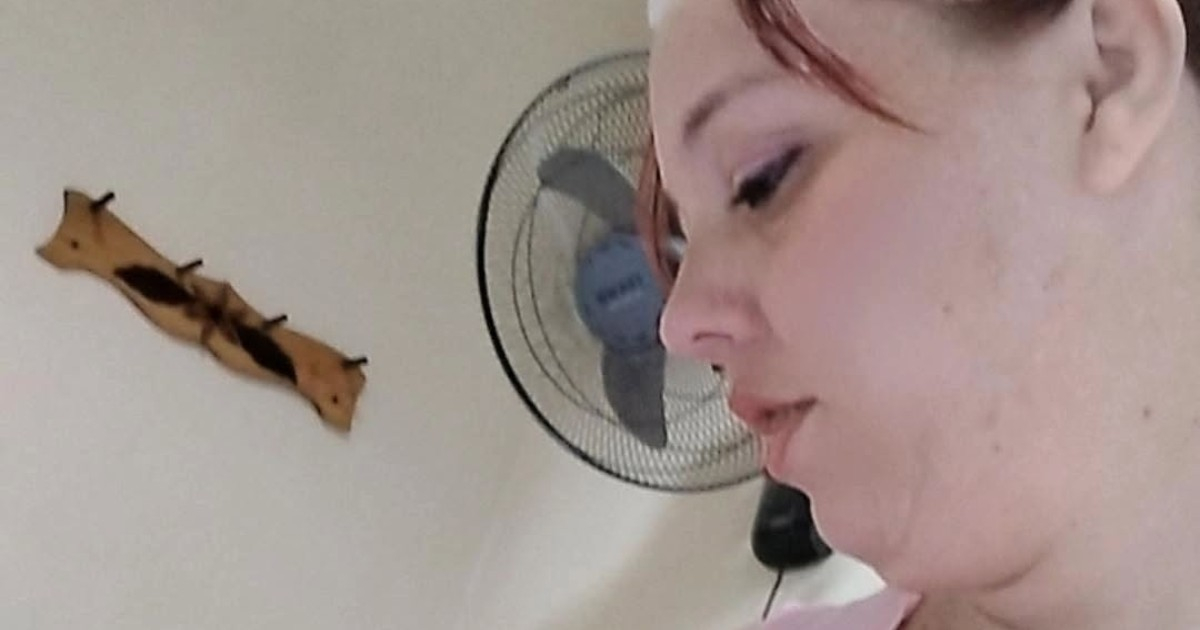
A Cuban mother has taken to Facebook to raise awareness about the dire situation facing her daughter Kamila, a young girl diagnosed with neurogenic fever and epilepsy. The authorities have removed the special milk from her diet, and the anticonvulsant medications have vanished from state pharmacies.
"They say every action has a reaction, so here's mine because everything has its limits, and I've reached mine. Friends, family, and everyone, I just want this to be shared and heard because, believe me, I can't take it anymore," wrote Yeliany García Molina, sharing the challenges her daughter is facing.
García explained that a few months ago, Kamila was diagnosed with neurogenic fever, a neurological condition that disrupts the body's ability to regulate temperature. "When it's hot, she gets a fever as high as 102 degrees. The saddest part is seeing her sleep outside because the heat is unbearable, even with a rechargeable fan," she detailed.
A Mother's Desperate Plea for Help
"This condition has aggravated her epilepsy, which was previously under control. According to the medical assessment and PAMI (Maternal and Child Care Program) in my area, Kamila was supposed to receive a solar kit, which we are still waiting for," she noted.
"But as I said, every action has a reaction. Despite her condition, they took away her milk, and her epilepsy medications are unavailable in pharmacies, though they can be found elsewhere. Seriously? Everything has its limits, and I won't post pictures of my daughter because it hurts to show her like that, but I can't go on like this," she confessed.
In the face of comments from friends and acquaintances, the mother added, "It's heartbreaking and frustrating because if an adult is thrown off balance by this situation, imagine her, who doesn't understand the power outages."
The Struggle of Cuban Mothers
Many Cuban mothers find themselves forced to expose the neglect their children face to receive attention from local authorities. "There's nothing to thank a government for when you have to demand help," lamented Rosalba Castillo last August, a mother of an eight-year-old boy from Pinar del Río with severe epileptic encephalopathy.
In June 2026, Alberto López Díaz, the Minister of the Food Industry, acknowledged that over 100,000 children stopped receiving their milk rations, including many with medically prescribed diets. During that time, the government admitted it could only ensure this essential food for just over 15,000 children with chronic conditions.
The medication situation is equally dire. By April 2026, only 190 of the 651 drugs in the national basic list were available, about 29%, with anticonvulsants among the hardest hit. In Ciego de Ávila, state pharmacies operated with merely 10% of the basic list by August 2026. Miguel Díaz-Canel himself admitted in October of the same year that national medication availability hovered around 30%.
Understanding the Crisis in Cuba's Healthcare and Nutrition
What is neurogenic fever?
Neurogenic fever is a neurological disorder that disrupts the body's ability to regulate temperature, often leading to high fevers without external causes.
Why are anticonvulsant medications important for Kamila?
Anticonvulsant medications are crucial for managing Kamila's epilepsy, helping to prevent seizures and maintain her quality of life.
How have food shortages affected children in Cuba?
Food shortages have led to over 100,000 Cuban children losing access to essential milk rations, severely impacting those with special dietary needs.