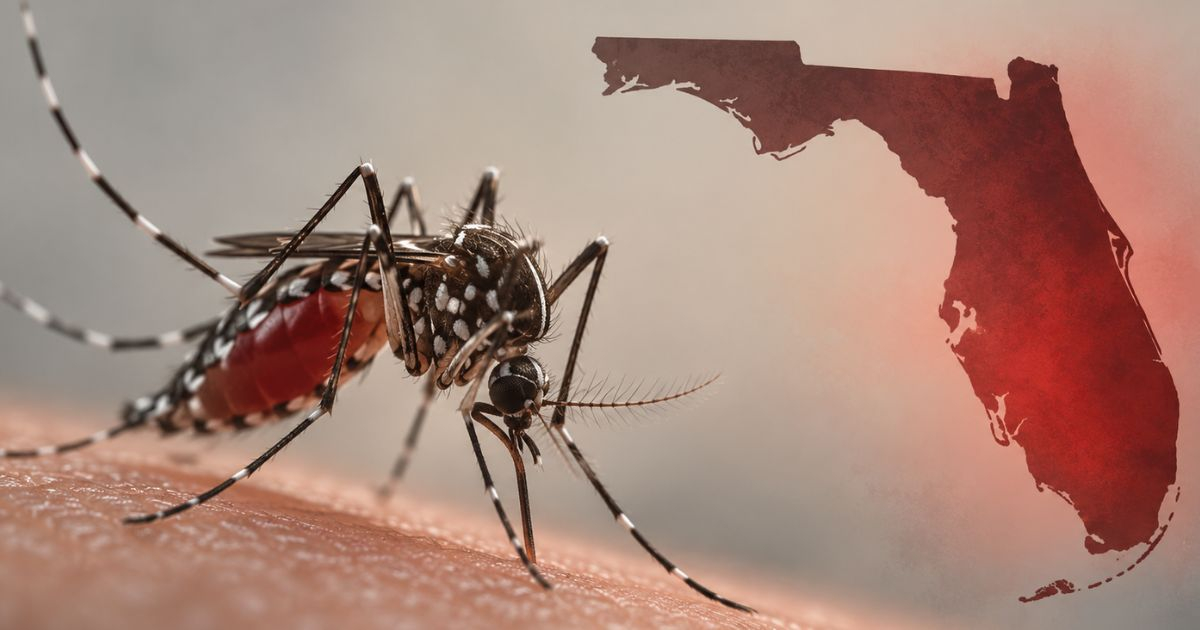
Dengue is no longer a disease primarily associated with international travel in the United States. Florida is currently experiencing an unprecedented rise in locally acquired infections, with more residents contracting the virus from local mosquitoes than those returning from travels abroad.
A report published by The New York Times this Monday highlights warnings from scientists and public health officials about the spread of dengue within the United States, suggesting that local transmission could become increasingly common.
Locally Acquired Cases Surpass Travel-Related Infections
The latest epidemiological surveillance report from the Florida Department of Health, covering the week from October 25 to 31, recorded 524 cases of dengue acquired within the state in 2026, compared to 382 linked to international travel. This represents a significant shift in the disease's behavior, as historically, most infections detected in the continental United States were among travelers returning from dengue-endemic countries.
Florida's local infections have now outnumbered imported cases. Comparing these figures to the previous year further underscores the growth; in 2025, only 62 locally acquired cases were reported, whereas in 2026, this number has increased more than eightfold, and the year is not over yet.
Concentration in Tampa Area Raises Questions
The primary hotspot for transmission is Hillsborough County, home to Tampa, with 407 local infections. Pinellas follows with 80 cases, while Miami-Dade and Orange County, where Orlando is located, report 12 and 10 cases, respectively. The concentration of cases in the Tampa area has surprised experts, who typically observe higher dengue activity in South Florida. The reasons for the outbreak's intensity in this region remain unclear.
Gabriela Paz-Bailey, head of the dengue division at the Centers for Disease Control and Prevention (CDC), informed the newspaper that researchers are examining various factors, including the possible introduction of the virus by travelers from the Caribbean. While she considers large-scale outbreaks like those in Puerto Rico unlikely in the continental U.S., she warns that local infections may become a regular occurrence.
Environmental and Climate Factors
Dengue is primarily spread by the bites of infected mosquitoes, especially Aedes aegypti and Aedes albopictus. When these mosquitoes bite an infected person, they can become carriers and subsequently transmit the virus to others, allowing dengue to spread within a community even among residents who have never left the U.S.
Travel continues to play a significant role, with the Florida Department of Health report indicating that 323 of the 382 international travel-associated cases in 2026 were linked to Cuba, an important factor for communities with strong ties to the island. Cuba itself is experiencing a significant increase in dengue cases, according to the Global Dengue Observatory, though these figures are estimates based on statistical models due to a lack of official data.
Florida's weather conditions may also contribute to the proliferation of mosquitoes. Warm temperatures, humidity, and heavy rains create ideal breeding environments, especially when water accumulates in yards, containers, and public spaces. Climate change is another factor under investigation, as it may impact the geographic distribution of mosquito vectors. However, the specific contribution of each factor to the current outbreak is still being studied by experts.
Heightened Measures and Public Health Response
The surge in infections has necessitated increased health measures. Hillsborough, Pinellas, and Pasco counties have declared local emergencies to facilitate mosquito control efforts and allocate resources. On November 5, Hillsborough extended its state of emergency until November 12. Authorities have increased aerial and ground treatments after detecting virus activity in mosquito populations across various neighborhoods.
The expansion of dengue was anticipated weeks ago when Florida reported 296 local infections as of October 3, marking the largest state outbreak since the 1930s. In less than a month, that number exceeded 500 cases. The disease has also caused at least one death in Florida in 2026. Gay Rabb Small, a Tampa resident, passed away on September 4, her 80th birthday, as confirmed by health authorities in September.
Her daughter told The New York Times that Small, who regularly walked several miles along Tampa's coast, had not traveled in the weeks before her illness. She began feeling unwell in late August, exhibited tremors, and was hospitalized, where she was diagnosed with dengue. Her condition deteriorated rapidly, leading to multi-organ failure associated with the infection.
Currently, no dengue vaccines are available for use in the United States, so prevention primarily relies on avoiding mosquito bites and reducing breeding sites. Official recommendations include using EPA-registered repellents, wearing clothing that covers arms and legs, installing screens on doors and windows, and eliminating standing water in pots, buckets, tires, and other containers.
Understanding the Dengue Outbreak in Florida
How has dengue transmission changed in Florida?
Dengue transmission in Florida has shifted significantly, with locally acquired cases now outnumbering those associated with international travel. This change suggests that local transmission is becoming more common.
What factors are contributing to the dengue outbreak in Florida?
Several factors contribute to the dengue outbreak in Florida, including the introduction of the virus by travelers, favorable weather conditions for mosquito breeding, and potential impacts of climate change on mosquito distribution.
What preventive measures are being recommended to combat dengue in Florida?
Preventive measures include using EPA-registered mosquito repellents, wearing protective clothing, installing screens on windows and doors, and eliminating standing water to reduce mosquito breeding sites.