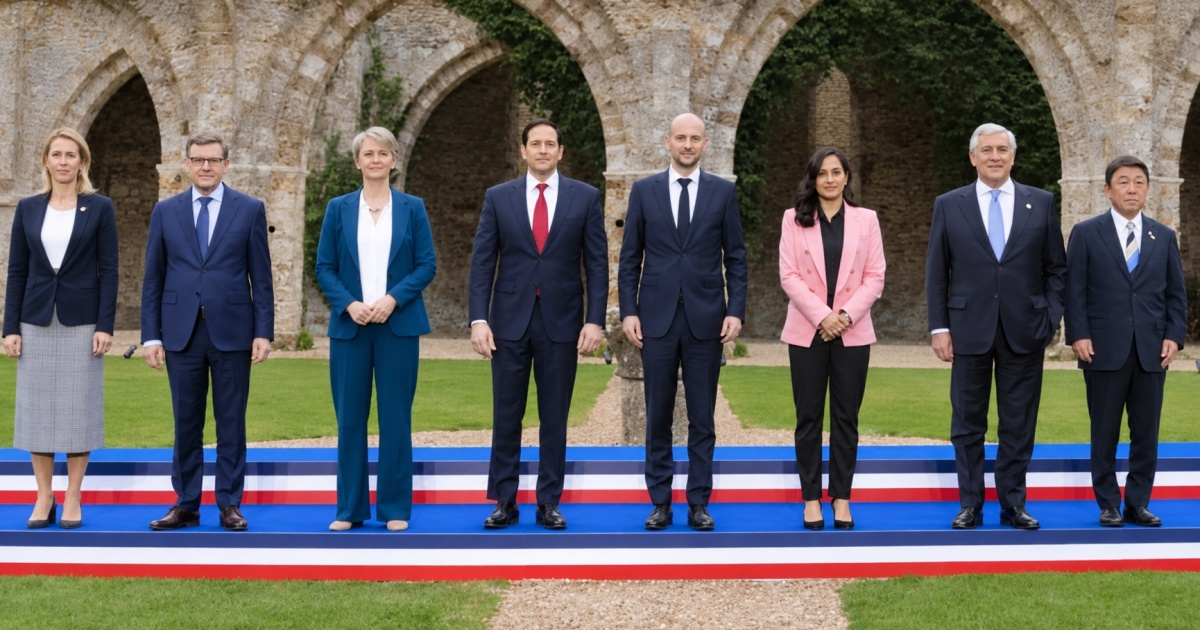
The foreign ministers of the G7 have called for substantial political and economic reforms from the Cuban government, urging the establishment of a democratic, multiparty system and the release of all individuals arbitrarily detained.
This list of demands was outlined in a joint statement released on Wednesday, November 11, following meetings held in Paris on November 9 and 10 under the French presidency of the group.
The document, signed by representatives from the United States, Japan, Germany, the United Kingdom, France, Italy, Canada, and the European Union, specifically addresses Cuba. It expresses deep concern over the deteriorating living conditions for its citizens and calls for political changes to ensure fundamental rights and freedoms.
Democratic Reforms and Freedoms at the Forefront
According to the joint statement published by the UK government, the foreign ministers urge Cuban authorities to "initiate and implement significant political and economic reforms to promote prosperity, respect for human rights, and the legitimate aspirations of the Cuban people."
The G7 countries are also demanding "concrete steps towards establishing a democratic, multiparty government, along with freedom of the press, and freedom of expression and association."
The statement makes an explicit appeal for the release of those detained on arbitrary grounds, stating, "We also demand the release of all arbitrarily detained individuals."
The ministers further encourage "constructive and inclusive dialogue to find a solution to the crisis."
Humanitarian Crisis Raises Alarm
The declaration also highlights the economic and humanitarian challenges faced by the Cuban population, particularly the shortage of essential goods.
"We express our concern over the deep economic crisis and humanitarian needs facing the Cuban people, including the shortage of food, fuel, and medicines," the document states.
The foreign ministers stress the importance of enhancing the delivery mechanisms for humanitarian aid both to and within Cuba to address the population's needs effectively.
Mounting Diplomatic Pressure
The statement comes amid escalating tensions between Washington and Havana.
U.S. Secretary of State Marco Rubio, who attended the G7 meeting, emphasized that promoting reforms in Cuba is a priority for the Trump administration.
Conversely, Cuban leader Miguel Díaz-Canel dismissed the U.S. pressures on Tuesday, asserting that "Cuba's future will never be decided in the north," responding to Trump's remarks about the island's situation.
Meanwhile, Cuban Foreign Minister Bruno Rodríguez Parrilla traveled to China as a special envoy, amidst Havana's efforts to strengthen ties with Beijing.
The G7's demands for the release of detainees align with one of the main requests made in October by over 130 former Cuban political prisoners, who called for the release of all political prisoners and the decriminalization of dissent as preconditions for any negotiation with the regime.
Frequently Asked Questions about G7's Stance on Cuba
What are the key demands of the G7 regarding Cuba?
The G7 calls for significant political and economic reforms, the establishment of a democratic multiparty system, freedom of press and expression, and the release of all arbitrarily detained individuals.
Why is the G7 concerned about the situation in Cuba?
The G7 is concerned due to the deteriorating living conditions, economic crisis, and humanitarian needs, including shortages of essential goods like food, fuel, and medicines in Cuba.
How has the Cuban government responded to the G7's demands?
Cuban leader Miguel Díaz-Canel rejected the U.S. pressures, stating that Cuba's future will not be decided externally, while Cuban Foreign Minister Bruno Rodríguez Parrilla is seeking to strengthen ties with China.