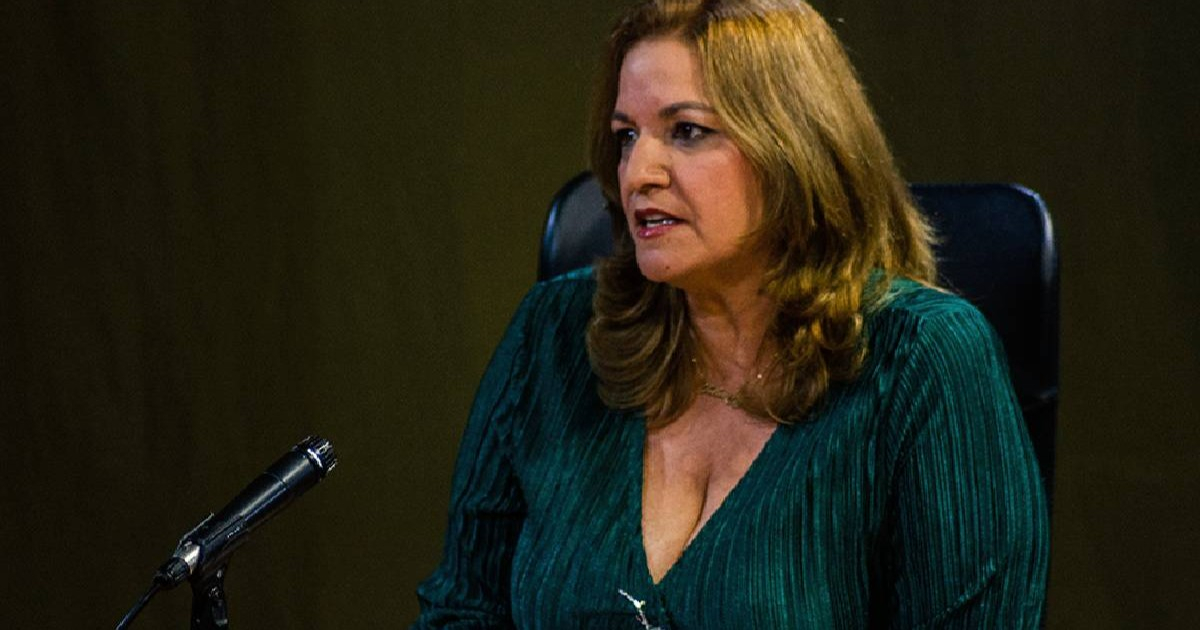
In a swift political shift, Cuban leader Miguel Díaz-Canel has accepted the resignation of Yelenys Tornet Menéndez as the governor of Las Tunas province. This announcement came just a day following the removal of Camagüey's governor, Jorge Enrique Sutil Sarabia, according to an official statement released on Wednesday.
The state-run newspaper Granma reported that Tornet Menéndez requested to step down due to "family and personal limitations" that hindered her ability to fulfill her duties.
During a special session in Las Tunas, Prime Minister Manuel Marrero Cruz communicated the decision to the Provincial Council. Delegates acknowledged Tornet Menéndez for her dedication and commitment since assuming the role of Governor, as noted in the statement.
Elected on December 8, 2024, with a significant 98.58% of delegate votes from municipal assemblies, Tornet Menéndez's term lasted a mere two years, ending in late December of the same year.
To temporarily fill the position, Díaz-Canel appointed Juana Yamilka Viñals Suárez, the current vice governor, who will serve until a new governor is elected through the legal process. Viñals Suárez, with a degree in Physics and Electronics and a master’s in Educational Sciences, was elected vice governor in December 2024 with 97.48% of the vote and has been a national assembly deputy since 2021.
During her short tenure, Tornet Menéndez openly acknowledged several severe issues in the province, including over 300 crimes reported in one week in early 2025, waste accumulation due to a shortage of trucks and workers, and ongoing challenges in agricultural production and payments to farmers.
The regime's official statement did not provide specific details on the circumstances leading to Tornet Menéndez's departure, beyond the generic explanation of "family and personal limitations." This lack of transparency mirrors previous leadership changes in this and other provinces.
Tornet Menéndez's resignation follows closely on the heels of Díaz-Canel's acceptance of Camagüey Governor Sutil Sarabia's resignation, who admitted to "errors in the performance of his duties, incompatible with his responsibilities." In Camagüey, Vice Governor Yennis León Mayedo was appointed as interim governor, following the same protocol now applied in Las Tunas.
The removal of two governors in just two days underscores a recurring pattern in various Cuban provinces since 2024: resignations presented as voluntary, with official statements lacking details on the actual reasons behind these supposed resignations or dismissals.
Las Tunas has experienced significant instability in its governmental and party leadership. In October 2024, Díaz-Canel dismissed then-Governor Jaime Ernesto Chiang Vega, who admitted to "errors" in his administration, and suspended Vice Governor Ernesto Luis Cruz Reyes for "violations in the exercise of his responsibilities."
In March 2025, the provincial first secretary of the Communist Party, Walter Simón Noris, was removed without public explanation.
Key Questions About Recent Cuban Leadership Changes
Why did Yelenys Tornet Menéndez resign as governor of Las Tunas?
Yelenys Tornet Menéndez resigned citing "family and personal limitations" that prevented her from continuing her duties effectively.
Who is Juana Yamilka Viñals Suárez?
Juana Yamilka Viñals Suárez is the newly appointed interim governor of Las Tunas, previously serving as vice governor. She holds a degree in Physics and Electronics and a master’s in Educational Sciences.
What issues did Tornet Menéndez face during her tenure?
During her tenure, Tornet Menéndez dealt with serious problems such as high crime rates, waste management issues due to a lack of resources, and challenges in agricultural production and payments to farmers.