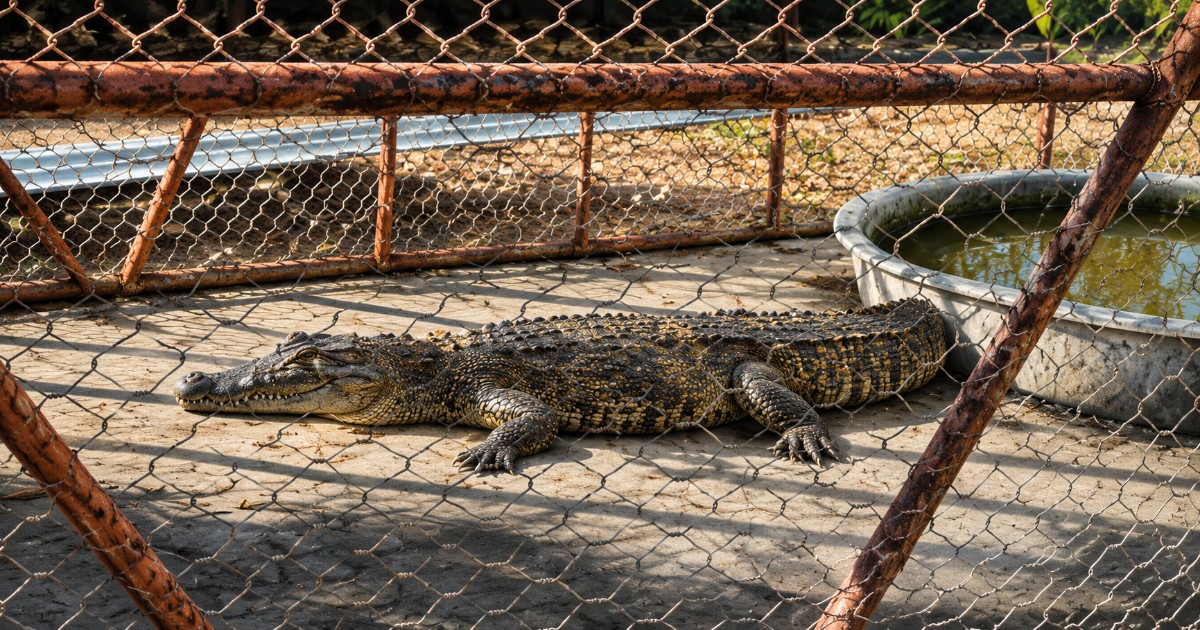
In a surprising discovery, a crocodile was found in the backyard of a home in Sagua la Grande, a municipality in Villa Clara, Cuba. This unusual find was made during a joint operation by the Forest Rangers and the Revolutionary National Police (PNR), as reported on social media on Wednesday.
The pro-government page, Fuerza Pueblo, highlighted this incident to commend the efforts of both institutions in combating the illegal collection of wild flora and fauna. "As a result of their vigilance, a crocodile was detected in the backyard of a home in Sagua la Grande, showcasing the importance of cooperation between our forces," the report stated.
An accompanying, albeit poor-quality, photograph showed the reptile behind a chain-link fence, resting on a concrete surface near a container of water. The report linked the discovery to ongoing efforts against the illegal wildlife trade but did not clarify how the crocodile ended up at the property, how long it had been there, or whether it was being kept in captivity.
Unanswered questions remain about whether the animal was removed, its future destination, or if any legal actions were taken against individuals involved. "Protecting wildlife is everyone's responsibility. If you encounter similar situations, do not hesitate to inform the authorities," concluded the regime's spokesperson online.
The announcement stirred reactions on Facebook, with some praising the rangers and expressing hope for the crocodile's return to its natural habitat. "Kudos to the Rangers. Let's hope the crocodile is returned to the swamp," one user commented.
Others expressed concern about the crocodile's fate if transferred to a zoo, citing issues about the conditions in some state-run facilities. Comments also raised issues about the treatment and living conditions of animals in these centers, while another user urged action against the captivity of wild birds in private homes.
The issue of owning and selling crocodiles in Cuba is also evident in recent online marketplace posts. One screenshot showed a user offering a crocodile measuring 84 centimeters with a photo displaying the animal alongside a measuring tape. Another listed a 50-centimeter specimen for $50, complete with images and contact information.
Though limited information on the Sagua la Grande crocodile makes it unclear if it was a pet, subject to mistreatment, or linked to illegal trade, these sales ads indicate a market for these reptiles in Cuba. This situation is compounded by reports of wild animals used in religious practices, raising questions about their capture, trafficking, and living conditions outside their natural environments.
Last September, a young woman from Matanzas shared her experience living with a crocodile she had rescued from being sold for religious rituals. Veterinary student Lorena Montes Peña advised against keeping crocodiles as pets, despite her own experience caring for one.
In Villa Clara, a crocodile escaped from the municipal zoo in Caibarién in January through a gap in the perimeter fence, prompting a neighborhood alert and a search operation. Days later, remains identified as the animal were found in an area known as La Picadora, sparking complaints about zoo conditions and conflicting reports on the reptile's fate.
More recently, in September, an activist reported the disappearance of animals from the Colón zoo in Matanzas, claiming a surviving crocodile was stolen and consumed by unidentified individuals.
Understanding Crocodile Incidents in Cuba
How was the crocodile discovered in Sagua la Grande?
The crocodile was found during a joint operation by the Forest Rangers and the Revolutionary National Police as part of efforts against illegal wildlife collection.
What concerns do people have about relocating the crocodile to a zoo?
Concerns include reports of poor living conditions in some state-run facilities and the welfare of animals kept there.
Are crocodiles commonly sold in Cuba?
Yes, there are online marketplace postings offering crocodiles for sale, indicating a demand for these reptiles in the country.
Why are crocodiles used in religious practices?
Some religious practices in Cuba involve the use of wild animals, including crocodiles, in rituals, which contributes to their illegal capture and trade.