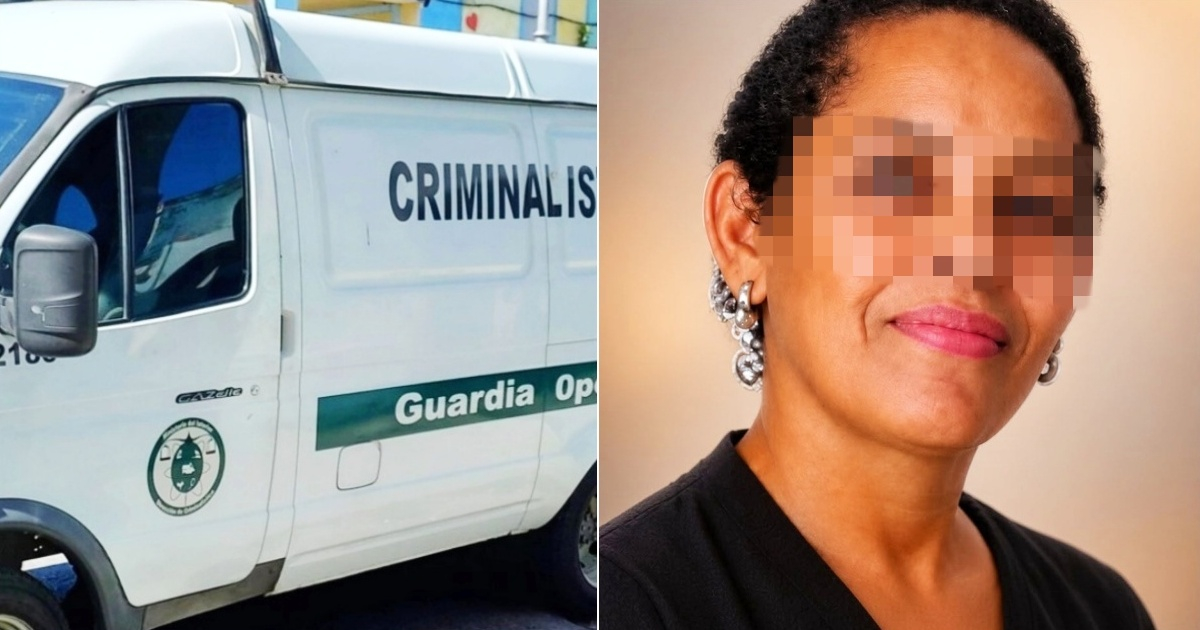
On Sunday, November 8, Juana María "Mayi" Guzmán Torres, a 54-year-old preschool educator, tragically lost her life after being attacked with a knife in Manzanillo, located in Granma Province. Her former partner has been identified as the suspected perpetrator.
The Gender Observatory of Alas Tensas (OGAT) confirmed this heinous act, marking the 62nd documented femicide in Cuba for 2026, a number that surpasses the total recorded for both 2024 and 2025.
According to the observatory, the police apprehended the alleged assailant following the murder. Guzmán Torres, who was a mother to two adult children, had devoted her career to nurturing young minds. Her passing prompted an outpouring of grief from former students on social media, who fondly remembered her dedication as an educator.
Insights from Crime Reporter Niover Licea
Crime reporter Niover Licea, through his platform NiO Reporting a Crime, shared details about the circumstances surrounding Juana Guzmán's assault and the medical complications that led to her death.
Licea, citing a source close to the family, reported that the victim was attacked with a knife. The suspect is believed to be the victim’s ex-husband, which sheds light on their relationship as it contrasts with the report from the Gender Observatory of Alas Tensas.
As per the information gathered by Licea, Juana underwent emergency surgery following the attack but later suffered a pneumothorax and other medical issues that contributed to her demise. Initially, Licea reported the incident as an attempted femicide while the victim was still alive. He later updated his report to reflect the fatal outcome.
At the time of the update, Licea was unaware of the suspect's arrest, which was later confirmed by the Gender Observatory. There were also discrepancies in the reported location of the incident, with Licea citing Caimarí and Alas Tensas pointing to the La Cañada neighborhood; both agree the attack occurred in Manzanillo.
Alarming Rise in Femicide Cases in Cuba
OGAT's records indicate 62 femicides documented through November 10, 2026, surpassing the 56 recorded in 2024 and the 50 in 2025. The 2025 tally was revised after verifying the murder of Marialina García Borroto in August of that year in Florencia, Ciego de Ávila.
In addition to these confirmed cases, the organization has recorded 38 attempted femicides and two male murders within the context of gender-based violence for the same period. Cuba reached 50 femicides in 2026 by early September, with an additional dozen cases added since then.
The Impact of Economic Strain and Service Shortages
Ileana Álvarez, director of the Alas Tensas Observatory, highlighted how Cuba's economic hardships and inadequate basic services exacerbate the vulnerability of women facing violence.
"The documented femicides continue to rise in Cuba, and we want to draw attention to this fact. Amid a crisis that deepens vulnerability, power outages, lack of transportation, communication difficulties, and economic dependency limit the ability to seek help, leave a home, or maintain a separation. The aggressor is always responsible, but these conditions can leave women with fewer means to find safety," Álvarez stated.
She also pointed out challenges faced by women in rural communities, where distances from support services and communication difficulties can delay intervention when threatened.
"In rural areas, these barriers can be even greater. Being far from services, lacking transportation, or losing communication can prevent a threatened woman from receiving timely help. Protection must also reach these areas with resources and responses tailored to their needs," she explained.
Calls for Effective Prevention and Protection Measures
The observatory criticized the institutional response to gender-based violence for focusing on post-crime penalties without ensuring effective mechanisms to protect threatened women.
Referring to the case of Marialina García Borroto, recently added to the 2025 records, Álvarez noted that the perpetrator had previously served a sentence for another murder.
"The aggressor had already served a murder sentence, a precedent that necessitates examining what risk assessment and protection mechanisms existed and how they functioned. Our stance is clear: populist punitive measures do not replace prevention," she asserted.
The organization advocates for specialized shelters, continuous assistance services, and procedures to identify and intervene in high-risk situations before new assaults occur.
In Cuba, femicide is not recognized as a standalone crime in the current Penal Code. Women's rights organizations have long called for a protective framework that includes prevention and victim assistance mechanisms.
Ongoing Investigations into Potential Cases
OGAT's tally could increase as investigations into other cases progress. The organization notes that 11 potential femicides and 18 attempts from 2026 remain under investigation.
The observatory is also verifying 12 possible femicides, five attempts, and one male murder in a gender-based violence context from 2025. Requests have been made to access investigation files for Anais Tamayo Puente, Danaibis Tamayo Ramírez, and Odalis Brizuela Zayas. The organization is also looking into the case of Bárbara Sánchez González, currently classified as a potential femicidal suicide.
Since 2019, Alas Tensas has documented hundreds of femicides, pointing out that the lack of official information on women's murders complicates efforts to clarify the circumstances, assess past violence, and evaluate police and judicial responses.
Understanding the Femicide Crisis in Cuba
What is the current state of femicide in Cuba?
As of November 2026, there have been 62 documented femicides in Cuba, surpassing the totals for 2024 and 2025.
How does economic hardship affect gender-based violence in Cuba?
Economic challenges, along with deficient basic services, increase the vulnerability of women facing violence, as these conditions limit their ability to seek help and escape dangerous situations.
What measures are being called for to address femicide in Cuba?
Organizations are advocating for specialized shelters, continuous assistance services, and proactive intervention procedures to prevent and address high-risk situations before they lead to violence.