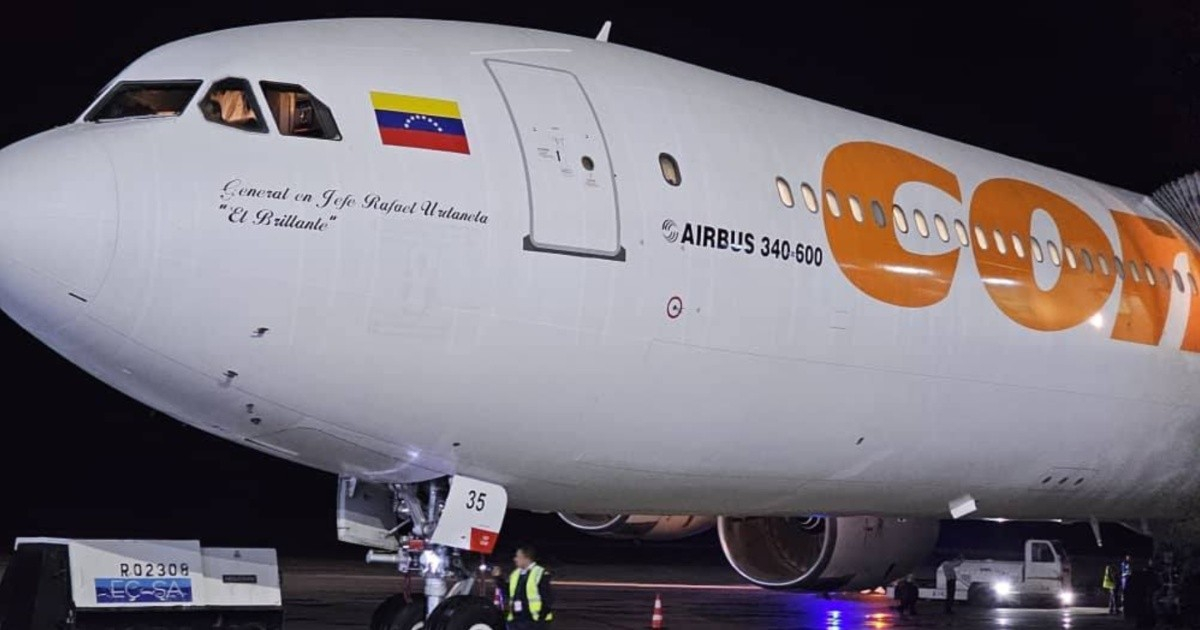
The Venezuelan state-owned airline, Conviasa, has announced it will restart its flight services between Caracas and Havana starting this Friday, November 13th. This move comes after roughly two weeks of suspension due to an aviation fuel crisis impacting ten Cuban airports.
Despite the ongoing restrictions on Jet A-1 fuel supply, which are officially in place until December 1st, the airline plans to operate two flights per week. Conviasa shared on its official Instagram account, "Flights from Caracas to Havana, Cuba will take place every Wednesday and Friday," encouraging interested passengers to purchase their tickets.
The route had been put on hold for about two weeks as the airline focused on its domestic operations within Venezuela.
On October 30th, the Cuban Air Navigation Company (ECNA) issued NOTAMs (Notices to Airmen) A3875/26 to A3884/26, indicating "JET A1 FUEL NOT AVBL"—or aviation fuel not available—at major terminals including Havana's José Martí International Airport, Varadero, Santa Clara, Camagüey, Holguín, and Santiago de Cuba, among others.
Although these restrictions do not formally close the airports or automatically cancel international flights, they force airlines to operate without relying on local fuel supplies.
Conviasa has not publicly explained how it plans to manage fuel provisioning for its flights to Cuba.
Airlines have a few options available: they can load enough fuel at their origin for the entire round trip, which is feasible for short routes from the United States, Mexico, or the Caribbean, or they can make technical stops in third countries. However, these options increase operational costs and may limit passenger or cargo capacity.
Other airlines have already adopted these measures. According to a report by 14ymedio, Copa Airlines has been loading extra fuel in Panama, Air Europa makes a technical stop in Punta Cana before heading back to Madrid, and Air China has been using Nassau, Bahamas, which led to cancellations in October and the organization of an extraordinary flight to repatriate stranded passengers.
This isn't the first time Conviasa has had to adjust its operations for similar reasons. In February, the airline rescheduled its connections between Caracas, Havana, and Managua over several days due to fuel restrictions in Cuba and Nicaragua's immigration requirements. Later, in June, it suspended the route after the Maiquetía airport closed because of earthquakes in Venezuela.
Additionally, the Caracas-Havana route holds commercial significance as many Cubans use it to purchase goods in Venezuela for resale on the island, including hardware items and solar panels.
Conviasa's return occurs amid a severe decline in air connectivity with Cuba. Iberia has suspended its direct Madrid-Havana route until the end of June 2027, Delta eliminated its service from Atlanta in June and reduced frequencies from Miami, and at least 11 airlines ceased operations at some point during 2026, leading to forecasts of over 1,700 flight cancellations.
The collapse is mirrored in international tourism figures: from January to August 2026, Cuba welcomed only 450,353 visitors, a 64.4% drop from the same period in 2025. In September, just 27,354 foreign tourists arrived, marking the lowest number for that month outside the pandemic years.
Understanding the Aviation Fuel Crisis in Cuba
What are the current fuel restrictions at Cuban airports?
Cuban airports are currently facing a shortage of Jet A-1 aviation fuel, as indicated by NOTAMs issued by the Cuban Air Navigation Company. This affects major airports such as Havana, Varadero, Santa Clara, and others.
How is Conviasa addressing the fuel crisis for its Cuba flights?
Conviasa has not publicly detailed its strategy for managing fuel shortages on its Cuba flights. Options include carrying sufficient fuel for round trips from origin or making technical stops in third countries.
Why is the Caracas-Havana route commercially significant?
The route is significant commercially as many Cubans travel to Venezuela to buy goods for resale in Cuba, such as hardware items and solar panels.