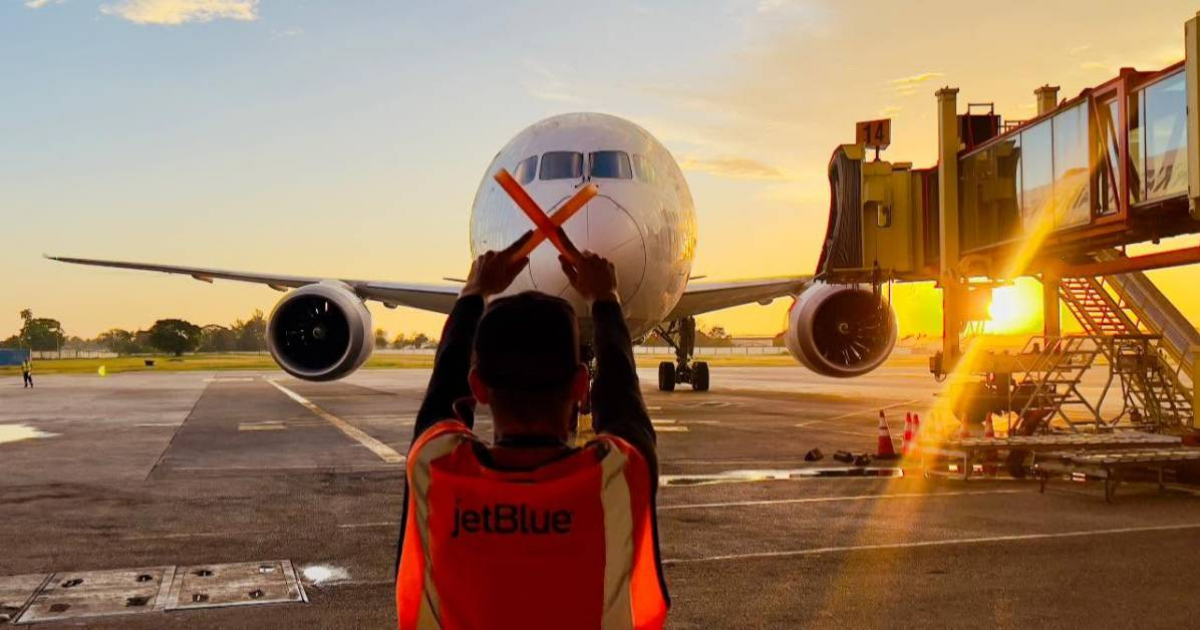
The aviation fuel shortage in Cuba continues with no resolution in sight. On October 30, the Cuban Air Navigation Company (ECNA) issued ten new aeronautical notices extending the unavailability of Jet A-1 fuel across ten airports until 04:00 UTC on December 1, 2026, which is equivalent to 11 p.m. on November 30 in local time.
These notices, labeled NOTAM A3875/26 to A3884/26, state in technical terms "JET A1 FUEL NOT AVBL" indicating that the standard fuel for commercial turbine aircraft will not be available for refueling at the affected terminals.
The impacted airports span nearly the entire geography of the island, including José Martí International Airport in Havana, Juan Gualberto Gómez (Varadero), Jaime González (Cienfuegos), Abel Santamaría (Santa Clara), Ignacio Agramonte (Camagüey), Jardines del Rey (Cayo Coco), Frank País (Holguín), Antonio Maceo (Santiago de Cuba), Sierra Maestra (Manzanillo), and Vilo Acuña (Cayo Largo del Sur).
Although this restriction does not mean the airports are closed or that all flights are automatically canceled, it forces airlines to seek costly alternatives. These include carrying extra fuel from the departure airport—a practice known as fuel tankering—scheduling technical stops in other countries for refueling, or outright suspending operations.
For instance, Air Europa continues its Madrid–Havana route but has added a stop in Punta Cana (Dominican Republic) for refueling on the return trip to Spain. Air China has chosen Nassau (Bahamas) as a refueling point for its flights between Beijing, Madrid, and Havana.
This extension replaces a previous series of notices that was set to expire on November 1, which itself had replaced an earlier set expiring on October 1. The crisis has been documented without interruption since February 2026, when nine airports received the first such notice.
A crucial caveat: December 1 does not guarantee the resumption of fuel supply. According to the specialized portal Click-Cuba, "the December date is a NOTAM expiration date, not a guarantee that the supply will be restored then, as ECNA may modify, replace, or cancel the notices before their expiration."
The cumulative impact on Cuban aviation and tourism is catastrophic. At least 11 airlines have suspended or reduced operations to Cuba during 2026, with over 1,700 flights canceled.
Among the airlines that halted services are Air Canada, Iberia, Air Transat, WestJet, Sunwing, Air France, Turkish Airlines, Rossiya, and Nordwind. Iberia has extended the suspension of its direct Madrid–Havana route until June 30, 2027.
Tourism figures reflect the collapse: Cuba received only 477,707 visitors between January and September 2026, which is 34.9% of the volume recorded during the same period in 2025, according to data from the National Office of Statistics and Information (ONEI) as reported by Infobae. September was the worst month of the year, with only 27,354 international arrivals.
In this context, the Venezuelan airline Conviasa announced the resumption of its Caracas–Havana flights starting next Thursday, with two weekly frequencies, although it has not publicly stated how it will secure fuel in the Cuban capital, where the restriction remains fully in force.
FAQs on Cuba's Aviation Fuel Crisis
What is causing the aviation fuel shortage in Cuba?
The fuel shortage is primarily due to economic challenges and logistical issues within Cuba, exacerbated by the political and economic policies of the Cuban government.
How are airlines adapting to the fuel shortage?
Airlines are adapting by carrying extra fuel from their origin airports, scheduling additional technical stops in other countries to refuel, or suspending flights altogether.
Is there a potential resolution to the fuel crisis by December 1?
December 1 is merely the expiration date for the current NOTAMs, not a guarantee of resolution. The Cuban authorities may extend or modify the notices as needed.