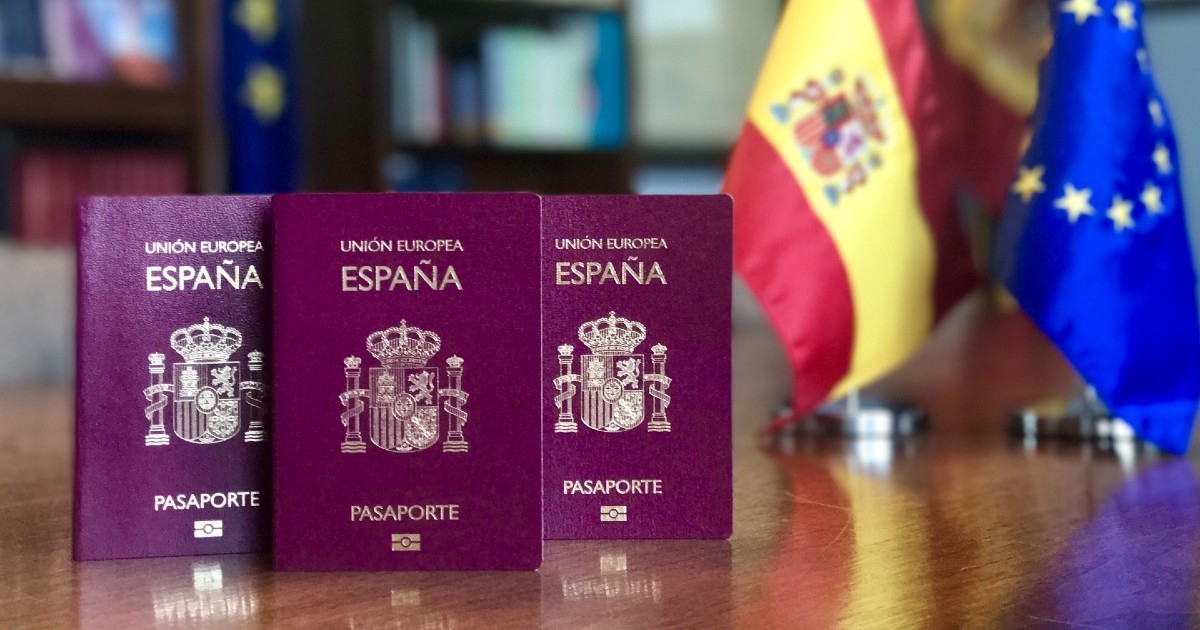
On Tuesday, the Spanish government announced through the Official State Gazette the Royal Decree 954/2026, dated November 4th. This decree outlines the regulations for the Spanish Citizenship Statute Abroad, introducing financial aid ranging from €4,000 to €7,600 for Spanish nationals who decide to return to Spain permanently under vulnerable conditions.
This legislation holds particular significance for Cuban nationals who obtained Spanish citizenship through the Democratic Memory Law, often referred to as the "Grandchildren's Law."
Understanding the Current Status of the Aid
Before making any plans to return, it's crucial to understand the current status of these aids. While the financial assistance is mentioned in the decree, it cannot yet be applied for; the decree outlines indicative amounts but leaves the determination of income requirements, application forms, and deadlines for a future regulation which the government has up to a year to approve.
As highlighted by the publication Hoy Aragón, "until then, there is no official amount, no income requirements, no application form, and no application deadline."
Immediate Steps for Returnees
Coming into effect on November 29th is the certificate for returning Spanish citizens, which serves as the key to accessing return programs. To obtain this certificate, four documents are required: a valid Spanish passport or national identity card, a literal birth certificate from the Spanish Civil Registry, a consular deregistration certificate, and a historical registration certificate in Spain.
The Directorate General for Spaniards Abroad and Return Policies is responsible for handling these resolutions, with a maximum processing time of three months.
Consular Registration Requirement
Perhaps the most surprising requirement is the Consular Registration: Article 6.4 of the regulation mandates that individuals must have been registered at their consulate for at least 12 months prior to applying for consular deregistration. Those who have not registered at the consulate of their country of residence will not be able to prove their status as a returnee until they fulfill this period.
Eligibility of Cuban Nationals Under the "Grandchildren's Law"
Can Cuban nationals who gained citizenship through the "Grandchildren's Law" access this aid? In principle, yes. A directive signed in October 2022 by then-Director General of Legal Security and Public Faith, Sofía Puente, confirmed that individuals who obtained citizenship through the Democratic Memory Law would be considered Spanish nationals by origin. This classification allows them to qualify for future aids, provided they are between 18 and 65 years old, demonstrate economic vulnerability, and meet the pending regulatory requirements.
It is estimated that over 350,000 Cubans began the naturalization process since the law took effect in October 2022. For those who already have citizenship and are contemplating returning, the most pressing step is to ensure their consular registration has been active for at least 12 months and to promptly obtain the consular deregistration certificate and literal birth certificate, as these documents take the longest to process.
A return guide is available for Cubans with Spanish citizenship, offering additional information on the process.
Political Controversy: Genuine Aid or Electoral Strategy?
The regulation has not gone unnoticed in Spanish political discussions. According to an investigation by El Debate, the government may be using this publication to "create economic expectations among an electoral group to whom it has opened the doors of nationality." However, the publication clarifies that "there is no evidence that this aid is conditioned on voting."
The decree takes effect precisely on November 29th, coinciding with the date of the Spanish general elections.
The scale of the proposed budget shift fuels the controversy. In 2019, the last year a similar aid was granted, the program distributed less than €800,000 among 858 beneficiaries, averaging €930 per person; in 2020, over 1,800 applications were submitted, with none approved.
The projected expenditure now amounts to over €8 million annually, with the maximum of €7,600 representing an 8.2-fold increase compared to the average payout seven years ago.
While waiting for the regulation to make the state aid effective, Cuban-Spaniards can explore existing programs: Asturias offers up to €6,000 for Asturians and their descendants returning, and the Canary Islands coordinate assistance for approximately 70,000 Canarians and their descendants in Cuba.
FAQs on Financial Aid for Returning Spanish Nationals
Who qualifies for the financial aid introduced by the Spanish government?
Spanish nationals returning permanently to Spain under vulnerable conditions are eligible, pending the establishment of specific income and other requirements.
What documents are needed for the certificate of returning Spanish citizens?
Applicants need a valid Spanish passport or national ID, a literal birth certificate from the Spanish Civil Registry, a consular deregistration certificate, and a historical registration certificate in Spain.
Are Cuban nationals with Spanish citizenship eligible for the aid?
Yes, those who obtained citizenship through the Democratic Memory Law can qualify, provided they meet age, economic vulnerability, and other pending regulatory requirements.